Your forties arrive with a strange combination: you are probably better at your work than you have ever been, and you are also noticing things. A name that takes an extra second. An afternoon that fogs over. The recovery from a short night that used to cost nothing and now costs the whole morning. None of it is alarming, and all of it is information. This is the decade where the habits of the previous twenty years start producing visible results, and the decade where new habits still have enough runway to change what the next forty years look like.
What does mental longevity mean in your forties?
It means acting on the trajectory while you still have decades of runway. In practice that means treating sleep, blood pressure, hearing, learning, and friendship as investments with long payback periods, and taking the small changes you have noticed as useful data instead of a verdict.
Mental longevity is the lifelong capacity to think clearly, regulate your inner state, adapt to change, keep learning, maintain meaningful connections, and live intentionally. In your forties, each item on that list has a specific pressure against it: work compresses learning, stress compresses sleep, and a schedule full of obligations compresses friendship into whatever survives.
What makes this decade different from your thirties is that the feedback has started. Your body and mind now respond visibly to how you treat them, which is uncomfortable and genuinely useful, since it means you can tell what is working.
Is what you are noticing normal?
Mostly, yes. Processing speed slows gradually from early adulthood while vocabulary, judgment, and pattern recognition keep improving. Most forties complaints trace to sleep, stress, and divided attention instead of aging, and those three are the ones you can address directly.
The research is reassuring on this point. Work published in Psychological Science found that different cognitive abilities peak at markedly different ages, with several continuing to improve well past midlife. The forties are a trade instead of a decline: you lose a little speed and you gain a great deal of judgment.
This matters because the interpretation changes the outcome. Someone who reads a foggy afternoon as the beginning of decline tends to withdraw from difficulty, which removes exactly the demand their brain needs. Someone who reads it as a signal about last night checks their sleep and keeps taking on hard things.
Before attributing anything to age, rule out the ordinary suspects. Sleep debt, chronic stress, alcohol, thyroid problems, vitamin deficiencies, and sleep apnea all produce exactly these symptoms and all respond to treatment, which our guides to brain fog and mental clarity cover in detail.
What deserves a medical check this decade?
Blood pressure, hearing, sleep quality, and metabolic markers. All four are silent, all four appear in the research on protecting thinking, and all four are treatable. Your forties are when checking them stops being optional and starts being high value.
Blood pressure matters because midlife vascular health shows up in later life cognition. The World Health Organization lists managing it among the actions that reduce risk of cognitive decline, and it produces no symptoms until it produces serious ones.
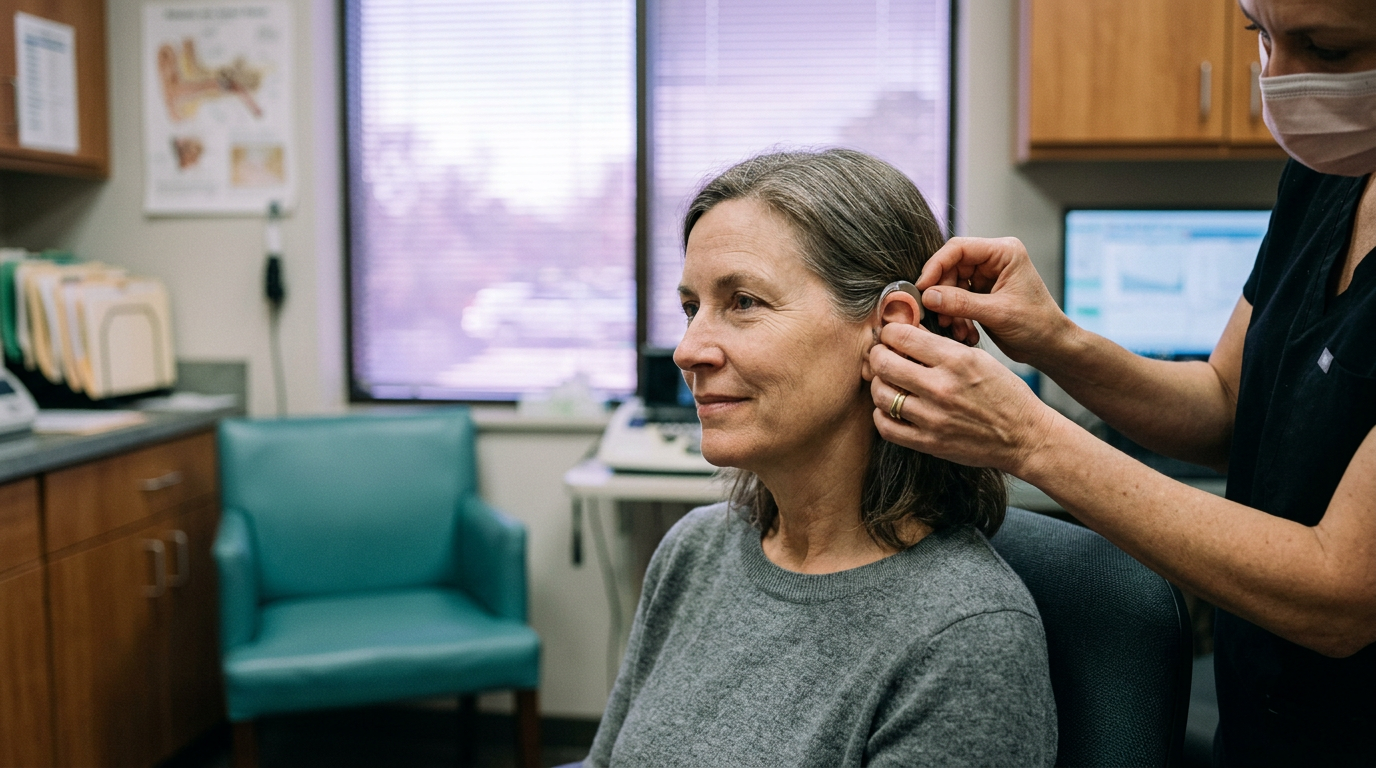
Hearing is the one people postpone for twenty years. Harvard Health's report on hearing aids and cognitive decline describes treatment slowing decline in adults at highest risk. Getting a baseline test in your forties costs an hour and gives every later decision something to compare against.
Sleep quality deserves mention because sleep apnea often begins in this decade, frequently undiagnosed, and it fragments the nights where memory consolidates. Snoring plus daytime exhaustion is worth a conversation with your doctor.
How do you keep learning when work has made you an expert?
Deliberately choose something you are bad at. Expertise in your field feels like growth and mostly repeats what you already know, while genuine novelty is what builds reserve. Being a beginner again in your forties is uncomfortable, useful, and increasingly rare.
This is the quiet risk of a successful career. Competence narrows: you spend your days executing skills you mastered years ago, and your brain adapts to a life with very little unfamiliar demand in it.
The discomfort of beginner status is a real obstacle for accomplished people, and it is worth naming. Being visibly bad at something in your forties, when your professional identity rests on competence, asks more of you than it asked at twenty. That is precisely why so few people do it, and why the ones who do keep a flexibility their peers slowly lose.
The remedy is choosing difficulty on purpose, an approach covered in our guides to neuroplasticity exercises and brain exercises. A language, an instrument, a physical skill, a subject far from your work. Twenty minutes most days is enough, and the awkwardness is the point.
What about friendships in the decade everyone is busiest?
Protect them with logistics instead of intentions. Adult friendships need scheduling, and this is the decade where they quietly disappear under work and family. A standing monthly call or a recurring dinner keeps what would otherwise erode without anyone deciding to end it.
Social connection carries genuine weight in long term health outcomes, including the analysis published in PLoS Medicine that found strong social relationships associated with survival across many studies. Conversation is also demanding cognitive exercise in its own right.
Logistics beat sentiment here. The friendships that survive this decade are almost never the ones with the deepest history; they are the ones with a recurring slot in a calendar. A first Thursday dinner, a Sunday walk, a monthly call while you drive home from work. The structure carries the relationship through the years when nobody has spare attention for it.
The practical difficulty is that nothing forces the issue. Nobody notices for years, and then a difficult season arrives and the support that would have carried you has thinned. Our guide to making friends as an adult covers rebuilding, and this decade is when maintaining costs far less than rebuilding will.
What changes if you start now instead of at sixty?
Twenty extra years of compounding. Reserve builds through sustained demanding activity, cardiovascular health accrues across decades, and habits established now run on rails by the time life gets harder. Starting at sixty still helps; starting now gives the same effort far more time to work.
This is the central argument for treating your forties seriously. The interventions available at sixty five are the same ones available at forty five, and their effect depends heavily on how long they have been running. Our guide to cognitive reserve covers why the accumulation matters so much.
Think of it as the difference between saving at forty five and saving at sixty five. The monthly amount is identical and the outcome is completely different, because the years did most of the work.
There is also a practical advantage to starting while everything still works. Habits are far easier to establish before health problems, caregiving duties, and reduced energy make everything harder, which our guide to how long habits take to form makes concrete.
Where do you begin?
Pick the one you have been ignoring longest, usually sleep or learning. Book the checks you have postponed. Then choose a single small practice and run it for a month before adding anything else, since one established habit beats five attempted simultaneously.
If you want the full territory before choosing, our guides to what mental longevity means and the six capabilities lay out what you are building and why each piece earns its place.
This decade is also when doing it alone gets hardest, since your time is claimed from every direction. Members inside HumanOS, our community for building a durable mind, work on these practices alongside people in the same season, which is what keeps a plan from quietly becoming an intention.
Is forty too late to protect my brain?
It is early, despite how it may feel. The protective factors work through accumulation across decades, and midlife habits show up strongly in later life outcomes. Forty leaves you thirty or forty years of compounding, which is a considerable runway.
Why do I forget names more than I used to?
Usually attention instead of memory. Names need a moment of focus at the point of hearing them, and busy forties minds are typically composing a reply. Our guides to memory techniques and improving memory cover the encoding habit that fixes most of it.
Does perimenopause affect cognition?
Many people report brain fog, word finding difficulty, and memory changes during this transition, and these symptoms often improve afterward. It is worth discussing with a clinician instead of assuming permanence, since sleep disruption during this period is treatable and contributes substantially.
How much does exercise matter at this age?
A great deal, and the required dose is modest. Brisk walking most days supports the vasculature and the brain structures involved in memory. It also improves sleep and stress regulation, which makes it the single most efficient item on any forties list.