You plan for your body to last. You track sleep, steps, maybe your heart rate. The mind doing all that planning deserves a plan of its own. Mental longevity is the lifelong capacity to think clearly, regulate your inner state, adapt to change, keep learning, maintain meaningful connections, and live intentionally. It is a practice, and people are practicing it together right now. This guide gives you the full picture: what mental longevity means, how it relates to mental health and physical longevity, the six capabilities behind it, what honestly happens to a mind over time, and how you start training yours today.
What is mental longevity?
Mental longevity is your capacity to stay mentally capable for as long as you live: clear thinking, steady emotions, flexible learning, real relationships, and intentional choices, maintained across decades. It covers thinking, feeling, relating, and choosing. It can be trained, and it starts wherever you are today.
The name does precise work. Longevity says this is a decades long project. Mental says the unit of care is the whole person using the brain: the thinking, feeling, choosing self.
It sits inside a bigger idea the World Health Organization calls brain health: how well the brain functions across thinking, sensing, feeling, social, and motor domains, so a person can realize their potential over the whole of life, whatever their current condition. Mental longevity takes that idea and turns it into something you can practice, week by week.
You will also meet two neighboring terms. Cognitive longevity emphasizes keeping thinking and memory sharp over time. Brain longevity emphasizes the health of the organ itself. Both point at real parts of the territory. Mental longevity is the wider frame that includes them, together with the parts a brain scan misses: your inner steadiness, your relationships, your sense of direction.
How is mental longevity different from mental health?
Mental health describes your present state: how you feel and function today, including conditions that deserve care right now. Mental longevity plays a longer game: it builds the capacities that keep your mind clear, adaptable, and connected across decades. You need both, and each one strengthens the other.
Mental health care rightly focuses on the present. It eases depression, treats anxiety, helps you through a crisis. Mental longevity asks a different question: whatever state you are in today, what keeps your mind capable in ten, twenty, forty years?
The two work together. Someone managing depression can absolutely practice mental longevity, and the practice often supports their care. Someone with a clean bill of health can still be coasting on a mind they assume will maintain itself. The healthiest way to hold it: treat today's state as your starting line, and treat the decades ahead as the race that deserves your attention. If you are struggling right now, a clinician is the right first step, and everything here works alongside that care.
What does mental longevity add to physical longevity?
Physical longevity keeps the body capable: heart, muscles, joints, metabolism. Mental longevity keeps the person capable: attention, memory, emotional steadiness, relationships, and purpose. They depend on each other, because the brain lives in the body, and extra years feel like a gift when the person living them still feels like you.
The physical longevity movement gave us a useful word: healthspan, the years you live in good health alongside the years you simply live. Mental longevity applies the same shift to the mind. The goal is a long life in which you remain someone who can think, choose, connect, and enjoy what you built.
The two are deeply entangled, and several of the strongest protections for the aging mind run straight through the body: movement, blood pressure, hearing, sleep. You will see that clearly in the risk factor research below.
Why give this work a name of its own?
Names organize attention. Healthspan gave millions of people a word for the quality of their years, and an entire field grew around it. Mental longevity does the same for the mind: it gathers scattered practices, sleep, focus, emotional skills, learning, relationships, into one project you can see whole and work on deliberately.
Without a name, the pieces stay scattered across self help, productivity advice, and clinical language, and each piece competes for your attention alone. With a name, they become one practice with one purpose: staying capable for the whole of your life. A shared word also lets people practice together, compare honestly, and carry the idea into conversations where it matters, with parents, partners, teams, and their own future selves.
The roots here run deep. Fields like cognitive health, healthy aging, resilience, emotional regulation, and behavior change have studied the pieces for decades. Mental longevity gathers that work into one practical frame a person can live by. The research belongs to science, and the synthesis is offered openly for you to use.
From here on, this article gets specific. You will meet the six capabilities one by one, see what the research honestly supports, and leave with a starter practice for each, small enough to begin tonight.
What are the six capabilities of mental longevity?
Mental longevity rests on six trainable capabilities: Clarity for clear thinking and attention, Regulation for steadying your inner state, Adaptability for learning and changing, Agency for choosing your direction, Connection for relationships that matter, and Restoration for sleep and recovery. Each one can be practiced, and together they describe a mind built to last.
Clarity. Thinking you can trust: attention that holds, memory that serves you, reasoning that stays sharp under load. When people say they want to stay sharp, Clarity is usually what they mean.
Regulation. The ability to notice your inner state and steady it: stress, frustration, anxiety, restlessness. A settled nervous system is the floor every other capability stands on, because a flooded mind loses access to its own clarity.
Adaptability. Staying flexible: learning new skills, updating old beliefs, meeting change with curiosity. This is where you build reserve for later decades, and it grows every time you let yourself be a beginner at something genuinely new.
Agency. Living intentionally: making real decisions, setting direction, keeping a sense of authorship over your own life. Agency turns the other five capabilities into a life you actually chose.
Connection. Maintaining relationships that matter. Social isolation appears on the major research lists of dementia risk factors, and connection is both a protection and, honestly, the point of a long mental life.
Restoration. Sleep and deliberate rest: the recovery everything else depends on. A mind that gets regular maintenance windows keeps its edge, so protect them the way you would protect training days.
The six feed each other, and the chain usually starts at night. Protected sleep steadies your nervous system, a steadier nervous system frees attention, freed attention makes learning and real conversation possible, and a week you actually chose gives you a reason to protect sleep again. Small wins travel through the whole system, which is why one honest practice per capability beats a heroic effort on any single one.
At Healing Waves we call the system these six form your Human OS: the interacting whole through which attention, interpretation, emotion, identity, habits, and decisions shape how you experience and respond to life. The framework gives the six capabilities one home, and this blog teaches them piece by piece.
Where does sound fit into mental longevity?
Sound is a supportive tool, strongest for Restoration and Clarity: steady soundscapes for winding down, calm audio for focused work, guided practices for deep rest. Sound supports the practice, and the practice does the work. That honest framing is how we use it and how we teach it.
Sound also carries our own story. Healing Waves began when Sefy Tofan, rebuilding his sleep after surviving Typhoon Yolanda, created long form sound experiences for his own rest and shared them with others. Years of publishing calm audio for sleep, rest, and focus grew into the wider mission you are reading now. We keep the same standard we started with: sound that serves a practice, described honestly, with the evidence held to the same bar as everything else on this blog.
How does the mind actually change with age?
Different mental abilities move on different schedules. Processing speed peaks early, working memory peaks around thirty, and vocabulary keeps climbing into the fifties and sixties. Serious decline is a disease process, and most people age without it. The realistic picture holds many curves, and several are still rising in midlife.
The numbers deserve to be said clearly. According to the World Health Organization, 57 million people were living with dementia worldwide in 2021, with nearly 10 million new cases every year. Dementia is more common after 65, and it remains a disease process with identifiable risk factors, many of them modifiable. Common and inevitable are different things.
The everyday story carries more hope than most people assume. In a large life span study published in Psychological Science, Hartshorne and Germine found that different cognitive abilities rise and fall on their own timelines: processing speed peaks around the late teens and twenties, working memory around thirty, and vocabulary keeps improving into the fifties and sixties.
Then there is cognitive reserve, the mind's built up capacity to work around damage and keep functioning. Harvard Health Publishing describes it as your brain's ability to "improvise and find alternate ways of getting a job done." The concept comes from a striking finding: some people showed advanced Alzheimer's related brain changes at autopsy yet had stayed clear in life, because their reserve kept working around the damage. Reserve is built through education, work, languages, music, and engagement across the whole of life, and it deserves its own full guide, coming soon on this blog.
When should you start building mental longevity?
Now, at whatever age you are reading this. The 2024 Lancet Commission on dementia identified 14 modifiable risk factors that act across the whole life course, from education in early life to hearing, blood pressure, and social contact in midlife and beyond, and estimated that around 45% of dementia risk is potentially addressable.
The full list, summarized by Alzheimer Europe, rewards slow reading: low education, hearing loss, high blood pressure, smoking, obesity, depression, physical inactivity, diabetes, excessive alcohol, traumatic brain injury, air pollution, social isolation, high midlife LDL cholesterol, and untreated vision loss. Notice how many of these are midlife factors. The decades when brain health feels least urgent are the decades when your choices carry the most weight.
Two honest caveats, because honesty is the entire point here. The 45% figure is a population level estimate from modeling, and individual outcomes vary. Risk reduction is also only half of mental longevity. The other half is positive: becoming clearer, steadier, and more connected in the years you are living right now.
What quietly weakens mental longevity?
The main forces are chronic stress without recovery, ongoing sleep debt, social isolation, long stretches of passive consumption, and living on autopilot. Each one drains a specific capability, and each one responds to small, deliberate counter moves you can start this week.
None of these look dramatic on any single day, which is exactly how they compound. Chronic stress keeps the nervous system braced and steals the recovery Regulation depends on. Sleep debt taxes memory, mood, and attention at the same time. Isolation shrinks the conversations that keep a mind flexible and a life meaningful. Passive scrolling fills the hours where learning, rest, and real connection would otherwise live. Autopilot erodes Agency: weeks pass, choices happen, and authorship quietly fades.
The response is simple to describe and honest about effort: notice which of these five is loudest in your life right now, and aim your first two weeks of practice exactly there.
How do you train mental longevity?
You train mental longevity the way you train a body: small, repeated practices aimed at specific capabilities. Protect sleep, move daily, practice sustained attention, learn things that stretch you, use breath to settle your nervous system, invest in relationships, and review your direction weekly. Consistency compounds far faster than intensity.
There is real evidence that targeted mental training holds up over time. In the ACTIVE trial, a large NIH funded randomized study of cognitive training in older adults, a short course of training still showed effects a decade later: 70.7% of participants trained in processing speed were performing at or above their baseline level on that ability ten years on, compared with 48.8% of untrained controls. The honest reading matters too: gains were strongest on the trained skills, and evidence for broad transfer to everyday life remains mixed. Training works best as one part of a wider practice.
Here is how people in our community usually begin. One small practice per capability, run for two weeks before adding anything:
Restoration: pick a consistent sleep window and protect it. Boring, foundational, first.
Clarity: ten minutes a day on one task with zero inputs. One thing, phone in another room.
Regulation: when you notice stress rising, lengthen your exhale for a few slow breaths before responding.
Adaptability: start learning one genuinely new skill this season, and let yourself be bad at it.
Connection: one conversation a week that goes past logistics with someone who matters.
Agency: a fifteen minute weekly review. What mattered, what drained you, what comes next.
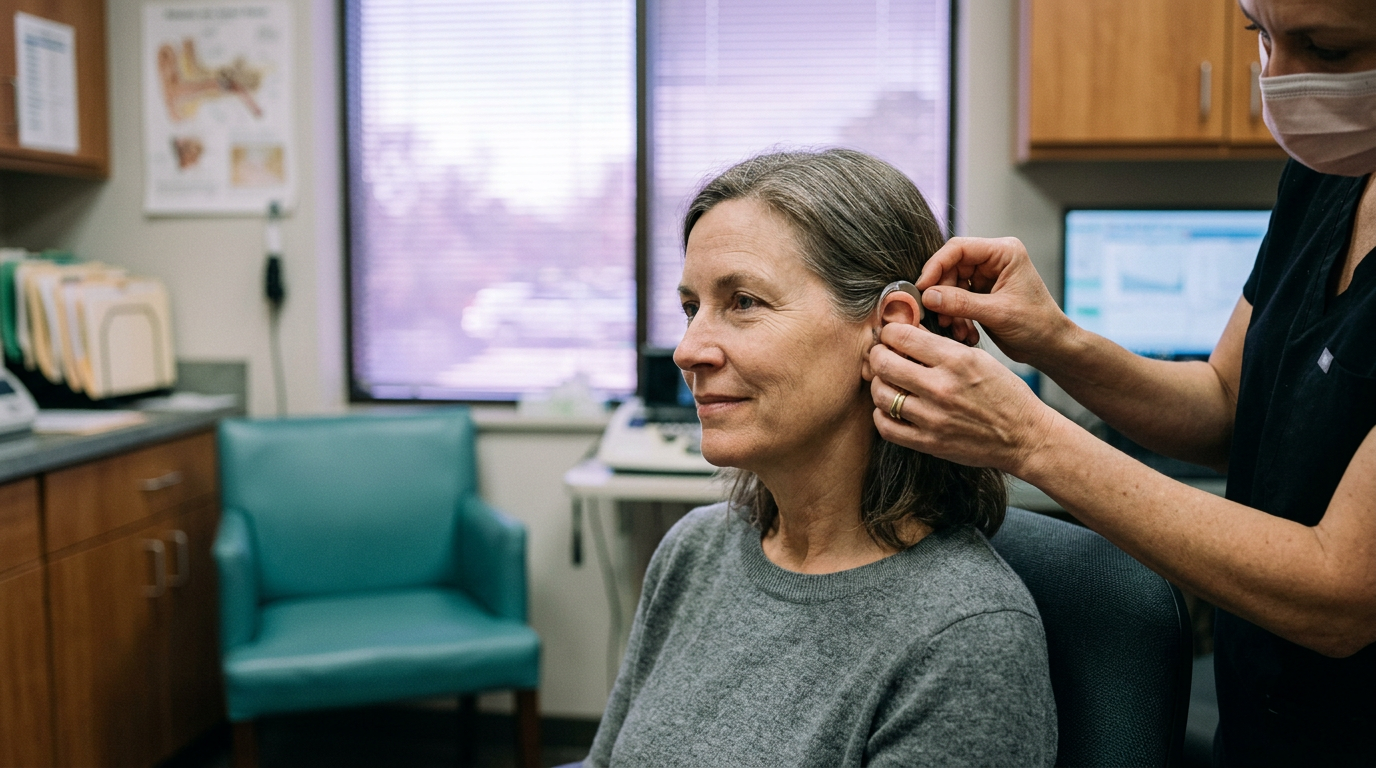
And keep the unglamorous basics from the risk factor list above: movement, hearing checks, blood pressure, time with people. All of it is brain work, even when it feels like errands. If you are worried about your memory or your mood, talk to a clinician first; education like this supports care and works best alongside it.
What does a week of mental longevity practice look like?
A realistic week holds one anchor per capability: a protected sleep window every night, one focused block most days, a daily breath reset, one learning session, one real conversation, and a fifteen minute weekly review. Total added time runs under three hours across the whole week.
Here is a shape people in our community often start with. Every night, the same sleep window, give or take half an hour. Every workday morning, ten minutes of single task focus before the first notification reaches you. Somewhere in each afternoon, three slow breaths with long exhales, tied to a trigger you already have, like closing your laptop. Twice a week, thirty minutes on the skill you are learning badly on purpose. Once a week, a conversation that goes deeper than logistics. Sunday evening, fifteen minutes with a notebook: what mattered, what drained you, what gets your attention next week.
Adjust the shape freely. The structure serves you, and the real win is arriving at next week still practicing.
How do you know it is working?
Progress shows up as lived experience first: falling asleep faster, fewer frayed afternoons, a skill moving from clumsy to workable, conversations that feel closer, weeks that match your intentions more often. Track those honestly in your weekly review, and give any practice at least two weeks before judging it.
Measurement in this field deserves honesty. Questionnaires and cognitive tests exist in research settings, wearables estimate sleep and stress within real limits, and the science of measuring a whole mind across decades is still young. So hold measurement lightly and specifically: write down what you practiced and what you noticed. Patterns across weeks tell you more than any single score, and they keep the practice tied to the life you actually want: clearer days, steadier responses, closer people.
Frequently asked questions
Is mental longevity the same as cognitive health?
They overlap, and mental longevity is wider. Cognitive health, which the National Institute on Aging describes as the ability to think clearly, learn, and remember, is a core component. Mental longevity adds emotional regulation, relationships, restoration, and intentional living. If cognitive health is the engine, mental longevity is the whole journey.
When is it too late to start?
The evidence keeps answering: later than you fear. In the ACTIVE trial, adults averaging 74 years old took a short course of cognitive training and still showed measurable advantages ten years later. Starting earlier gives consistency more room to compound, and starting today beats waiting for a perfect moment.
What is mental fitness?
Mental fitness is the practice side of mental longevity, the way workouts are the practice side of physical health. Fitness is what you do this week. Longevity is what those weeks add up to across a life.
Do brain training apps build mental longevity?
They can play a small part. Trials like ACTIVE found the clearest gains on the specific skills people trained, and honest programs say so. An app works best as one tool inside a wider practice built on sleep, movement, learning, connection, and intention.
Does mental longevity require meditation?
Meditation is one strong tool for Clarity and Regulation, and plenty of people build both through focused work, breath practice, movement, or prayer. Choose the attention training you will actually repeat. The capability is the goal, and the tool is whichever one keeps you practicing.
What if you are starting from burnout?
Start smaller than feels impressive. Protect sleep first, add the breath reset second, and let the other capabilities wait until energy returns. Recovery is a legitimate phase of practice, and moving through it gently is itself Regulation training. If exhaustion runs deep or lifts slowly, bring a clinician into the picture early.
One more honest note before you go: the first two weeks decide very little. Minds change on the timescale of seasons, and the practices above are designed to be small enough to survive busy weeks. Pick one capability, pick one practice, and let the compounding begin quietly.
Mental longevity is easier in company. Practice survives contact with real life when other people are practicing beside you, trading what works, asking honest questions, keeping each other consistent. That is what our community is for, and there is a seat with your name on it. When you are ready, join us in the HumanOS Community. Come as you are, and bring your questions.