The phrase brain exercise has been claimed by an industry. It now mostly means an app with bright colors that promises to sharpen your mind in five minutes a day, and the evidence for those promises is thinner than the marketing suggests. Meanwhile the activities that genuinely change what a brain can do are sitting in plain view, unmonetized: learning a language, playing an instrument, mastering a physical skill, memorizing something properly, arguing carefully with someone who disagrees with you. This guide covers what the research supports, what it does not, and how to tell a real brain exercise from a pleasant way to pass a bus ride.
What counts as a brain exercise?
A genuine brain exercise is any activity that demands sustained effort at something your brain has yet to master. It has to be difficult enough to require full attention, unfamiliar enough that existing skills fall short, and repeated often enough for the adaptation to consolidate.
Those three conditions eliminate a great deal of what gets sold under the name. An activity you have performed comfortably for years keeps existing circuits warm and asks for nothing new. A game that stays at the same difficulty stops producing change the moment you become good at it.
They also promote a lot of ordinary life into the category. A demanding conversation qualifies. Cooking an unfamiliar recipe under time pressure qualifies. Learning to dance qualifies emphatically, since it combines movement, sequence, timing, and social coordination at once.
Do brain training apps actually work?
They reliably improve your performance at the exercises they contain, and that improvement transfers poorly to everyday thinking. The careful trial evidence shows durable gains in specifically trained abilities with limited spread to untrained tasks, which is a real result and a narrow one.
The most rigorous data comes from large trials of cognitive training in older adults, including the ACTIVE trial published in Journal of the American Geriatrics Society. Training produced improvements in the trained abilities that persisted for years, alongside limited evidence of transfer to general daily function.
The gap between those two facts is where the marketing lives. An app can honestly report that users improved at its tasks, and users can honestly report feeling sharper, since getting better at something does feel like getting sharper. Whether that improvement shows up in your work, your conversations, or your ability to learn a new skill is a separate question, and it is the question that matters.
That result deserves a fair reading in both directions. Targeted training genuinely works for the thing it targets, which matters if the target is something you care about, like processing speed. What it fails to support is the broader promise, where twenty minutes of matching shapes makes you sharper at work, at conversation, or at remembering names.
Which activities produce the largest change?
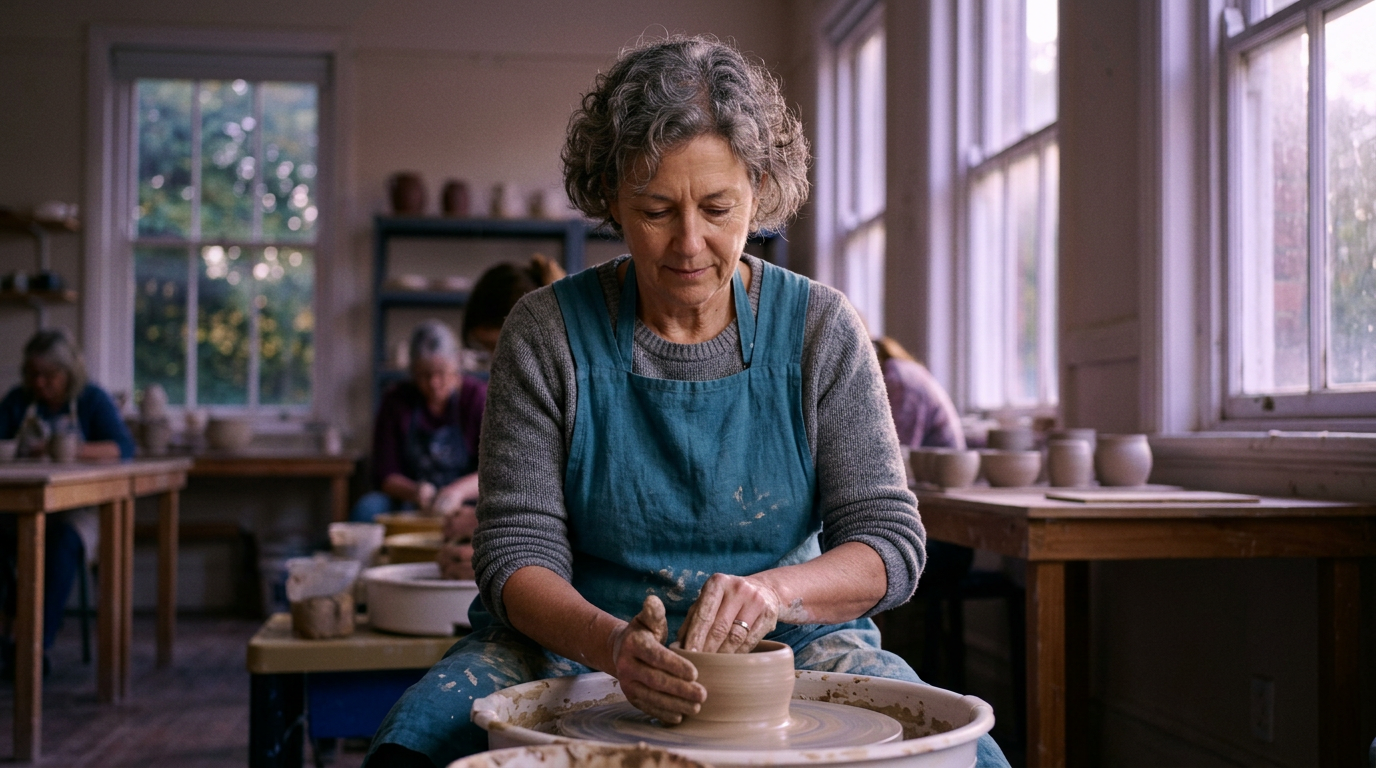
Learning a musical instrument, acquiring a language, complex physical skills like dance or climbing, memory technique applied to real material, and any craft with a genuine learning curve. Each demands several systems at once and keeps demanding them for years.
Music tops most lists because of how many systems it recruits simultaneously: fine motor control, listening, timing, reading, memory, and expression, all coordinated in real time. Languages demand sustained work through constant small failures, which is exactly the condition that drives adaptation.
Memory technique deserves inclusion because the evidence is unusually direct. A 2017 study published in Neuron trained people with no prior background for six weeks, thirty minutes at a time, and found substantial memory gains that held four months later alongside measurable reorganization of brain networks. Our guide to memory techniques covers the method they used.
Physical skills belong here for a reason people underrate. They combine cognitive demand with movement, and movement independently supports the brain structures involved in learning and memory.
How hard should a brain exercise feel?
Hard enough that you fail regularly and can still see progress across weeks. Comfortable practice has stopped producing change, and overwhelming practice produces frustration without learning. The productive zone sits at the edge of your current ability, which means it keeps moving.
This is why difficulty needs managing deliberately. The crossword you finish every morning was a genuine exercise in the year you started and is now maintenance. The remedy is escalation: harder puzzles, a new variant, a different discipline entirely.
Progression is what separates training from hobby. A guitarist who plays the same four songs for six years is enjoying music without asking anything new of their brain, while the one who keeps taking on pieces slightly beyond their reach is training constantly. The activity is identical from outside and completely different underneath.
A useful signal is the feeling of effortful attention. If your mind can wander while you perform the activity, it has become automatic, and automatic activities ask nothing of your plasticity. Our guide to neuroplasticity exercises covers how that adaptation actually works.
How much practice does it take?
Twenty to thirty minutes on most days, sustained across weeks instead of crammed into weekends. The six week research protocol that produced measurable network changes used daily sessions of thirty minutes each. How you distribute the practice matters as much as the total volume, since consolidation happens between your sessions and especially during the sleep that follows them.
Daily beats weekly at the same total. Thirty minutes a day for six days produces far more than three hours on Sunday, because each session gets an overnight consolidation phase, which our guide to getting more deep sleep connects directly to learning.
Attach the practice to an existing anchor so it survives busy weeks, an approach covered in our guides to habit stacking and implementation intentions. The exercise that continues for a year beats the superior one you abandon in March.
What supports brain exercise from outside?
Sleep, aerobic movement, and genuine social engagement. Sleep consolidates whatever you practiced during the day, physical exercise supports the biology that makes learning possible at all, and demanding conversation exercises several systems on its own. Training without those three conditions in place produces plenty of frustration and remarkably little adaptation.
Harvard Health's guide to keeping your mind sharp at any age arrives at the same combination: keep learning, engage your senses, repeat deliberately, space your practice, and support all of it with movement, rest, and connection.
The practical implication is worth stating plainly. If you have thirty minutes and you are choosing between a training app and a walk with a friend where you discuss something difficult, the walk is the better brain exercise, and it also happens to be the one you will still be doing next year.
Social engagement deserves particular emphasis because it is the most underrated brain exercise available. Conversation demands memory, attention, language, emotional reading, and rapid adjustment, all at once and in real time, which is why isolation shows up so consistently in the research on cognitive risk.
Where do brain exercises fit in a mental longevity practice?
They are how you keep the capacity to learn, which is the capacity that every other one quietly depends on. A mind that keeps taking on difficult new material stays adaptable, builds reserve against the changes ahead, and remains genuinely useful to its owner across many decades.
Mental longevity is the lifelong capacity to think clearly, regulate your inner state, adapt to change, keep learning, maintain meaningful connections, and live intentionally. Brain exercise sits directly under keep learning and feeds several of the others, since demanding practice builds the buffer described in our guide to cognitive reserve and keeps adaptability alive. The wider argument runs through what mental longevity means.
Difficult practice also survives better in company, which is what every music class and climbing gym demonstrates. Members inside HumanOS, our community for building a durable mind, learn hard things alongside each other and compare progress through the awkward middle stage where most solo attempts quietly stop.
Are crosswords and sudoku useless?
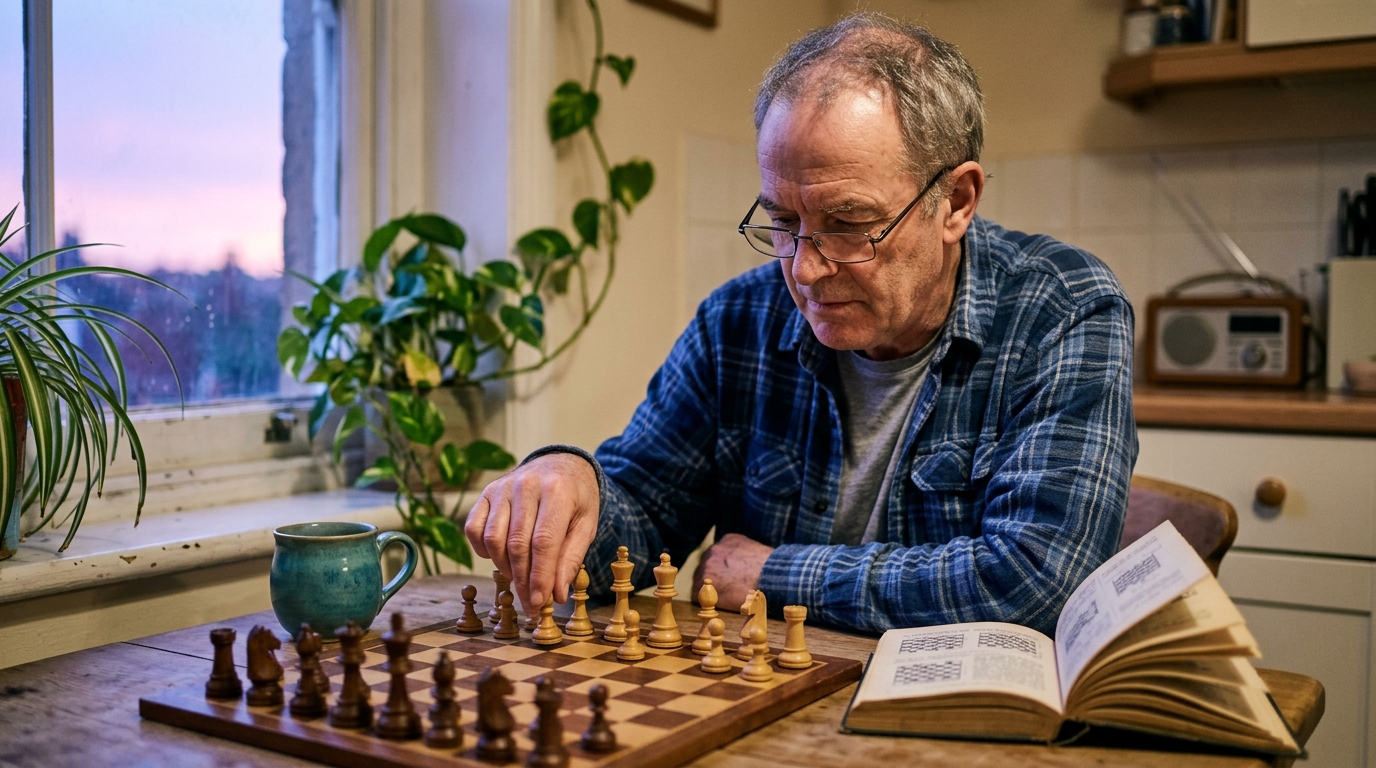
They are useful while they remain difficult and they are enjoyable regardless, which counts for something. What they cannot do is build broad cognitive capacity once you have become good at them. Keep them for pleasure and add something with a steeper curve for training.
How quickly do brain exercises show results?
Within the trained activity, improvement appears in days to weeks. Broader changes take months of consistent work, and the research protocol producing measurable network reorganization ran daily for six weeks. Expect progress in the skill first and general benefits later.
Is it too late to start at seventy?
No. Training studies in older adults show real and durable gains, and adults learn new languages, instruments, and physical skills throughout life. Progress requires more repetition and more patience with age, and the direction of travel remains available.
Can physical exercise count as brain exercise?
It supports the brain powerfully and works through a different mechanism, mostly by improving the biology that makes learning possible. Activities that combine both, like dance, martial arts, or climbing, give you the cognitive demand and the physical benefit in the same hour.