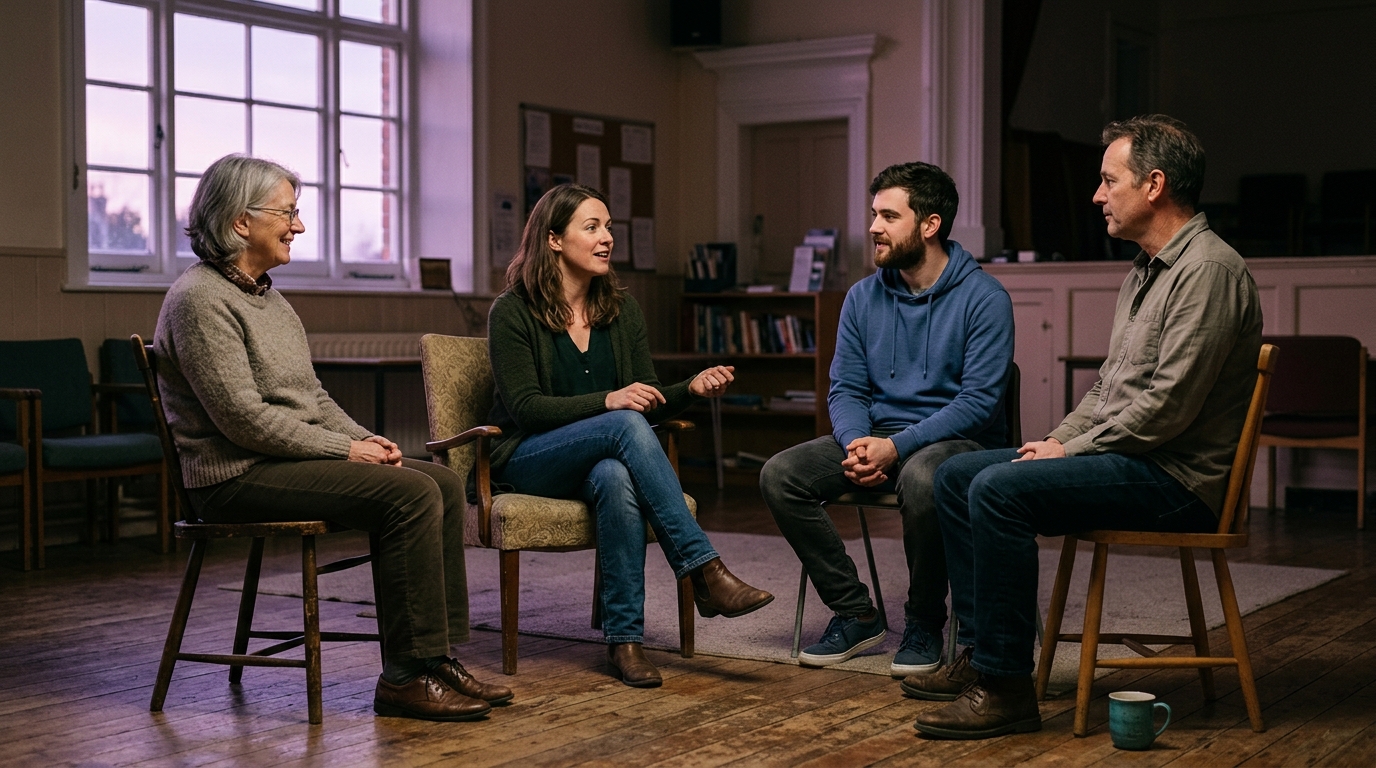
Nobody warns you that friendship has a supply chain, and adulthood quietly dismantles it. School, teams, and first jobs manufactured what sociologists call the three conditions of friendship, proximity, repetition, and unguarded moments, and then careers, moves, and family years strip all three away. If you are wondering how to make friends as an adult, the honest first news is that nothing is wrong with you: the machinery changed, and the skills that worked at nineteen were never skills, just circumstances. This guide covers why adult friendship is structurally harder, what the research says connection is worth, and the practical system that rebuilds a circle on purpose.
Why is making friends harder as an adult?
Because the three ingredients friendship grows from, repeated unplanned contact, shared context, and settings that lower the guard, stopped happening automatically. Adults meet the same strangers weekly at most, in roles instead of contexts, with schedules that make repetition rare. The difficulty is architectural, and architecture can be rebuilt.
Naming the mechanics dissolves most of the shame. School delivered the same faces daily for years, which is why proximity plus repetition produced friends without anyone trying. Work provides colleagues, a genuine friendship source and a guarded one, since roles and stakes keep some walls up. And the unguarded ingredient, the late talks and shared struggles that turn acquaintances into people who know you, requires time adults schedule least. The rebuild, then, is straightforward to describe: manufacture proximity, force repetition, and create the conditions where guards drop, all on purpose, with a calendar.
What is adult friendship actually worth?
By the research, a startling amount: across 148 studies and over 300,000 participants, people with stronger social relationships showed a 50% higher likelihood of survival over the study periods, an effect the authors placed alongside quitting smoking and above exercise and obesity as a mortality factor.
The numbers come from the landmark Holt-Lunstad meta analysis, and they anchor a theme running through this entire blog: connection behaves like a health behavior, with loneliness sitting on the modifiable dementia risk lists beside inactivity and smoking. Mental longevity is the lifelong capacity to think clearly, regulate your inner state, adapt to change, keep learning, maintain meaningful connections, and live intentionally. The maintain meaningful connections clause is written into the definition because the evidence forced it there: friendship is Connection, the capability, and building it in adulthood is health work that happens to be fun.
Where do adult friendships actually form?
Wherever the three conditions get manufactured: recurring groups with the same faces, classes, clubs, leagues, volunteering, faith communities; workplaces that allow real conversation; existing weak ties, the friendly acquaintances one invitation away; and other people's circles, since friends of friends arrive half-vetted and pre-warmed.
The recurring-group rule deserves the emphasis, because one-off events are friendship lottery tickets while weekly anything is a friendship factory: the same climbing gym slot, the standing five-a-side, the writers' circle, the language exchange. Choose by two filters, an activity you would enjoy even if no friends emerged, which removes the desperation tax, and a format with built-in conversation, since parallel silence builds little. The weak-tie inventory is the fastest starting point for most people: the colleague you always laugh with, the other parent at pickup, the old friend gone quiet, each one invitation from becoming real. And borrowed circles compound: say yes to the group things, host the mixed table, and let your people meet each other's people.
How do you turn acquaintances into friends?
With the unglamorous formula: invite, repeat, deepen. One specific invitation, coffee Saturday, the Thursday class together, a walk after pickup. Then repetition on a rhythm, because friendship is a frequency phenomenon. Then graduated depth, real questions and honest answers, one layer at a time, both directions.
Each step has a failure mode worth pre-empting. Invitations die of vagueness, we should hang out sometime, so make them concrete and low-stakes, and expect to issue several before rhythms form, since busy adults decline for reasons that are rarely about you. Repetition dies of scheduling friction, which standing arrangements solve: the first-Sunday hike, the monthly dinner, the same class each week, decided once. Depth dies of permanent small talk, and the repair is graduated self-disclosure, sharing something one notch realer, the actual stressful thing, the real hope, and asking questions that give the other person the same doorway. Depth also requires reliability, because being the person who shows up, remembers, and keeps confidences is the entire job description.
What does a realistic friendship practice look like?
Weekly: one real conversation past logistics, by call or in person, and one specific invitation or reply that moves a plan from talk to calendar. Monthly: one recurring group attended, every time. Quarterly: one dormant friendship revived with an honest message. The whole practice fits inside two hours a week.
Treat it exactly like the other practices in this series, small, scheduled, and protected, because Connection is a capability and capabilities run on reps. The when-then format from our planning guide serves perfectly: when Saturday coffee is poured, then I message one friend a real question; when the class ends, then I suggest the drink. Track it lightly in the weekly review, since circles drift silently and the review catches the drift early. And expect the timeline research on friendship found: dozens of shared hours to move a stranger to friend, more to reach close, which sounds heavy until you notice a weekly rhythm accumulates it on autopilot within a season or two.
Why does friendship protect the brain specifically?
Conversation is unscripted cognitive exercise, being known regulates the nervous system, and social isolation sits on the modifiable dementia risk factor lists beside smoking and inactivity. Friendship trains attention, memory, and emotional range in every exchange, which is why connection keeps appearing in the brain health research.
The mechanics run through the whole capability framework. A real conversation demands live attention, working memory, perspective-taking, and emotional reading, a fuller cognitive workout than most puzzles offer, delivered with laughter. Co-regulation, the way calm and warmth transfer between nervous systems, makes friends part of your Regulation infrastructure, the people your stress physiology recovers alongside. And the isolation research, summarized in the 2024 Lancet Commission risk factor list our brain aging and prevention guides draw from, treats disconnection as a modifiable exposure with real consequences, which converts every standing dinner into quiet preventive medicine. The practice below counts as brain care in exactly the way walking does.
What gets in the way, honestly?
The big four: the everyone-already-has-their-people story, which the loneliness statistics quietly refute; rejection sensitivity, which reads busy Novembers as verdicts; the audit mindset, keeping score of who invited last; and depleted seasons, where the practice shrinks to maintenance instead of vanishing.
Each deserves one honest sentence. Surveys keep finding large shares of adults wishing for closer friendships, which means the person you hesitate to invite is statistically likely to be quietly hoping someone would. Declined invitations are schedule data far more often than social judgment, and the practice absorbs them by issuing more. The scorekeeping habit kills more friendships than conflict does, and the repair is deciding that whoever notices the gap builds the bridge. And in caregiving, grief, and burnout seasons, the practice legitimately shrinks to voice notes and honest I-am-underwater messages, which real friends receive as connection, because they are. Persistent social anxiety that blocks every attempt deserves a therapist's help, and that support works.
Frequently asked questions
How long does adult friendship take to form?
Friendship research estimates dozens of shared hours to move from acquaintance to friend, and a couple of hundred toward close friendship. The practical translation: a weekly rhythm reaches real friendship inside a season or two, which is why recurring beats intense and standing arrangements beat heroic gestures.
Is it normal to have fewer friends in your forties?
Circles typically narrow through the building decades as time collapses, and the research consolation is that quality carries the health benefits more than count. Two or three honest friendships plus a warm wider circle serves most people's connection needs beautifully. Depth is the metric worth auditing.
How do I revive a friendship that faded?
Directly and without ceremony: I thought of you, I miss our talks, want to catch up this month? Faded friendships mostly faded from logistics, and the awkwardness you fear is usually relief on both ends. Old friends restart at depth, which makes revival the highest-yield move in the entire practice.
What about making friends online?
Interest communities, including ours, genuinely work as meeting grounds, and the friendship still forms through the same conditions: repetition, real conversation, deepening honesty, and eventually voice, video, or meeting where possible. Treat online spaces as the modern version of the club, and run the same invite-repeat-deepen play.
It would be strange to end this one anywhere else: community is the friendship supply chain rebuilt, same faces, real conversations, guards down by design. Ours is full of adults running exactly this practice, and the standing invitation is real. When you are ready, join us in the HumanOS Community. Come introduce yourself; several future friends are already in the room.