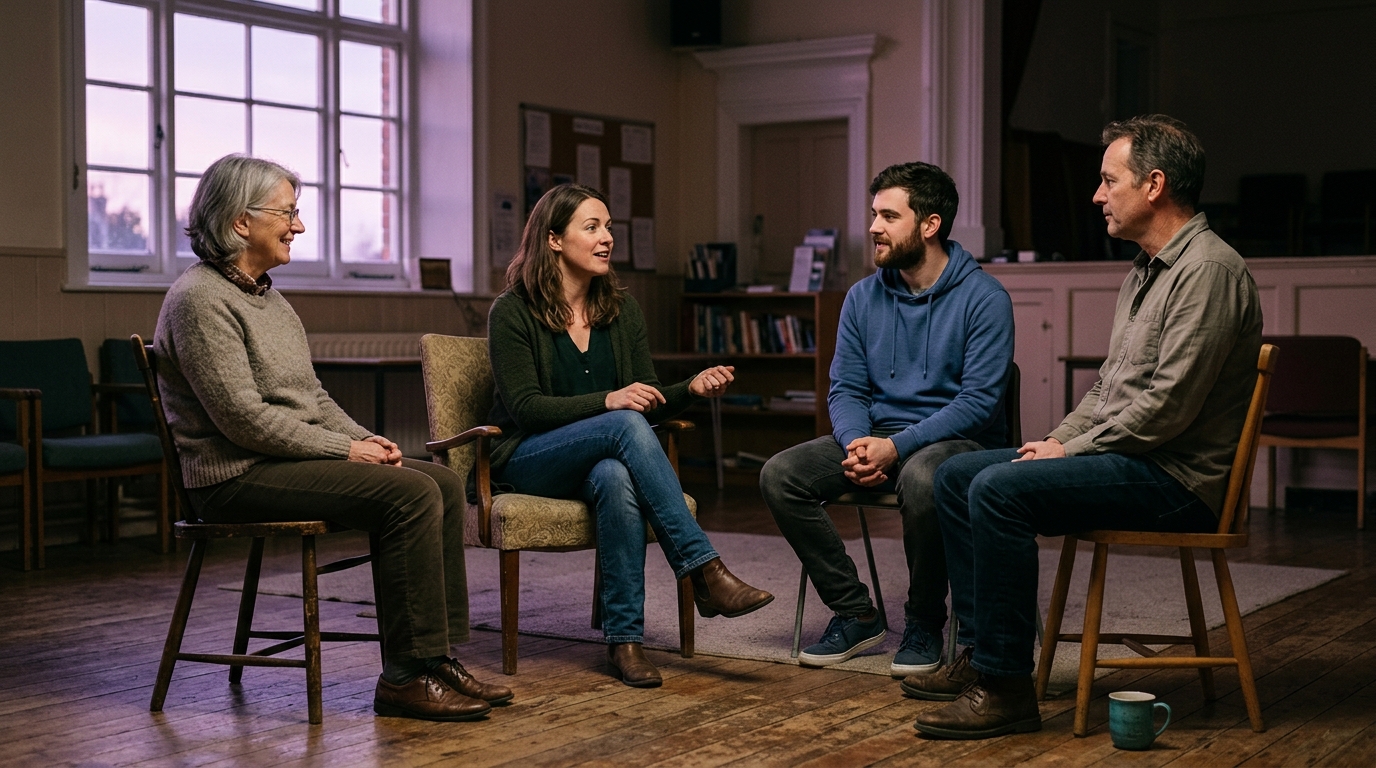
Loneliness gets filed under emotions, somewhere near sadness, treated as a private discomfort you should probably manage on your own. The research files it somewhere else entirely: alongside smoking, blood pressure, and physical inactivity, as a factor that predicts how long people live and how well their minds hold up. That reframing changes what it deserves. A feeling asks for consolation. A health factor asks for a plan, and the plan turns out to be more practical than the word epidemic suggests.
What is the loneliness epidemic?
It describes the widespread rise in people reporting few close relationships and frequent loneliness across many countries. What makes it a health story instead of only a social one is the evidence linking weak social connection to worse physical and cognitive outcomes over time.
Two things are worth separating. Loneliness is the subjective experience of lacking the connection you want, and social isolation is the objective condition of having little contact. They frequently travel together and they come apart often enough to matter, since people can be lonely inside a busy household and content with few contacts.
The distinction matters for what helps. Someone isolated by circumstance, a new city, a health problem, a caring role, needs access and opportunity. Someone lonely inside a full life needs depth, which is a different project entirely and usually a harder one to admit to.
Both appear in the research on health outcomes, which is why the language of epidemic entered public discussion. Something affecting this many people, with measurable consequences for their health, behaves like a public health problem.
Why does connection affect physical health?
Relationships buffer stress, encourage healthier behavior, and give the nervous system regular signals of safety. Chronic loneliness keeps a body mildly mobilized, disrupts sleep, and removes the practical support that helps people manage illness, which together produce measurable effects over years.
The headline evidence comes from a large analysis published in PLoS Medicine, which pooled data across many studies and found strong social relationships associated with substantially better odds of survival. The effect sizes placed connection alongside well established risk factors, which is what moved this from a soft topic to a health one.
The mechanism runs partly through stress physiology. Safe company settles a nervous system, while loneliness keeps a low grade alarm running, and our guides to lowering cortisol and nervous system regulation cover what sustained activation costs.
How does loneliness affect thinking?
Isolation removes the cognitive demand that conversation provides, and it disrupts sleep and mood in ways that degrade attention and memory. Social engagement appears repeatedly among the factors that protect thinking, which makes connection a cognitive issue as much as an emotional one.
Conversation is genuinely demanding mental exercise. Following someone's meaning, holding context, reading tone, retrieving words at speed, and adjusting as you go engages several systems at once, which is difficult to replicate deliberately.
The World Health Organization names staying socially engaged among the actions that reduce risk of cognitive decline. This is also why untreated hearing loss matters so much: it makes conversation effortful, people withdraw, and the withdrawal removes the exercise, a chain our guide to improving memory follows.
Why has connection become harder?
The structures that used to supply it have thinned. People move more, work remotely, marry later, attend fewer institutions, and spend hours in feeds that provide the appearance of contact without its substance. Nothing about modern life supplies friendship automatically anymore.
The digital piece deserves a fair hearing. Messaging keeps distant relationships alive in ways that were impossible before, and it substitutes poorly for presence. Passive scrolling through other people's lives is the version most strongly associated with feeling worse, and our guide to digital minimalism covers trading low grade contact for the real kind.
Remote work deserves a specific mention, since it removed the last reliable source of unplanned contact for millions of people. The colleagues you never chose, the conversations that started by accident, the walk to lunch: those supplied a surprising share of most adults social lives, and very little has replaced them.
The deeper change is structural. Friendship used to be a byproduct of proximity and repetition: the same neighbors, the same workplace, the same institutions for decades. Remove that repetition and friendship becomes something you have to schedule, which is a skill most people were never taught.
What actually helps?
Recurring, low pressure contact built around a shared activity. Regular beats intense here, since ordinary repetition is what actually builds closeness between people. Join something that meets on a schedule, keep one standing commitment with a friend or two, and choose presence over messaging wherever your circumstances allow it.
The repetition point is the practical heart of it. Friendship grows through unremarkable time in the same place instead of through memorable occasions, which is why classes, clubs, choirs, volunteering, and regular sport work better than events. You show up weekly and eventually you know someone.
Lower the bar for what counts as socializing, too. A shared walk, a coffee, twenty minutes on the phone while you cook: none of these require planning an occasion, and all of them do the work. Waiting until you can host something proper is how years pass without seeing anyone.
The second move is turning warm acquaintances into actual friends by naming a recurrence: a monthly walk, a standing dinner, a call on your commute. Our guide to making friends as an adult covers this in depth, including why the awkwardness of proposing it is worth tolerating.
What if you feel lonely with people around you?
That experience is common, and it points at depth instead of quantity. What relieves loneliness is the sense of being known, and that requires some honesty about your actual life. Plenty of people have a full calendar of contact and no single relationship where they say anything genuinely true.
Loneliness also distorts perception in a way worth knowing about. It tends to make people read neutral social signals as rejection, which produces caution, which produces distance, which confirms the original feeling. Recognizing that loop is useful, since it means the coolness you sense in others is sometimes a product of the state itself.
The way through is unglamorous: tell someone something real, slightly before it feels comfortable. Say the week has been hard, name the thing you are worried about, admit the ambition you feel silly about. Depth arrives through a series of small disclosures that get met well, and it stalls indefinitely in relationships where everyone involved keeps things pleasant.
Where loneliness persists alongside low mood, poor sleep, and withdrawal, treat that combination as worth professional attention. Loneliness and depression reinforce each other, and untangling them usually goes faster with help.
Where does connection fit in a mental longevity practice?
It is one of the core capacities and one of the strongest protective factors available. Relationships buffer stress, supply cognitive exercise, carry you through hard seasons, and give the whole enterprise a point, which is why they belong beside sleep and movement instead of below them.
Mental longevity is the lifelong capacity to think clearly, regulate your inner state, adapt to change, keep learning, maintain meaningful connections, and live intentionally. Connection sits explicitly in that sentence, and it quietly supports the rest: regulation is easier with people, learning is more durable when shared, and purpose usually involves someone other than yourself, as our guides to what mental longevity means and a sense of purpose explore.
This is also the capacity least suited to solitary effort, which is the obvious problem with reading about it alone. Members inside HumanOS, our community for building a durable mind, practice these habits alongside each other, which turns the reading into contact and gives the recurring structure somewhere to live.
How much social contact do people actually need?
It varies enormously, and quality matters more than quantity. A few relationships where you feel known outperform a wide network of pleasant acquaintances. The useful test is whether you have someone to call at two in the morning and someone who would notice if you disappeared for a week.
Is loneliness really as harmful as smoking?
Comparisons like that come from pooled analyses where the effect sizes for weak social ties sat alongside established risk factors. Any single comparison oversimplifies, and the underlying finding is robust: social connection predicts survival strongly enough to belong in the same conversation as the classic risks.
Can online communities help?
They can, particularly for people isolated by geography, health, or unusual interests, and they work best when they involve genuine interaction and some continuity of relationship. Passive consumption of other people's posts does very little, and may leave you feeling worse.
What if I am introverted?
Then aim for depth with a few people instead of volume. Introversion concerns how you recharge, and the need to be known is close to universal. Two or three real friendships and one recurring group activity suit most introverts far better than a wide social calendar.