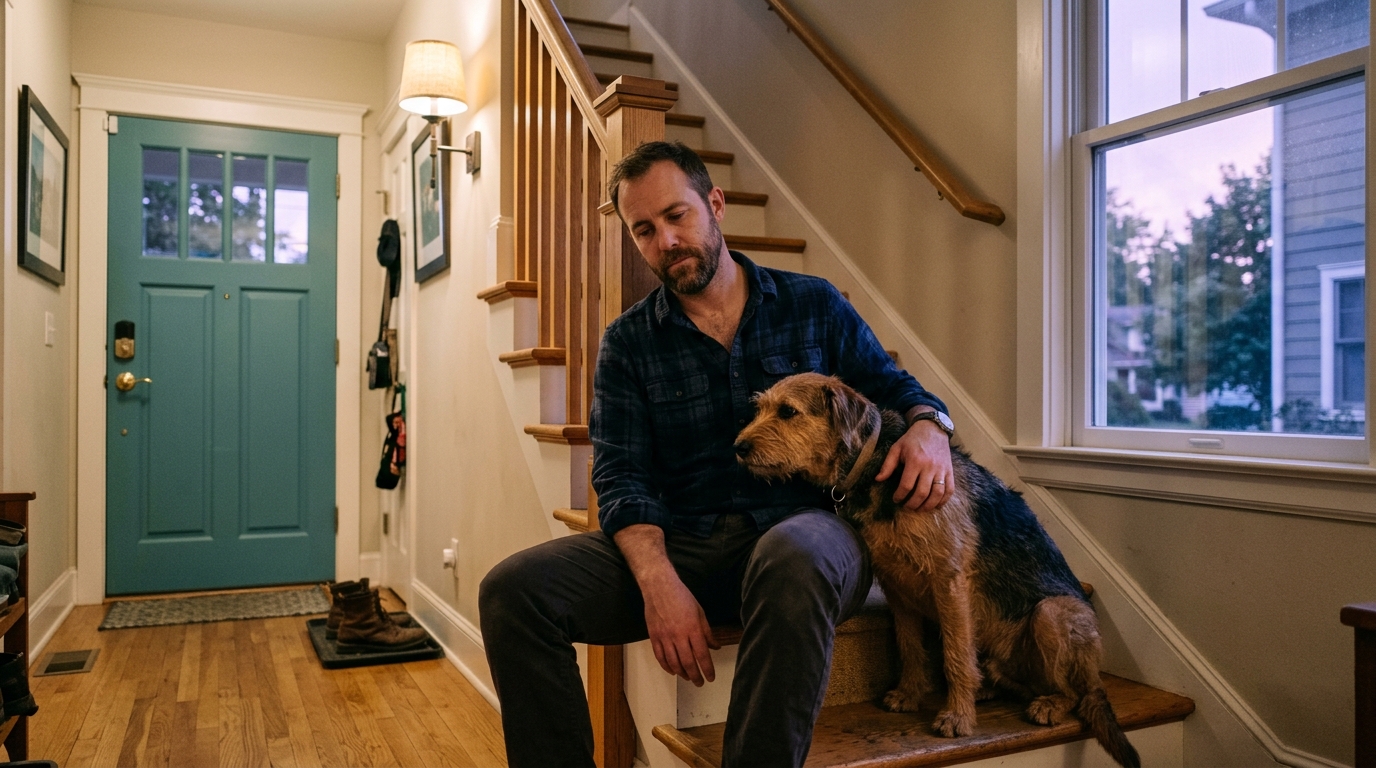
Some seasons leave you startling at the dishwasher. A door closes and your shoulders answer, a message pings and your stomach votes first, and even the good days run on a low hum of almost. If that is your current setting, nervous system regulation is the skill you are missing, and it is genuinely a skill: the learnable capacity to move between activation and rest at the right times. This guide explains what regulation means without the jargon, what a dysregulated season feels like from inside, which practices carry real evidence, what to make of vagus nerve trends, and when the edge you feel deserves professional company.
What does nervous system regulation actually mean?
Nervous system regulation is your capacity to shift between states on purpose: up into alertness when life demands it, down into calm when the demand passes. The machinery is the sympathetic system, your accelerator, and the parasympathetic system, your brake. Regulation means both work, and both get used at the right moments.
The design is elegant and episodic, as Harvard Health Publishing lays out: a challenge arrives, the accelerator mobilizes energy and attention, the challenge passes, the brake returns you to baseline. Nothing about a strong stress response is dysfunction. The trouble is a schedule that keeps the accelerator lightly pressed for months, until the brake grows unfamiliar and rest starts to feel like a skill you lost the manual for.
Regulation also has a floor worth naming: a system can drop below calm into shutdown, the flat, foggy, unmotivated state that often follows long overload. Up and down are both part of the territory, and the practices below serve movement in both directions.
What does a dysregulated season feel like?
Wired and tired at the same time. Startling at small sounds, snapping at small requests, a jaw that only unclenches in the shower. Sleep that takes an hour to arrive, appetite that swings, focus that skitters. Or the other flavor: flat, foggy, and far away from things you usually love.
Recognizing your pattern matters more than labeling it perfectly. Some people run hot, all activation, irritation, and 2am ceilings. Some run cold, numb and procrastinating inside a fog. Many alternate, burning hot through the week and crashing flat on weekends. All of these are nervous systems doing their honest best with the inputs they received, which is why the fix is a change of inputs, repeated until the system believes it. Mental longevity is the lifelong capacity to think clearly, regulate your inner state, adapt to change, keep learning, maintain meaningful connections, and live intentionally. Regulation is the capability that makes all the others reachable on a hard day.
Which practices actually regulate a nervous system?
The evidence backed set: slow breathing with extended exhales, daily movement, a consistent sleep window, morning daylight, time with people who settle you, meditation practiced modestly, and honest reductions in caffeine, alcohol, and news load. Each is small alone; together they retrain what your baseline feels like.
Breath leads because it is the only autonomic lever you steer directly: exhaling slowly engages the brake within a breath or two, and a few anchored rounds a day compound into a system that downshifts on request. Movement metabolizes the activation your day already produced, and rhythm matters more than intensity. Sleep and morning light anchor the hormonal rhythm underneath the whole system, which our cortisol guide covers in depth. Meditation earns its place with modest, honest effects on stress and anxiety across many trials, as the National Center for Complementary and Integrative Health summarizes, and ten ordinary minutes counts.
Co-regulation deserves special mention because humans are herd animals about calm: a slow voiced friend, an unhurried meal, a dog who thinks you hung the moon, all of these downshift a system faster than willpower does. Loneliness runs the same circuit in reverse, which is one more reason connection sits inside this framework as a capability and never as a luxury.
Screens and stimulants deserve their honest line in the inputs column. News and feeds supply threat shaped information at a pace no nervous system evolved for, caffeine after mid afternoon extends activation into the night, and alcohol trades an evening of apparent calm for a fragmented, unrestorative sleep. None of these require abstinence pledges. They require noticing which ones your particular system pays most dearly for, and adjusting the dose with adult honesty.
What about vagus nerve exercises and polyvagal theory?
The vagus nerve is real and central: it carries much of the brake signal, and slow exhales are the best documented way to engage it. Polyvagal theory, the popular framework built around it, mixes useful practical language with scientific claims researchers actively dispute, so use its exercises and hold its explanations lightly.
The honest sorting: humming, singing, gargling, cold water on the face, and long exhales all plausibly nudge vagal activity, cost nothing, and are safe for most people to test on themselves for two weeks. Meanwhile, the theory's evolutionary story and some of its physiological claims sit outside the mainstream consensus, which is worth knowing when the internet presents them as settled fact. You are allowed to enjoy a practice while staying honest about which parts are mechanism and which parts are metaphor. Your two week self test settles what any of it does for you, and that result is the one that matters.
What does a realistic daily regulation practice look like?
Morning: ten minutes outside, moving, before the first scroll. Three anchored breath rounds: after waking, after lunch, after closing the laptop, four slow breaths each with exhales longer than inhales. Evening: a down ramp hour with dim light and a screen curfew in bed. Weekly: one unhurried conversation. Total cost, under thirty minutes a day.
The anchoring is the trick that makes it survive real weeks: tie each round to an event that already happens, and the practice stops needing memory or motivation. Expect the first week to feel like nothing much, the second to produce one strangely calm evening, and the month to quietly change what your shoulders do when the door closes. Rebuild after bad weeks by shrinking to the morning light and one breath round; the system forgives lapses much faster than it forgives abandonment.
How do you regulate in the middle of a hard moment?
Use the sixty second protocol: exhale twice as long as you inhale for four breaths, drop your shoulders and unclench your jaw on purpose, name what is happening in one plain sentence, and widen your gaze to take in the whole room. Then decide your next move from the slightly calmer floor you just built.
Each move has a job. The long exhales engage the brake directly. The shoulder and jaw release interrupts the body's bracing posture, which otherwise keeps voting for emergency. Naming, even silently, moves activity toward the parts of the brain that plan. And widening the gaze counters the tunnel vision that arousal creates. None of it erases the situation, and all of it returns you a working version of yourself, which is usually the only thing the moment was missing.
When does dysregulation deserve professional company?
When panic arrives, when anxiety or low mood runs most days for weeks, when sleep stays broken despite honest rhythm work, or when the past keeps arriving in the present through flashbacks, nightmares, or a body that never stands down. These patterns respond to treatment, and self regulation practice supports care while replacing none of it.
Trauma deserves its own gentle sentence: a system trained by dangerous seasons learned its bracing honestly, and unlearning it goes better with a credentialed therapist, at a pace that preserves choice and ground. Evidence based therapies for anxiety and trauma exist and work, clinicians can rule out the medical mimics like thyroid conditions, and asking for that help is regulation in its most adult form: noticing what the system needs and providing exactly that.
One reframe carries the whole practice: stop treating calm as a reward for finished work, and start treating it as equipment for doing the work. Regulated is how you negotiate, parent, create, and decide at your actual level. The breath rounds are maintenance on the instrument every other part of your life is played on.
Frequently asked questions
Is a 24 hour nervous system reset real?
A day of rest can genuinely shift your state, and the retraining that changes your baseline runs on weeks of repetition. Enjoy the reset day, then let the small daily anchors do the actual work. Any program promising a permanent fix in a weekend is selling the calendar, and the calendar is free.
How long does re-regulation take?
State shifts arrive in minutes with breath and movement. Baseline shifts usually show in two to six weeks of consistent anchors: easier evenings, faster recovery after stressors, sleep arriving closer to on time. Years of bracing can take seasons to fully unwind, and every week of practice pays something forward.
Are somatic exercises the same thing?
Somatic practices, body based movements and awareness work, are one family of regulation tools, and many people find them a natural fit. Our dedicated guide to somatic exercises covers the practical set. The shared principle is simple: the body is a direct road into the state you are trying to change.
Can a person become too calm?
Regulation aims at range, never at permanent softness: a well regulated system still surges for the presentation, the sprint, the emergency, and then stands down afterward. If calm ever slides toward flat and unmotivated, that is the shutdown end of the territory, and gentle activation, movement, light, people, is the way back up.
Nobody regulates alone, and borrowed calm is still real calm. Our community is full of people rebuilding their baselines the unglamorous way, trading notes on breath anchors, morning light, and the weeks it all slipped, with kindness for both. When you are ready, join us in the HumanOS Community. Bring your startle reflex; it is welcome here.