How Stress Rewires Your Brain and How to Reverse It
Chronic stress physically changes the structure of your brain, shrinking the prefrontal cortex and enlarging the amygdala. Here is what the neuroscience says about reversing the damage.
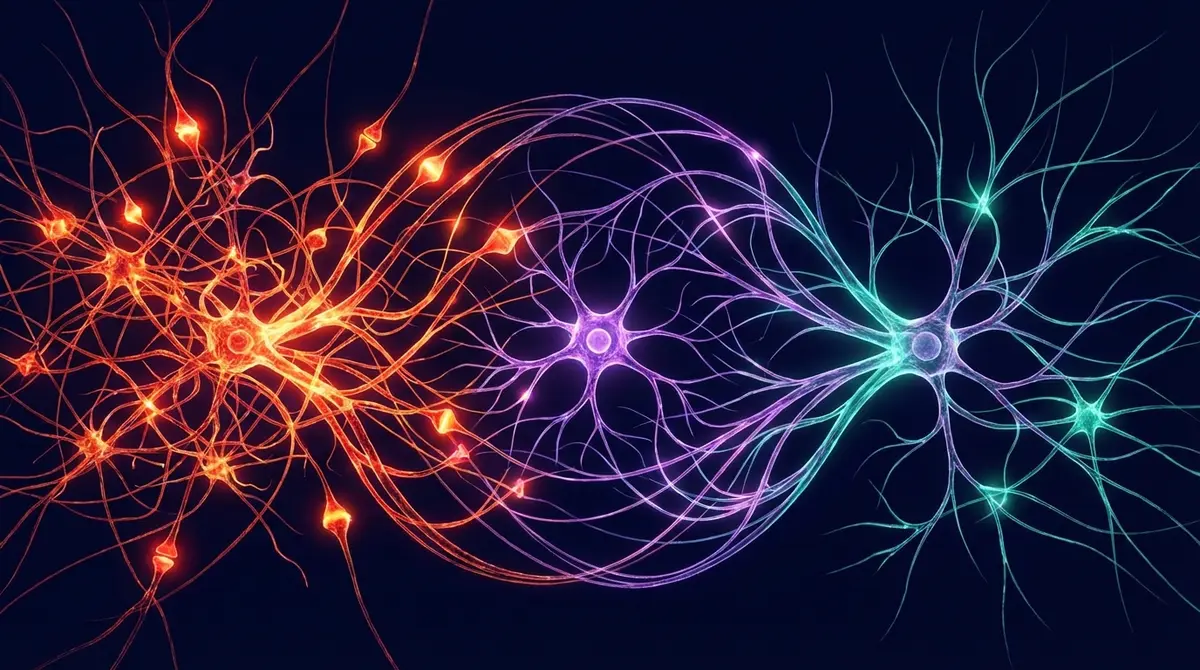
Stress Does Not Just Feel Bad. It Physically Reshapes Your Brain.
When people say stress is "all in your head," they are more right than they realize, just not in the way they mean it. Chronic stress does not simply produce unpleasant feelings. It physically alters the structure of your brain, changing the size of key regions, the density of neural connections, and the chemical environment in which your neurons operate.
This is not speculation. It is visible on brain scans. Decades of research in neuroscience and neuroendocrinology have documented exactly how prolonged stress exposure remodels the brain, and the changes are consistently in a direction that makes you less capable of rational thinking, emotional regulation, and restorative sleep.
The good news, which is equally well-documented, is that these changes are not permanent. The same neuroplasticity that allows stress to reshape your brain also allows you to reshape it back. But you need to understand what happened first.
What Chronic Stress Does to Your Brain
The Amygdala Gets Bigger and More Reactive
The amygdala is a small, almond-shaped structure deep in each temporal lobe. It is your brain's threat detection center, responsible for processing fear, detecting danger, and initiating the fight-or-flight response. Under chronic stress, the amygdala does not just become more active. It physically grows.
Research from Rockefeller University, led by Bruce McEwen, demonstrated that chronic stress increases dendritic branching in the amygdala. More dendrites mean more synaptic connections, which means the amygdala becomes more sensitive to potential threats and faster to trigger stress responses. A study published in Biological Psychiatry found that just 10 days of chronic stress produced measurable amygdala hypertrophy in animal models.
In practical terms, this means chronic stress makes you more anxious, more reactive, and more likely to perceive neutral situations as threatening. Your brain's alarm system has been physically rewired to fire more easily. This is why people under chronic stress often describe feeling "on edge" constantly. They are not imagining it. Their amygdala has literally been restructured for hypervigilance.
The Prefrontal Cortex Shrinks
While the amygdala grows, the prefrontal cortex (PFC) shrinks. The PFC is the most evolutionarily recent part of your brain, responsible for executive function: planning, decision-making, impulse control, working memory, and the regulation of emotional responses. It is also the primary structure that inhibits amygdala activity, essentially your brain's braking system on the stress response.
Research published in Nature Neuroscience showed that chronic stress causes dendritic retraction in the medial prefrontal cortex, the exact opposite of what happens in the amygdala. Neurons in this region lose branches, reducing synaptic connections and weakening the PFC's ability to regulate downstream structures.
A landmark study by Amy Arnsten at Yale found that even short-term exposure to uncontrollable stress rapidly impaired PFC function. Neurons in the PFC essentially went "offline" during high-stress states, shifting control to more primitive brain regions. Under chronic stress, this temporary shutdown becomes a structural change.
The combined effect is devastating: a bigger, more reactive alarm system paired with a smaller, weaker braking system. Your brain becomes better at detecting threats and worse at evaluating whether those threats are real. This is the neurological basis of anxiety, and it directly undermines sleep.
The Hippocampus Deteriorates
The hippocampus, critical for memory formation and spatial navigation, is particularly vulnerable to cortisol. It has one of the highest concentrations of glucocorticoid receptors in the brain, making it a primary target of stress hormones.
Chronic stress reduces hippocampal volume through multiple mechanisms: suppressed neurogenesis (the birth of new neurons), dendritic retraction, and in severe cases, actual neuronal death. A meta-analysis published in Molecular Psychiatry found that individuals with PTSD had hippocampal volumes 6 to 8% smaller than matched controls.
For sleep, the hippocampal connection matters because the hippocampus is involved in the consolidation of memories during sleep. When the hippocampus is compromised, sleep architecture shifts away from the deep slow-wave stages where memory consolidation occurs. You sleep more lightly, remember less, and the restorative functions of sleep are diminished.
The Cortisol Problem
Cortisol is the primary mediator of stress-induced brain changes. In acute doses, cortisol is helpful. It mobilizes energy, sharpens focus, and enhances short-term memory. The problem arises when cortisol remains elevated chronically.
Under normal conditions, cortisol follows a circadian rhythm: high in the morning (the cortisol awakening response), gradually declining through the day, and reaching its lowest point around midnight. This rhythm is essential for sleep. The evening cortisol drop is what allows melatonin to rise and sleep to initiate.
Chronic stress flattens this curve. Cortisol stays elevated into the evening, or the morning peak disappears entirely, leaving you feeling sluggish in the morning and wired at night. A study in Psychoneuroendocrinology found that individuals with flattened cortisol curves had 62% more nighttime awakenings and 40% less slow-wave sleep than those with healthy cortisol rhythms.
The brain changes caused by chronic cortisol create a self-reinforcing loop. A weakened PFC cannot effectively shut down the stress response. A hyperactive amygdala triggers cortisol release at lower thresholds. A compromised hippocampus cannot properly encode the context that distinguishes real threats from false alarms. Each change makes the next iteration of stress more damaging.
How to Reverse Stress-Induced Brain Changes
Neuroplasticity is bidirectional. The same mechanisms that allow stress to reshape your brain also allow targeted interventions to reshape it back. The research on reversal is clear, and the timeline is shorter than most people expect.
1. Exercise: The Most Powerful Neuroplastic Intervention
Aerobic exercise is the single most effective known intervention for reversing stress-induced brain changes. It increases hippocampal neurogenesis, strengthens prefrontal cortex function, and normalizes amygdala reactivity.
A landmark study published in Proceedings of the National Academy of Sciences by Kirk Erickson found that one year of moderate aerobic exercise (walking 40 minutes, 3 times per week) increased hippocampal volume by 2%, effectively reversing 1 to 2 years of age-related shrinkage. The exercise group also showed improved memory performance and increased levels of BDNF (brain-derived neurotrophic factor), the protein that stimulates neuronal growth.
For prefrontal cortex recovery, both aerobic exercise and resistance training show benefits. A 2018 meta-analysis in British Journal of Sports Medicine found that exercise improved executive function across 33 randomized controlled trials, with effects comparable to some pharmacological interventions.
The timing of exercise matters for sleep. Morning exercise is ideal: it anchors your circadian rhythm, builds toward healthy cortisol dynamics, and avoids the sleep-disrupting effects of late-evening exertion.
2. Meditation: Structural Brain Changes in 8 Weeks
Meditation is not just stress relief. It produces measurable structural changes in the brain that directly counter stress-induced damage.
Sara Lazar's research at Harvard, published in Psychiatry Research: Neuroimaging, found that 8 weeks of mindfulness-based stress reduction (MBSR) increased gray matter density in the hippocampus and decreased gray matter density in the amygdala. Participants practiced an average of 27 minutes per day. The degree of amygdala reduction correlated with self-reported stress reduction.
Joe Dispenza, whose work bridges neuroscience and meditation practice, has documented that advanced meditators show increased prefrontal cortex thickness and enhanced functional connectivity between the PFC and limbic system. This increased connectivity represents a stronger "brake" on the stress response.
For sleep specifically, a study published in JAMA Internal Medicine found that mindfulness meditation improved sleep quality comparably to evidence-based sleep hygiene education, with particular improvements in sleep onset latency and nighttime wakefulness. The mechanism likely involves both cortisol normalization and enhanced vagal tone.
3. Sleep Itself: The Recovery State Your Brain Needs
This creates a challenging paradox: the brain changes caused by stress impair sleep, but sleep is essential for reversing those brain changes. Slow-wave sleep is when the brain clears metabolic waste through the glymphatic system, consolidates memories, and repairs neural tissue. REM sleep processes emotional memories and regulates amygdala reactivity.
A study from the University of California, Berkeley, found that a single night of sleep deprivation increased amygdala reactivity by 60%, effectively mimicking the neural state produced by chronic stress. Conversely, a full night of quality sleep reduced amygdala reactivity and restored PFC function.
Breaking into this cycle often requires addressing the nervous system state that prevents sleep rather than targeting sleep directly. Sound environments designed to support parasympathetic activation can serve as an entry point. At Healing Waves, our 8-hour sleep tracks are designed for this exact purpose: providing a consistent auditory environment that supports the nervous system transition from stress to recovery, allowing the brain's restorative sleep processes to engage.
4. Social Connection
Social isolation is a chronic stressor that directly impacts brain structure. Conversely, secure social connections buffer against stress-induced brain changes. Research from the HeartMath Institute has shown that positive social interactions increase heart rate variability (a marker of vagal tone and parasympathetic function), which in turn supports the neural circuits that stress degrades.
A study in PNAS found that perceived social support modulated amygdala reactivity to threatening stimuli. Participants who reported stronger social bonds showed reduced amygdala activation when viewing threatening images, suggesting that social connection literally changes how your brain processes threat.
5. Cognitive Reappraisal
The PFC's ability to reframe stressful situations (cognitive reappraisal) is both impaired by chronic stress and strengthened by practice. Research by Kevin Ochsner at Columbia found that practicing reappraisal strategies increased PFC activation and reduced amygdala activity over time, essentially rebuilding the top-down regulatory circuit that stress degrades.
This is not positive thinking. It is a trainable neural skill. Each time you consciously choose to reframe a stressful thought, you are strengthening the prefrontal circuits that chronic stress weakened. The HeartMath Institute's heart-focused breathing technique, which combines slow breathing with deliberate emotional reframing, has been shown to improve HRV and reduce cortisol within a single session.
The Timeline for Recovery
How long does it take to reverse stress-induced brain changes?
- Days: Cortisol normalization begins within days of starting regular exercise, meditation, or sleep improvement
- Weeks: Amygdala reactivity decreases measurably within 4 to 8 weeks of consistent meditation practice
- Months: Hippocampal volume increases are detectable within 3 to 6 months of regular aerobic exercise
- Ongoing: PFC strengthening is cumulative and benefits continue to accrue with sustained practice
The brain is not a static organ. It is being reshaped by your experiences every day. Chronic stress reshapes it in one direction. The interventions above reshape it in the other. The question is not whether your brain can change. It is whether you will provide the signals it needs.
Start Where You Are
If you are reading this during a period of high stress, the research points to three immediate priorities:
- Protect your sleep. Even imperfect sleep is better than no sleep. Create the best conditions you can. Use sound or guided meditation if silence feels activating.
- Move your body. Even 20 minutes of walking produces measurable neuroplastic effects. Do it in the morning if possible.
- Breathe slowly. Six breaths per minute for 10 minutes activates the parasympathetic system and begins to restore the cortisol curve.
You do not need to overhaul your life. You need to give your brain consistent signals that the threat has passed and recovery can begin.
For a comprehensive guide to rebuilding your nervous system's capacity for rest, our Nervous System Repair Manual covers the full protocol from stress response to deep recovery.
Start Sleeping Better Tonight
Join 14,500+ people who've transformed their sleep with healing frequencies, delta wave entrainment, and our progressive 21-night program.