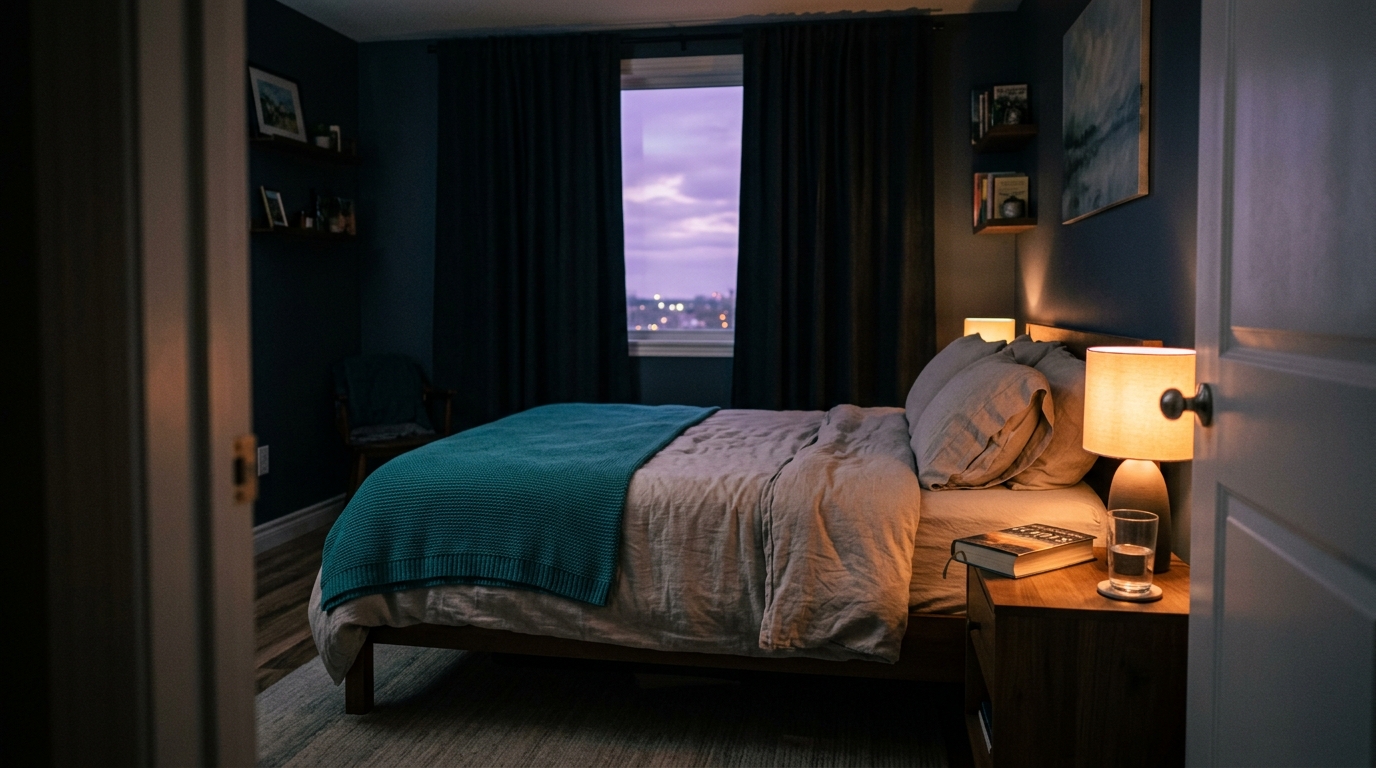
Some afternoons ask for a nap your schedule refuses to fund, and some nights end with a body in bed and a mind still standing. Yoga nidra was built for exactly that gap. It is a guided, lying down practice that walks your attention slowly through the body and breath while you rest at the edge of sleep, awake the whole time, and finishing strangely restored. You may have met it recently under a newer name, NSDR, or non sleep deep rest. This guide covers what yoga nidra is, what the research honestly shows, how to practice it tonight, when it fits a real week, and what it can and cannot replace.
What is yoga nidra?
Yoga nidra, often translated as yogic sleep, is a guided rest practice done lying down: a narrator walks your attention through the body, the breath, and simple imagery while you remain still and awake at the border of sleep. Sessions run ten to forty five minutes, and the only skill required is listening.
The structure is what separates it from a nap or a meditation. A typical session settles the body, sets a simple intention, rotates attention systematically through the limbs and senses, visits the breath, and drifts through gentle imagery before returning you to the room. The rotation is the engine: attention moves too steadily for the mind to build worries, and too gently to keep you fully alert, parking you in the drowsy borderland where the body downshifts profoundly. Practitioners often describe time going strange, twenty minutes feeling like five or fifty, which is the borderland doing its work.
The practice also carries an old and lovely job description: rest for people who cannot stop. The format asks for no concentration, no posture, no experience, and no belief, which makes it the most beginner proof practice in the entire contemplative catalog. If meditation has ever felt like failing quietly on a cushion, this is the door that was built for you.
Is NSDR the same thing?
Functionally, yes. Non sleep deep rest is the name Stanford neuroscientist Andrew Huberman coined for practices that produce deep physiological rest without sleep, with yoga nidra as the centerpiece. The rebrand removed the cultural packaging and kept the protocol, which is why the scripts sound nearly identical in practice.
The renaming did something genuinely useful: it let millions of people try a practice they would have scrolled past under a Sanskrit name, and it framed the experience in the physiological language of rest and recovery. Whichever door you enter through, the room is the same: lying down, guided, awake, restored. Choose recordings by voice and pacing you can actually relax into, because the narrator is the instrument, and taste matters more than terminology.
What does the research honestly show?
Small but real: studies associate yoga nidra practice with reduced stress and anxiety measures, improved sleep quality, and distinctive brain states at the sleep border. One famous imaging study measured a 65% rise in striatal dopamine during practice in experienced meditators, with eight participants, which is exactly the study size to hold lightly.
The honest map: the dopamine finding, from Kjaer and colleagues in 2002, remains fascinating, tiny, and rarely replicated, so treat it as an intriguing clue about the state and nothing firmer. Recent randomized trials, mostly modest in size, report improvements in sleep quality, anxiety, and stress in groups from students to shift workers. And the broader mind body literature, summarized honestly by the NCCIH, shows modest real benefits from related practices. Underneath the studies sits reliable physiology: long slow exhales and stillness engage the calming brake described by Harvard Health Publishing, and thirty guided minutes of that is a large dose. Promising, pleasant, low risk, and honestly sized: that is the current evidence sentence.
How do you actually practice tonight?
Choose a guided recording between ten and thirty minutes. Lie on your back on a bed, mat, or floor, blanket over you, eyes closed, arms resting. Follow the voice without effort: when it says notice the right hand, simply notice. Drifting is normal, sleep is allowed, and there is no way to do it wrong.
Practical settings help. Warmth matters, because still bodies cool. Support the knees with a pillow if the lower back complains. Headphones are optional; a phone across the room on speaker works and removes the temptation of screens. The classic instruction is to remain awake at the border, and the adult version of that rule is gentler: if you sleep, you needed it, and the practice counts anyway. Healing Waves publishes guided rest sessions in exactly this family on Insight Timer, and any narrator whose pace settles you will serve. The only real mistake available is trying hard, which the format is specifically designed to make impossible.
First timers usually ask what they should feel. The honest range: most people feel pleasantly heavy and clear on session one, some feel restless the first few tries as the body renegotiates stillness, and a minority feel emotional as accumulated tiredness surfaces. All three are the practice working. Give it three sessions before voting, and vary narrators before varying the verdict.
When does yoga nidra fit a real week?
Three slots earn the most testimonials: the afternoon energy dip, where twenty minutes revives without wrecking the night; the wind down before bed, as a runway into sleep; and the 3am waking, where a recording gives a racing mind a handrail back toward rest. Two to four sessions weekly is a generous practice.
The afternoon slot deserves special advocacy for everyone who cannot nap: unlike napping, yoga nidra rarely produces grogginess or evening sleep debt, which makes it the rare rest that costs nothing later. For night wakings it pairs beautifully with the no problem solving rule from our racing thoughts guide, replacing the committee with a narrator. Mental longevity is the lifelong capacity to think clearly, regulate your inner state, adapt to change, keep learning, maintain meaningful connections, and live intentionally. Restoration is the capability yoga nidra trains directly: deliberate rest practiced as a skill, on a schedule, by an adult who refuses to treat rest as a moral failing.
What can it replace, and what can it never replace?
Yoga nidra can replace doomscrolling breaks, some caffeine, and the fake rest of collapsing in front of a screen. It cannot replace sleep: the deep stages run repairs no waking practice performs. Chronic exhaustion, insomnia, and sleep disorders deserve clinicians, with the practice as a supportive companion.
The sleep boundary deserves respect because the internet occasionally suggests otherwise: no amount of NSDR compresses the night your brain requires, and using the practice to justify shorter sleep spends the principal to buy interest. The realistic accounting is humbler and still excellent: a practiced twenty minutes reliably returns a calmer body, a cleaner attention, and an easier evening, which is more than most twenty minute purchases can claim. If exhaustion persists through honest rest and honest nights, that is information for a clinician, and bringing it to one early is the well rested move.
If you remember one image from this guide, keep the borderland: a state your body already visits nightly on the way into sleep, which this practice teaches you to park in on purpose. Nothing mystical is required to believe in it, because you have felt it every night of your life, ten seconds before losing the thread. Yoga nidra is simply the skill of arriving there awake, staying a while, and coming back restored.
Frequently asked questions
Is it bad if I fall asleep during yoga nidra?
It is information, never failure: a body that sleeps through afternoon sessions is carrying sleep debt worth paying properly at night. Keep practicing, let sleep happen when it insists, and notice whether staying at the border gets easier as your nights improve. It usually does.
How is yoga nidra different from meditation?
Most meditation trains attention while sitting, holding a focus and returning to it. Yoga nidra guides attention while lying down, aiming at deep rest at the edge of sleep. Meditation builds the noticing muscle; nidra drains the arousal tank. Many practitioners keep both for different hours.
How long until I feel benefits?
The state effect, calmer body and quieter mind, usually arrives within the first session or two, which is the practice's best salesman. Trait effects on sleep and baseline stress follow the usual honest schedule: two to four consistent weeks, a few sessions per week, judged by evenings and mornings.
Can I practice with insomnia or anxiety?
Generally yes, and gently: the practice is widely used alongside both, with body scans and guided rest common in clinical settings. If lying with eyes closed spikes anxiety, keep sessions short, keep a light on, and involve a therapist for the pattern underneath. Persistent insomnia deserves CBT-I and a clinician.
Rest deepens in company that honors it. People in our community trade favorite narrators, afternoon slots, and honest reports of falling asleep at minute six, which everyone has done. When you are ready, join us in the HumanOS Community. Bring your tiredness; it is welcome, and it will be lighter when you leave.