Your tracker says two percent deep sleep and suddenly the whole morning makes sense, or does it? Deep sleep has become the anxiety metric of the wearable era, and it deserves better conversation than a nightly grade. It is the stage where your body runs repairs, your brain consolidates the day, and your system does maintenance no supplement replaces. The honest news for anyone wondering how to get more deep sleep: you cannot force a single extra minute directly, and you can absolutely set the conditions that let your brain allocate more. This guide covers what deep sleep does, what steals it, what genuinely increases it, and how to read your tracker without losing your mind.
What is deep sleep and what does it actually do?
Deep sleep, also called slow wave sleep, is the stage of large synchronized brain waves when the body repairs tissue, strengthens immunity, regulates blood sugar, and the brain consolidates memory and clears waste. Adults typically spend 10 to 20% of the night there, concentrated in the first half of the night.
The Sleep Foundation's overview reads like a maintenance manifest: tissue and muscle repair, growth hormone, immune strengthening, blood sugar regulation, memory consolidation, waste clearance. For a 7 to 9 hour sleeper that budget runs roughly 40 to 110 minutes, and the wide range is your first defense against tracker panic: normal varies a lot, by age above all. Deep sleep declines naturally across the decades, which means comparing your fifty year old nights to a twenty year old's chart is comparing different animals.
The early night concentration carries the single most practical fact in this article: deep sleep is front loaded. The first sleep cycles carry most of it, which is why the hour you go to bed and the regularity of that hour matter more for deep sleep than almost anything else you will read.
What steals deep sleep?
The reliable thieves: alcohol in the evening, which suppresses and fragments the deep stages; late bedtimes that crowd the front loaded window; irregular schedules that leave the brain guessing; late caffeine; an overheated bedroom; and untreated sleep disorders, with loud snoring and gasping leading that list.
Alcohol is the most common and most misread, because it feels like a sleep aid while working as a sleep tax: the night starts sedated, then the second half fragments, and the deep stages take the cut. A late bedtime does subtler damage, pushing sleep's start past the window where slow waves want to happen. Heat matters because core temperature needs to fall for deep stages to arrive, which makes the warm bedroom a quiet saboteur. And the medical thief deserves bold print: sleep apnea shreds deep sleep nightly while masquerading as ordinary tiredness, so loud snoring, observed pauses, gasping, or unrefreshing sleep most mornings deserves a clinician conversation before any optimization advice, including everything below.
What actually increases deep sleep?
Regular schedule first, especially a consistent, sufficiently early bedtime. Daily aerobic movement, which is among the best supported boosters of slow wave sleep. A warm bath or shower one to two hours before bed. A cool, dark, quiet room. Alcohol reduced or ended early. Caffeine on an afternoon curfew. Enough total time in bed.
Notice the family resemblance: everything on the list either raises the body's need for repair, movement does that, or removes interference with the repair window. The warm bath earns its research support through the cooling rebound afterward, which the Sleep Foundation notes may specifically encourage slow wave sleep. Total time in bed is the unglamorous multiplier everyone skips: a six hour night cannot contain a seven hour night's deep sleep budget, and no biohack rearranges that arithmetic. Fiber rich eating and lighter evenings help at the margins. Mental longevity is the lifelong capacity to think clearly, regulate your inner state, adapt to change, keep learning, maintain meaningful connections, and live intentionally. Deep sleep is where the Restoration behind that capacity physically happens, which makes these boring levers some of the best paid minutes in this entire blog.
What does a deep sleep friendly day look like?
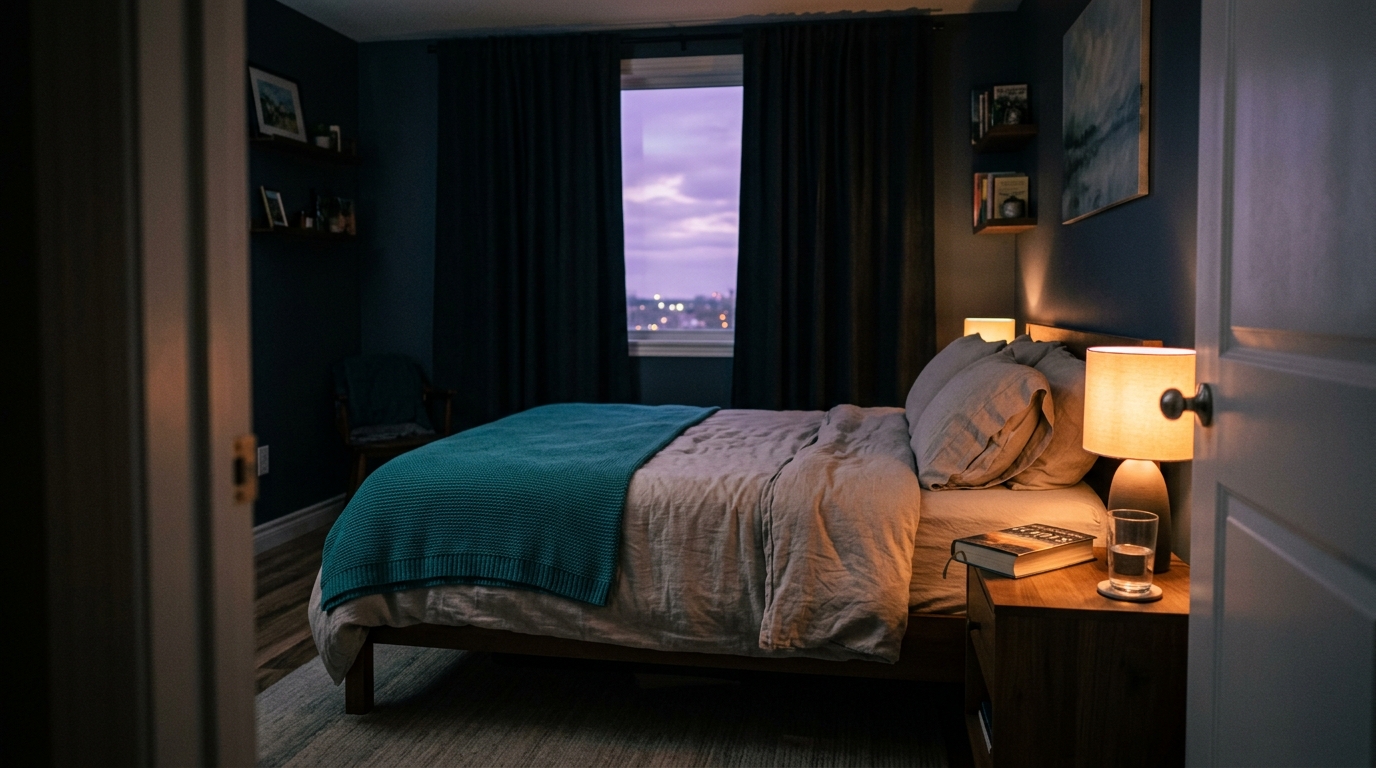
It starts at the same wake time as yesterday, gets outside light early, holds thirty minutes of genuine movement, ends caffeine by early afternoon, keeps dinner and drinks modest and early, and lands in a cool dark room at a consistent hour with time enough for a full night.
The morning half surprises people: wake time regularity and early daylight anchor the circadian timing that decides when slow waves are even available, and the day's movement raises the night's repair demand. The evening half clears the runway. None of the items are new, and their teamwork is the entire trick, because deep sleep responds to the whole day's system and stays unimpressed by any single hack performed at 11pm.
Can sound or technology add deep sleep?
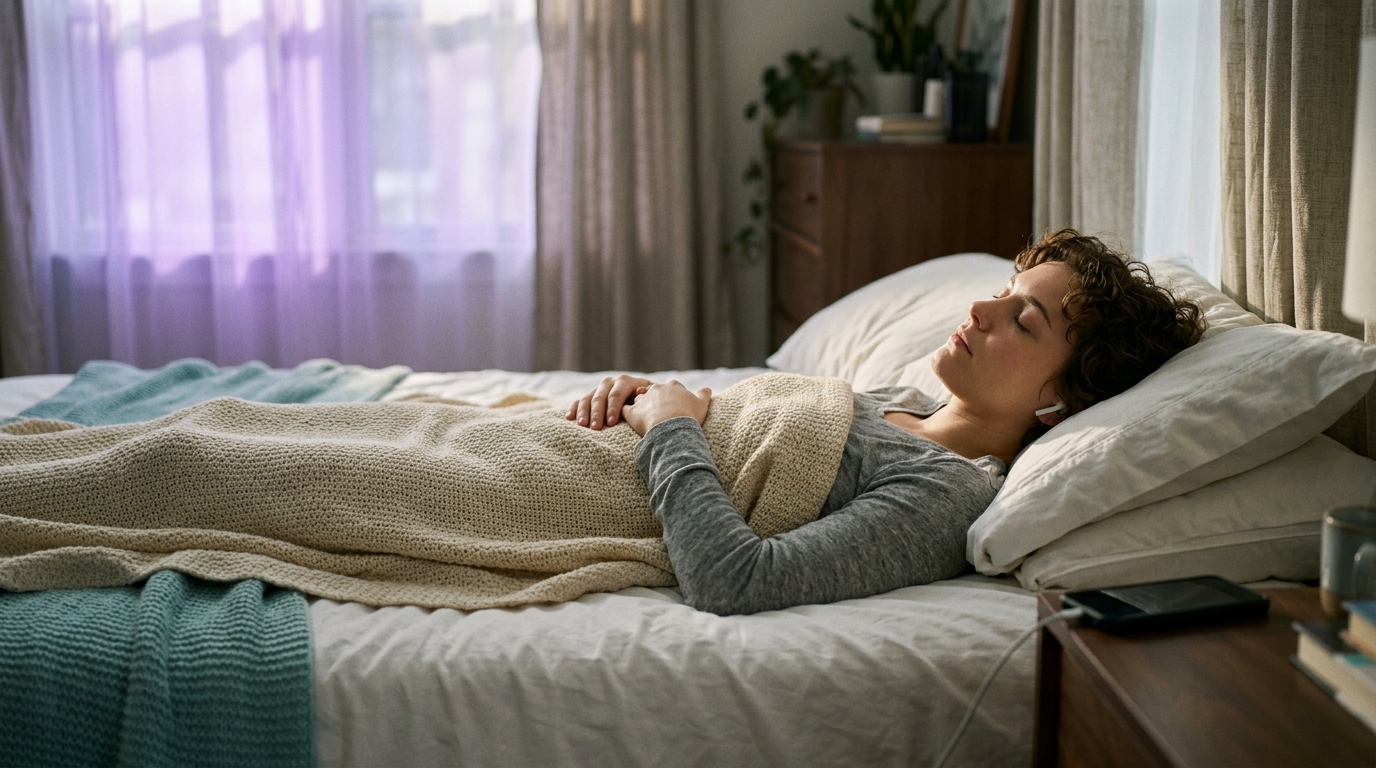
Steady background sound can protect deep sleep by masking the noises that would otherwise fragment it. Research on acoustic enhancement, gentle pulses timed to slow waves, is real and promising in labs, and consumer versions remain early. Treat sound as protection first, enhancement as a bonus still being proven.
The masking case is practical: doors, pipes, partners, and streets produce exactly the abrupt sounds that pull a brain out of slow waves, and a steady sound floor, rain, brown noise, a fan, blunts their edges. Our guides to sound cover the how. The tracker feature that claims to play tones which deepen your sleep sits in the promising but early file: legitimate research exists, consumer implementations vary, and no one should buy hardware to fix what an earlier bedtime fixes free. The priority order stays: schedule, movement, temperature, alcohol, and only then acoustics.
Age deserves its own reassurance before the tracker section, because half of deep sleep worry is generational math. The decline across decades is normal architecture, and the repair functions adapt with it; a sixty year old getting forty five focused minutes of slow wave sleep can wake genuinely restored. Judge your nights against your own age bracket and your own mornings, and let the twenty five year olds keep their charts.
How should you read your tracker's deep sleep number?
As a rough weekly trend, never a nightly verdict. Consumer wearables estimate stages from movement and heart signals, and they disagree with lab measurement precisely at the stage boundaries. Watch whether the trend responds to earlier nights and less alcohol, and let how mornings feel carry at least equal weight.
The failure mode has a name now, orthosomnia, the pursuit of perfect sleep scores at the cost of actual sleep, and deep sleep numbers are its favorite bait because they are the least accurate stage estimate consumer devices make. The sane protocol: check weekly, correlate with behavior, and run experiments in fourteen night blocks, earlier bedtime for two weeks, alcohol free for two weeks, and watch the trend. If the number refuses to move while mornings feel repaired, believe the mornings. If mornings stay wrecked regardless, that is a clinician conversation, with apnea and the other medical thieves at the top of the differential.
Put the whole guide in one evening: dinner on the earlier side, a brisk walk after, warm shower at nine, room cooled and darkened, screens retired at the bedroom door, lights out at a consistent hour that leaves eight in the bank, and the tracker checked on Sunday instead of at sunrise. Repairs run best on a schedule the mechanic can rely on, and yours is no different.
Frequently asked questions
How much deep sleep do I need?
Roughly 10 to 20% of the night for adults, 40 to 110 minutes on a full night, with the budget shrinking naturally with age. There is no universal nightly quota, and sufficiency shows up as mornings that feel repaired and days that hold together, which outrank any percentage.
Why is my deep sleep so low?
The common causes stack: late or irregular bedtimes, evening alcohol, a warm room, short total sleep, age, and tracker estimation error. Run the two week reset, earlier consistent nights, cool room, no evening drinks, and retest. Persistent low readings with loud snoring or exhausted mornings point at a sleep study.
Does more deep sleep mean better sleep?
Deep sleep is one member of a team: light sleep and REM carry their own essential jobs, and a healthy night cycles through all of them in a reliable architecture. Chasing one stage misreads how sleep works. Protect the whole night and the stages sort out their own budget.
Do supplements increase deep sleep?
For healthy adults, no supplement has convincing evidence of adding deep sleep, and several popular ones disturb sleep architecture instead. The honest exceptions run through clinicians: treating a diagnosed deficiency or condition can transform sleep. Route that question through an appointment, and spend the money on blackout curtains.
Better nights compound quietly, and they compound faster with company keeping you honest about bedtimes. People in our community trade real notes on evening routines, alcohol experiments, and the earlier hour that finally moved the needle. When you are ready, join us in the HumanOS Community. Bring your worst morning; we have all worn it.