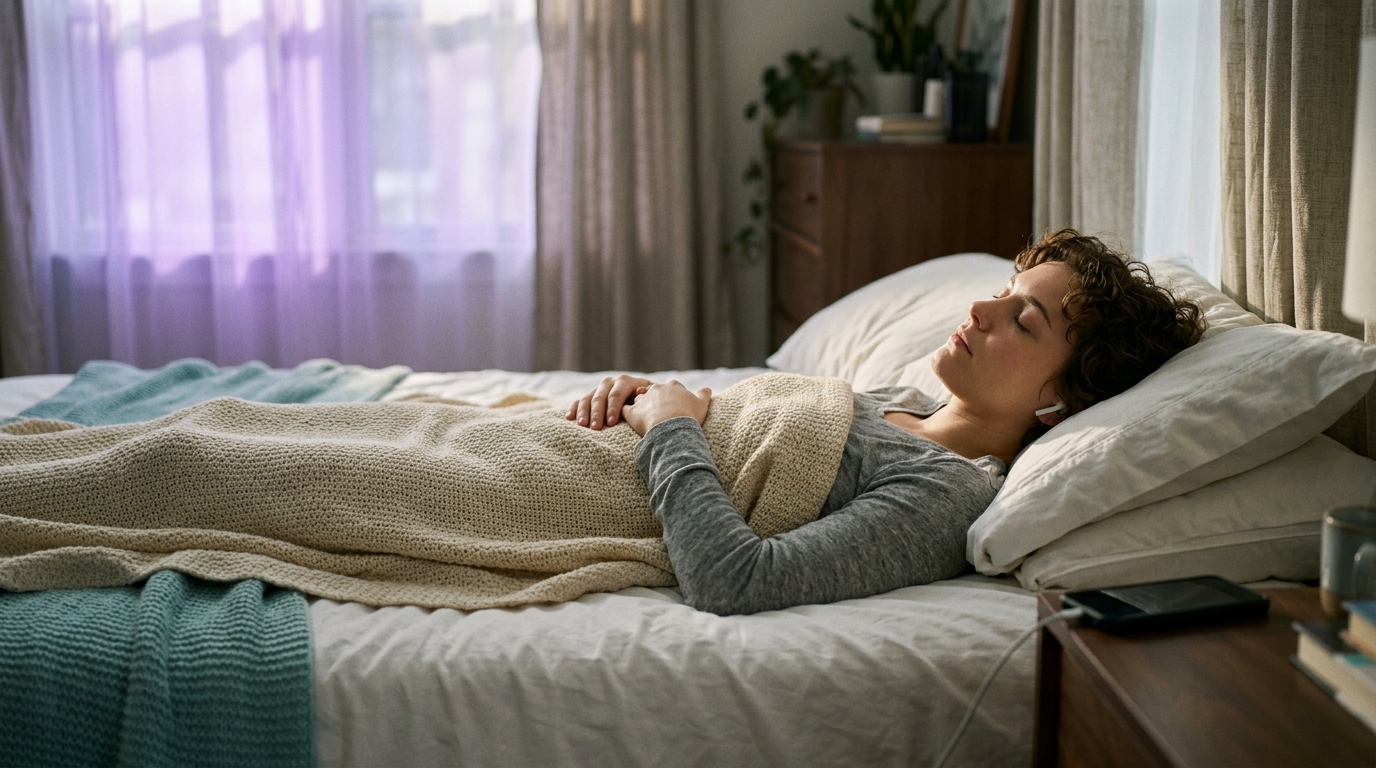
It is 12:40am, tomorrow is loud, and your brain has chosen this exact pillow to draft speeches, replay conversations, and remember the thing from 2016. Everyone searching how to fall asleep fast knows the real enemy is rarely the body. The honest starting line: healthy sleepers usually take 15 to 20 minutes to drift off, so instant sleep is a myth worth retiring. What follows is what actually shortens the wait, according to sleep research: expectation reset, pressure and timing, body temperature, the get out of bed rule, thought displacement techniques, and one five minute writing trick with a measured nine minute payoff.
How fast is falling asleep fast, honestly?
A healthy sleep latency runs about 15 to 20 minutes, according to the Sleep Foundation. Dropping off in under five minutes usually signals sleep deprivation, and regularly waiting past 30 to 45 minutes points at habits, timing, or an insomnia pattern worth addressing. Aim for reliably within twenty, never for instantly.
The expectation matters because pressure is sleep's least favorite audience. Watching the clock and doing arithmetic about tomorrow's meeting manufactures exactly the arousal that delays sleep further, a loop the Sleep Foundation flags when it recommends turning clocks away. Falling asleep is like being handed something by a cat: it happens when you stop reaching. Every technique below works by removing obstacles, never by forcing the event.
What sets up fast sleep before you reach the bed?
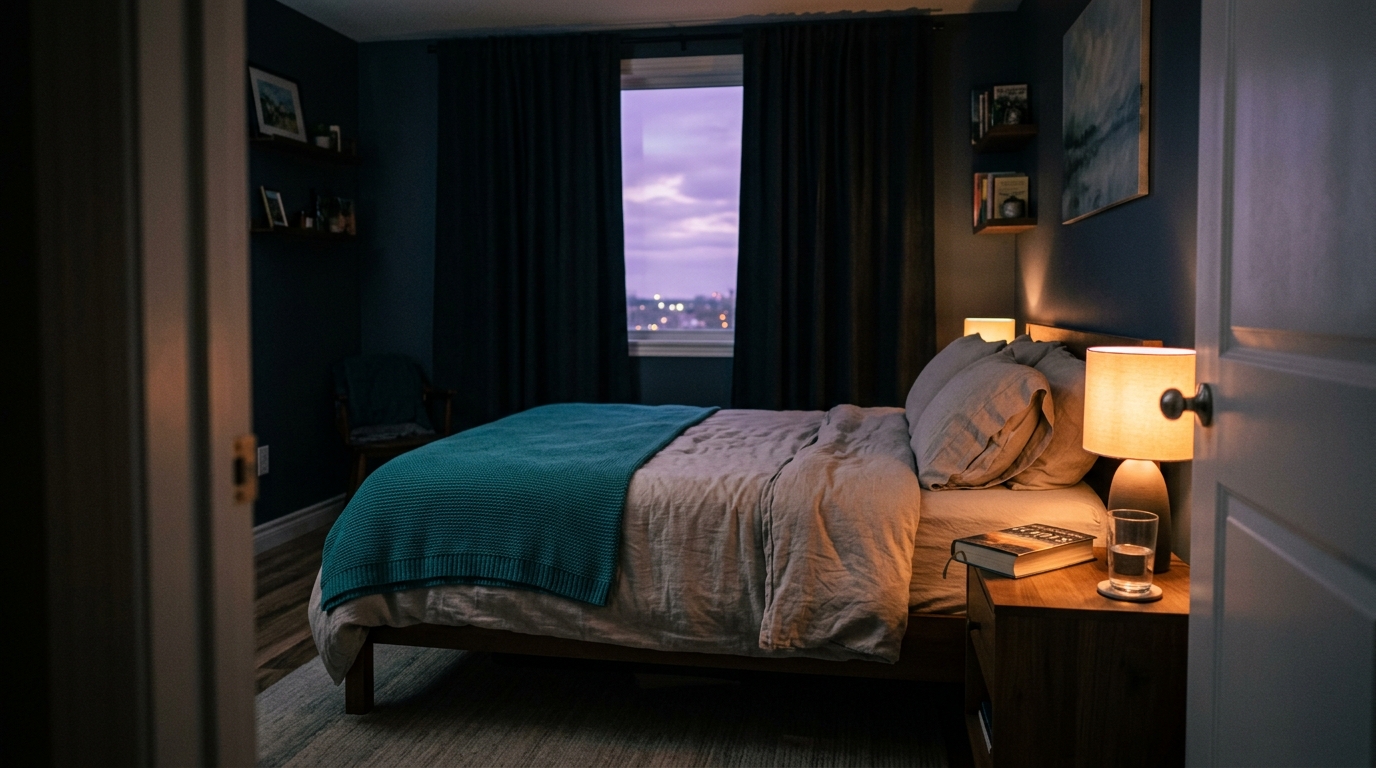
Three levers do most of the work: enough sleep pressure, built by a consistent wake time and a day with real light and movement; caffeine that ends by early afternoon; and a body allowed to cool, helped by a warm shower or bath an hour or two before bed and a bedroom kept cool.
Sleep pressure is the honest physics underneath every trick: wake at the same time daily and skip the late afternoon nap, and the evening arrives with genuine drowsiness in stock. Caffeine's quiet tax is well documented, disturbing sleep even when consumed six hours before bed, so give it a 2pm curfew during a reset. The temperature move sounds backwards and works forwards: warm water opens the blood vessels of your hands and feet, which then dump heat as you dry off, and the falling core temperature is one of the body's own signals for sleep onset. The Sleep Foundation's cool, dark, quiet room guidance, roughly 60 to 67 degrees Fahrenheit or 16 to 19 Celsius, catches the same wave from the other side. Alcohol deserves its honest sentence here: it sedates the falling asleep and fragments the staying asleep, taking more than it gives.
What should you do when sleep will not come?
Follow stimulus control, the rule behavioral sleep medicine trusts most: after roughly twenty minutes of clear wakefulness, leave the bed, sit somewhere dim with something calm and boring, and return only when drowsy. It feels counterproductive and it retrains the core association: bed means sleep, never struggle.
The logic is conditioning. A brain that spends ninety frustrated minutes in bed nightly learns that mattresses are where wrestling happens, and it starts bracing at the pillow. Leaving on schedule breaks the lesson, and most people who hold the rule for two consistent weeks watch the latency shrink. The dim rules apply during the exile: low light, no feeds, no productivity, a paper book or quiet audio, and back to bed at the first genuine yawn. Repeat as needed without scorekeeping, because the rule is training the bed, never punishing you.
Which techniques quiet a racing mind at lights out?
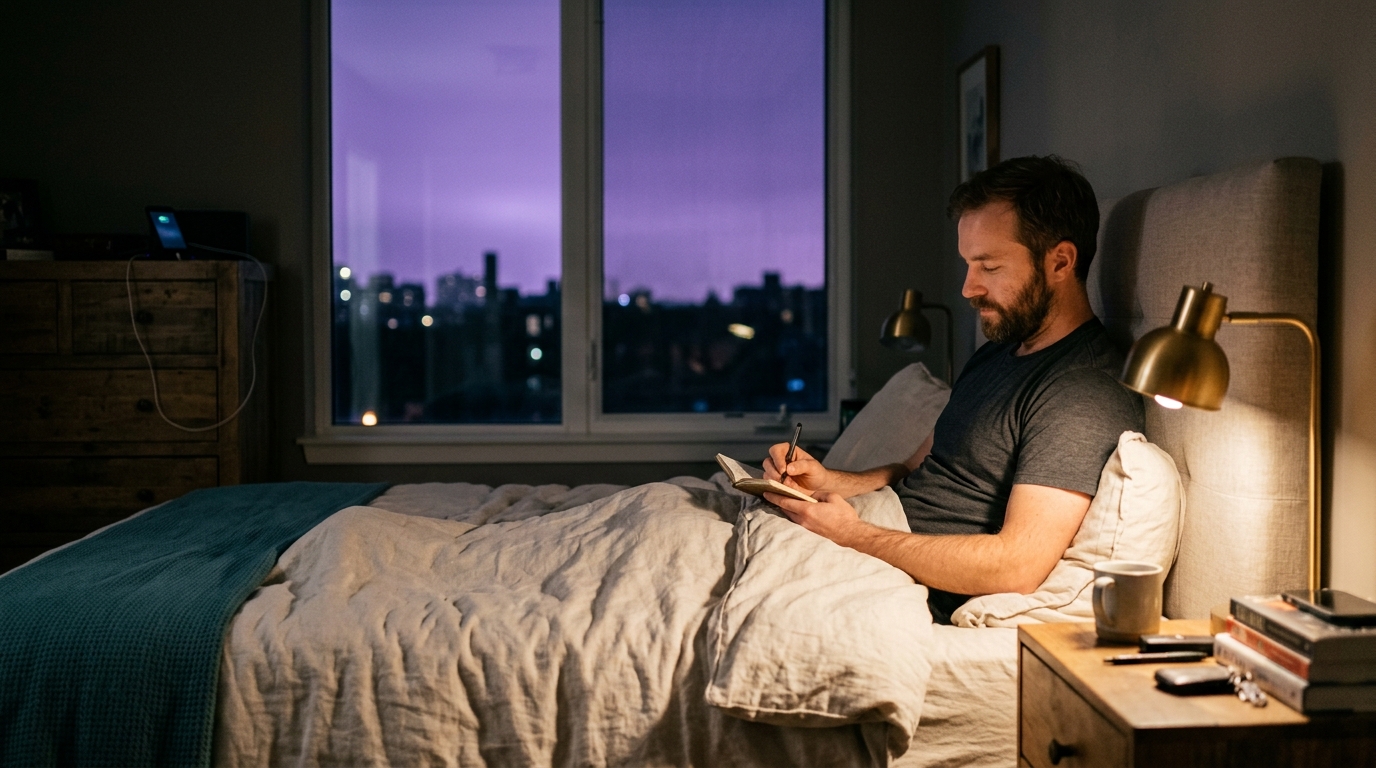
Three carry the best evidence and testimonies: the five minute to-do list, written before bed, which cut sleep onset by about nine minutes in a lab study; cognitive shuffling, walking through random unrelated images until the mind loses the plot; and slow breathing patterns like 4-7-8 that lengthen the exhale and settle the body underneath the thoughts.
The writing trick has the cleanest receipt: in a polysomnography study by Scullin and colleagues, people who spent five minutes writing tomorrow's to-do list fell asleep in about 16 minutes versus 25 for those who journaled about completed tasks, and the more specific the list, the faster the drift. Externalized plans stop requiring a rehearsal service. Cognitive shuffling works the adjacent angle: pick a neutral word like cabin, then picture unrelated items for each letter, cat, apple, boat, and let the images stay dull; the sequence occupies the narrating mind with material too random to build worry from. And the breath patterns, 4-7-8 or simply exhales twice the inhales, run the same parasympathetic lever every regulation guide on this blog leans on. Racing thoughts that persist nightly get their own full guide next in this series, and a mind that races most nights alongside low mood or anxiety deserves a clinician's conversation.
What quietly sabotages sleep onset?
The usual suspects: the doomscroll that files threat reports at 11pm, the clock glowing with countdown math, the nightcap that trades onset for fragmentation, the heavy late meal, the 6pm espresso still on duty, and the bedroom that doubles as an office, wiring the pillow to work.
Each has a cheap counter. Feeds get a curfew at the bedroom door, and the phone charges across the room, which also retires the clock checking. Alcohol moves earlier and lighter on nights that matter. Dinner lands earlier or lighter. The workspace leaves the bedroom, or when floor plans refuse, work at least leaves the bed itself. None of these are moral positions; they are association hygiene, teaching a very literal organ what this room is for.
Does the military method actually work?
The famous two minute method is a stacked relaxation routine: soften the face, drop the shoulders, exhale, relax down the body, then hold a peaceful image or repeat do not think. The stack is legitimate technique; the two minute promise is folklore. Expect a useful tool, never a stopwatch guarantee.
Its ingredients are progressive muscle release, breath, and visualization, all respectable, which is why the routine helps many people once the viral expectations are removed. Treat every branded method the same way: keep the relaxation, drop the deadline. Sleep science's actual measured wins live in the unglamorous levers above, and the methods are simply pleasant ways to pass the fifteen honest minutes.
What does a fast sleep evening look like end to end?
Caffeine ended by early afternoon. A warm shower around ninety minutes out. Screens handed a curfew at the bedroom door, room cool and dark. Five minutes writing tomorrow's list. Lights out inside your consistent window, breath slowed, shuffle if the mind chatters, and out of bed calmly if twenty minutes pass. Repeat nightly until it bores you into sleep.
Mental longevity is the lifelong capacity to think clearly, regulate your inner state, adapt to change, keep learning, maintain meaningful connections, and live intentionally. Restoration is where that capacity gets rebuilt nightly, which is why this series treats falling asleep as a trainable skill and never as luck. Two honest weeks of the routine above settles what any single desperate night cannot, and the consistency, as always, is the active ingredient.
Two audiences deserve tailored footnotes. Shift workers and new parents: your obstacle is schedule, so anchor whatever regularity is possible, guard naps strategically, and treat blackout curtains and eye masks as equipment. Anxious sleepers: run the routine and treat racing thoughts as their own project, because a mind that will not stand down usually needs its worries triaged on paper hours before bed, where the sorting belongs.
Frequently asked questions
How can I fall asleep in five minutes?
Reliably, you cannot, and chasing that number breeds the pressure that delays sleep. Healthy latency runs 15 to 20 minutes. The realistic project is trimming a 45 minute struggle toward twenty calm ones, which the levers here achieve for most people within a few consistent weeks.
Should I stay in bed and rest if sleep will not come?
Quiet rest has value, and past roughly twenty awake minutes the bed starts learning the wrong lesson. Behavioral sleep medicine's answer is the calm exile: dim room, boring material, return at drowsiness. Protecting the bed-sleep association pays off nightly for years.
Do sleep apps and trackers help?
Wind down audio and breathing guides help many people; overnight scoring helps fewer, and latency scores can feed the exact performance anxiety that delays sleep. If the data relaxes you, keep it. If bedtime acquired a scoreboard, retire the tracker for two weeks and watch what happens.
When does trouble falling asleep deserve a professional?
When most nights take past 30 to 45 minutes for over a month despite honest routine changes, when worry about sleep dominates evenings, or when daytime function sags. CBT-I, the structured behavioral treatment, is the recognized first line for chronic insomnia, and clinicians can also catch the medical mimics.
Nights improve faster when the experiment has company. People in our community trade honest notes on wind downs, list writing, and the boring routines that finally worked, with zero judgment for the 2am regulars. When you are ready, join us in the HumanOS Community. Bring your longest night; someone there has slept through worse.