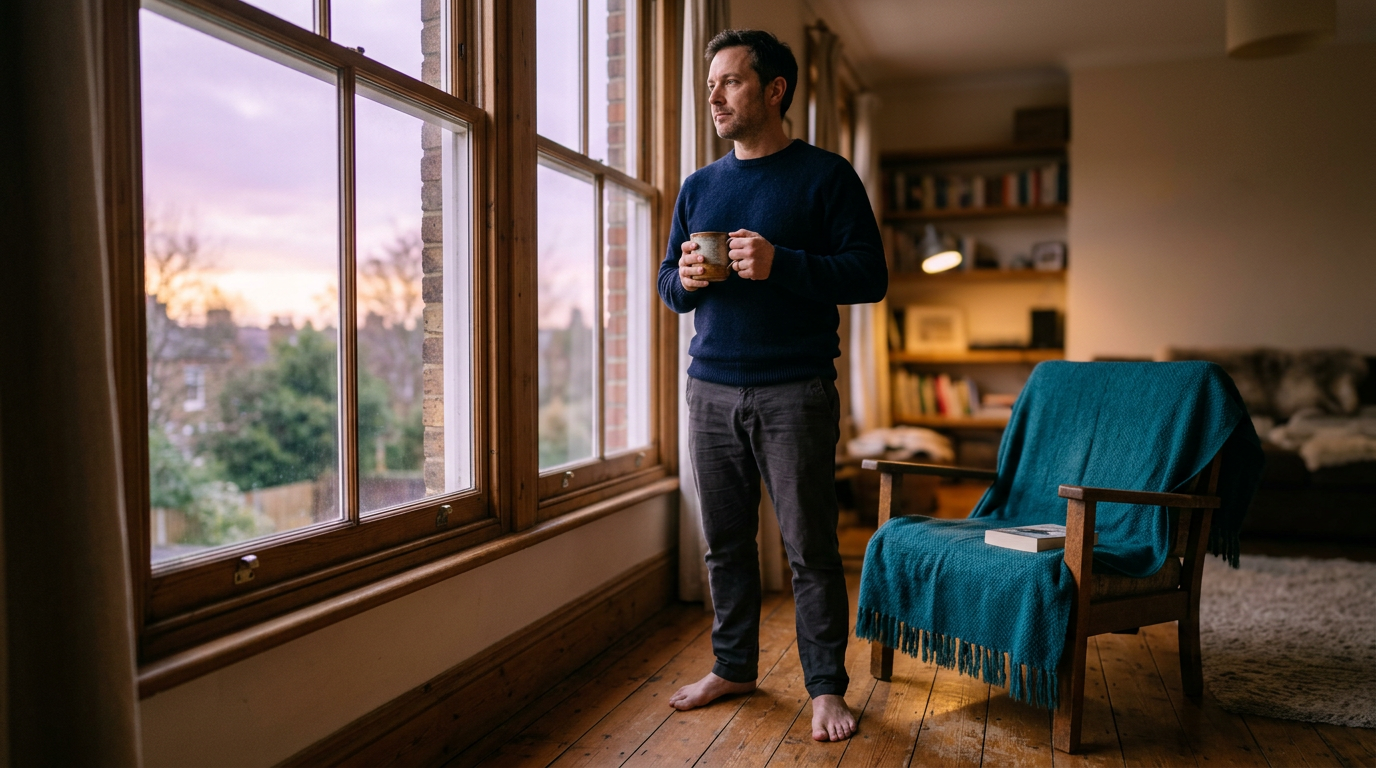
You closed the laptop hours ago and your shoulders have yet to receive the memo. Stress is famously mental and stubbornly physical: the clenched jaw, the shortened breath, the back that files complaints in the evening. Somatic exercises approach the problem from the body's side, using movement, posture, and felt sensation to shift your inner state, on the wager that a day's worth of bracing deserves more than a change of thoughts. This guide explains what somatic work is, why it plausibly helps, seven exercises you can run tonight, an honest reading of the evidence, and the moments when a body deserves professional company instead of a checklist.
What are somatic exercises?
Somatic exercises are body first practices that use slow movement, deliberate muscle release, touch, and attention to physical sensation to change your state. Soma simply means body. Where talk approaches stress through the story, somatic work approaches it through the shoulders, jaw, breath, and posture carrying it.
The family is broad and mostly old: progressive muscle relaxation from 1920s medicine, grounding practices from contemplative traditions, gentle shaking from practices as different as qigong and post race routines, and body scanning straight out of modern mindfulness programs. What unites them is direction of travel. You are addressing the state through the body first, and letting the mind follow, which for many people, especially the ones exhausted by their own thoughts, is precisely the appeal.
Why would moving the body change the mind?
Because the traffic runs both ways. Your brain reads muscle tension, posture, and breath as evidence about the situation, so a braced body keeps voting for emergency long after the meeting ended. Releasing the physical pattern removes the evidence, and the stress physiology described by Harvard Health gets room to stand down.
The mechanics are respectable. Interoception, your sense of the body's internal state, feeds directly into emotion, so changing the signal changes the input. The stress response mobilizes muscles for action that modern stressors rarely require, leaving activation with nowhere to go; movement gives it somewhere. And attention placed on sensation is attention removed from rumination, which is its own small mercy. The popular framing says the body needs to complete the stress cycle, and it is a compelling model holding more clinical poetry than clinical trials, so hold the story lightly and let the low risk practices speak for themselves.
Which seven exercises should you actually try?
Start with these: the slow body scan, progressive muscle release, gentle standing shakes, grounding through the feet, the stretch and exhale pairing, self applied soothing touch, and slow orienting. Each takes two to five minutes, needs no equipment, and can be done in work clothes in a living room.
The body scan. Lie or sit, and walk attention slowly from scalp to feet, noticing without fixing. Three minutes. Most people discover tension they had no idea they were funding.
Progressive muscle release. Tense one muscle group hard for five seconds, then release completely and feel the difference for ten. Fists, shoulders, jaw, belly, legs. The contrast teaches your body what release actually feels like, which braced bodies genuinely forget.
Standing shakes. Stand, soften knees, and bounce or shake gently for one to two minutes, arms loose. Undignified and effective, like a dog after a bath or a runner after a race. Stop if anything hurts, and keep it gentle.
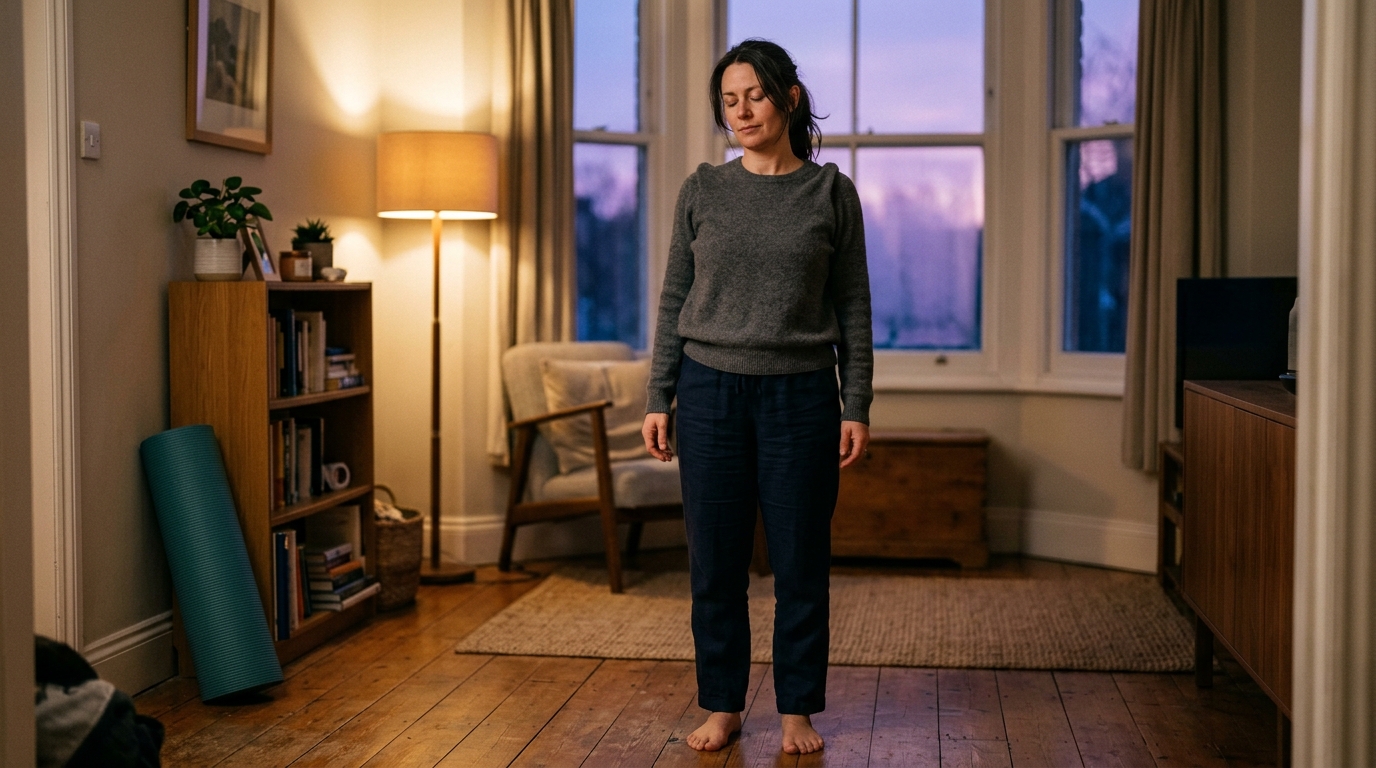
Grounding through the feet. Stand or sit, press both feet honestly into the floor, and feel the ground push back for five slow breaths. Weight is information, and it reads as safety.
Stretch plus exhale. Any comfortable stretch, timed so the deepening rides the exhale. The long out breath engages the calming brake while the muscle lengthens, two releases for the price of one.
Soothing touch. A hand on the chest or both hands wrapping the upper arms, with slow breath. Touch signals safety to a mammal nervous system, including your own touch, which is always in supply.
Slow orienting. Turn your head unhurriedly and let your eyes visit the room, naming nothing, for thirty seconds. You are letting the oldest part of the system confirm the absence of tigers, which it appreciates more than reasoning ever manages.
Timing tips from people who practice: the shakes work best in transition moments, arriving home, post difficult call, before the evening begins, because they mark an ending the calendar refused to provide. The scan and muscle release live best at day's edge, where they double as a runway into sleep. And every exercise lands better after the exhale slows first, which takes one physiological sigh and costs nothing.
How do you build a two week somatic practice?
Pick two exercises, one for daytime spikes and one for evenings. Anchor the daytime pick to a recurring trigger and the evening pick to a fixed slot, five minutes after dinner or before bed. Run fourteen days, note one line nightly about tension and sleep, then keep what earned its place.
A sensible pairing for desk workers: grounding through the feet at every laptop close, and progressive muscle release before bed. For the wired and tired: standing shakes when you get home, body scan at lights out. The nightly line matters more than it looks, because somatic change is gradual and memory flatters neither tension nor progress; two weeks of notes tells the truth. Mental longevity is the lifelong capacity to think clearly, regulate your inner state, adapt to change, keep learning, maintain meaningful connections, and live intentionally. This is Regulation practiced from the body's side, and it counts fully.
What does the evidence honestly say?
Component by component, respectable: progressive muscle relaxation carries decades of use in stress and sleep care, movement's mental health evidence is strong, and mind body practice research, summarized by NCCIH, shows modest real benefits. Somatic exercise routines as branded packages have thin direct trial evidence, and the risk of gentle versions is low.
That split deserves plain language because the internet sells somatic work with cinematic promises. The honest position: the ingredients are established, the specific recipes are mostly tradition plus plausibility, the cost is minutes, and the sensible test is personal, run gently for two weeks. The NCCIH's summary of meditation and mindfulness research is a fair proxy for the neighborhood: real, modest, worth having, and never miraculous. Anything promising trauma resolution in five viral moves has left the evidence entirely and deserves the skepticism you brought to supplement aisles.
When does the body need more than exercises?
When tension travels with panic, flashbacks, or a past that keeps arriving in the present, the right room is a credentialed trauma therapist, where body based approaches exist in clinical form. Persistent pain, numbness, or symptoms deserve a clinician first, because bodies also speak in medical sentences.
Trauma healing through the body is a real clinical field, with approaches like somatic experiencing practiced by trained professionals at a pace that preserves choice and ground; the self help versions of this article are for ordinary stress, and they make poor substitutes for that care. Equally practical: jaw pain, chest tightness, dizziness, and chronic tension all have medical differentials, and the least somatic thing you can do is breathe through a symptom that wanted a doctor. When in doubt, the appointment comes first and the exercises after clearance, which is exactly the order a well regulated adult books them.
A note for the skeptics who made it this far, because somatic language can run flowery: you are allowed to strip every metaphor off these practices and keep them anyway. Tense and release is applied physiology. Slow orienting is letting your visual system update its threat file. Feet on the floor is proprioception doing customer service. The poetry is optional, and the shoulders drop either way.
Frequently asked questions
How are somatic exercises different from stretching?
Stretching aims at muscles and range; somatic work aims at state, using attention and sensation as active ingredients. The same hamstring stretch becomes somatic when the exhale, the noticing, and the slowing carry the work. Intent is the difference, which is why the practices look ordinary and land differently.
Is shaking or TRE safe to do alone?
The gentle standing shake in this article is safe for most people. Formal tremor practices like TRE can stir strong responses in people carrying trauma, which is why those are best learned with a qualified practitioner. Gentle, short, and stop when it stops feeling good covers the solo version.
How fast should results arrive?
In the moment, most people feel some release within minutes, especially from the contrast of progressive muscle work. Baseline change, less evening tension, easier sleep, shows across two to four consistent weeks. If nothing shifts by then, trade exercises; bodies have preferences, and the catalog is long.
Should somatic work be daily or as needed?
Both jobs exist: as needed for spikes, daily for retraining the baseline. The two week protocol above runs both lanes at once with five to ten minutes a day. Daily anchoring does the deeper work, and the as needed uses keep proving the tools are real, which sustains the habit.
Bodies calm faster in calm company, which is the oldest somatic finding there is. People in our community swap honest notes on shakes, scans, and the two week experiments that stuck, tension and all. When you are ready, join us in the HumanOS Community. Bring your shoulders; we know they had a week.