Sleep Dread: When You Fear Bedtime Itself
Sleep dread is the fear of bedtime itself — anxiety about the anxiety of trying to sleep. Learn why it develops and evidence-based strategies to overcome it.
# Sleep Dread: When You Fear Bedtime Itself
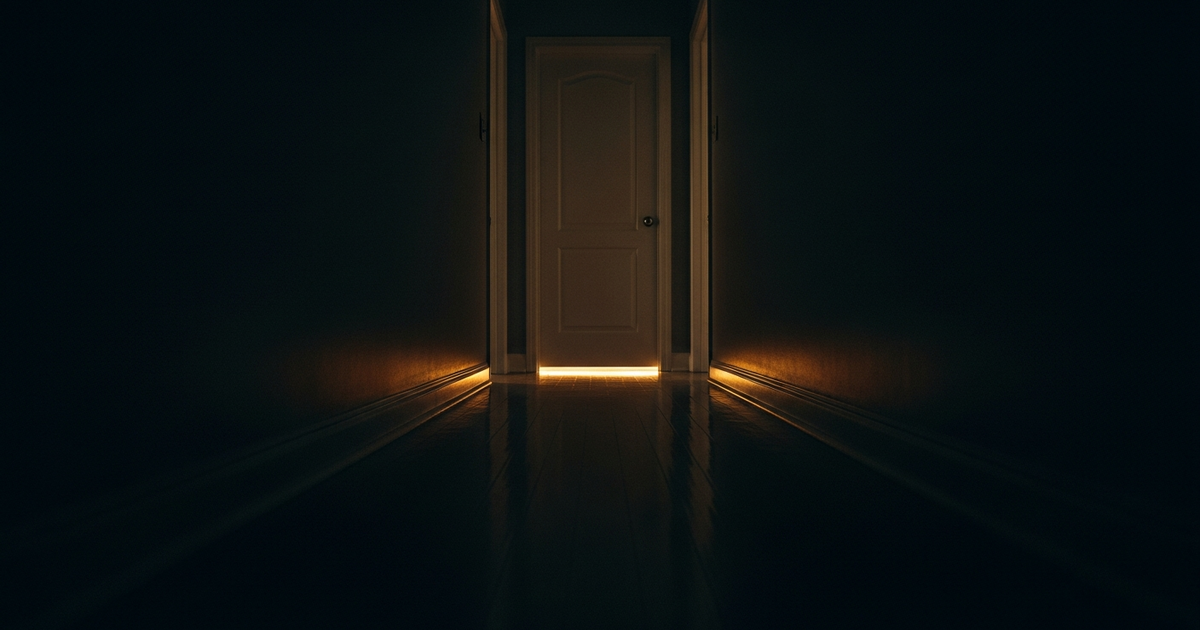
There's a moment, somewhere between dinner and darkness, when it starts. Not a thought exactly — more like a shadow. A tightening in your chest. A low-frequency awareness that the hours are counting down to the part of the day you dread most.
Not a meeting. Not a confrontation. Bedtime.
Sleep dread is sleep anxiety at its most entrenched — the fear of bedtime itself, driven not by what keeps you awake but by the anticipated suffering of lying in the dark, unable to sleep, knowing how bad tomorrow will feel.
If you've reached the point where you stay up too late on purpose, fall asleep on the couch to avoid your bed, or feel genuine panic as the evening hours wind down — you're experiencing sleep dread. And you need to know: it's one of the most treatable conditions in sleep medicine.
How Sleep Dread Develops
Sleep dread doesn't appear overnight. It's the end stage of a progressive cycle:
Phase 1: The Initial Trigger
A period of poor sleep — stress, illness, jet lag, a new baby, anything that disrupts sleep for several consecutive nights. This is normal and temporary.
Phase 2: Performance Anxiety
You start "trying" to sleep. Monitoring yourself. Calculating hours. This creates the effort-arousal paradox: the harder you try, the more awake you become.
Phase 3: Conditioned Insomnia
Your brain associates the bed with wakefulness and frustration. The bed becomes a trigger for anxiety, not a cue for sleep.
Phase 4: Anticipatory Anxiety
The anxiety moves earlier in the evening. You start dreading bedtime hours before it arrives. The thought "I won't be able to sleep tonight" generates the cortisol and sympathetic activation that guarantees the prediction comes true. It's a self-fulfilling prophecy.
Phase 5: Sleep Dread
The meta-anxiety solidifies. You're no longer anxious about sleep — you're anxious about the anxiety. You know the panic is coming. You know the hours of lying awake are coming. The anticipated suffering becomes worse than the actual sleep loss.
At this stage, many people develop avoidance behaviors:
- Staying up until 2-3 AM, exhausted, to minimize time spent awake in bed
- Falling asleep on the couch (where no conditioned association exists)
- Using alcohol as a sedative (which worsens sleep architecture)
- Avoiding sleep-related conversations or articles
- Building elaborate pre-sleep rituals that become compulsive rather than calming
The Neuroscience of Sleep Dread
Sleep dread involves a specific neural circuit: the anticipatory anxiety pathway.
Your amygdala doesn't just respond to current threats — it responds to anticipated threats based on past experience. After enough nights of suffering, your amygdala has learned: "Bedtime = suffering." It begins generating the threat response preemptively, sometimes hours in advance.
This pre-emptive response includes:
- Cortisol elevation beginning in the early evening
- Increasing sympathetic nervous system tone as bedtime approaches
- Rumination about past bad nights ("Remember last Tuesday?")
- Fortune-telling ("Tonight will be just as bad")
- Physical tension accumulating throughout the evening
By the time you actually get into bed, you're at peak arousal — exactly the opposite of what sleep requires. The amygdala's "protection" has created the very outcome it was trying to prevent.
Breaking Free: Evidence-Based Strategies
1. Decouple Bed from Suffering (Stimulus Control)
The foundation of recovery: break the bed-anxiety association.
Rules:
- Go to bed only when genuinely drowsy (not at a scheduled time)
- If you're not asleep within 15-20 minutes, get up
- Go to a different room. Do something calm in dim light (reading, gentle stretching)
- Return to bed only when drowsy again
- Repeat as many times as needed
- Wake at the same time every morning regardless
The first week will be hard. You may spend more time out of bed than in it. But each time you return to bed drowsy and fall asleep quickly, you're building a new association: bed = sleep. After 2-3 weeks, the conditioned dread begins to dissolve.
2. Replace the Bed's Emotional Signature
Your bed currently carries the emotional weight of months or years of frustration. You need to create new positive (or at least neutral) associations.
Sound association: Start playing a delta frequency track every time you get into bed — but only when you're already drowsy. Over time, the specific sound becomes a conditioned sleep cue. Your brain learns: "This sound = I fall asleep quickly." The positive association gradually overwrites the negative one.
Comfort ritual: Before getting into bed, do one pleasant sensory thing: apply a specific hand cream, spray a specific pillow mist, or put on specific sleep clothes. These become additional conditioned cues that carry positive associations.
3. Address the Anticipatory Anxiety Directly
The evening dread often responds to a technique from ACT (Acceptance and Commitment Therapy):
Name and externalize the dread: "The dread is here. I notice it in my chest. It's doing its thing." Don't fight it. Don't try to make it go away. Observe it like weather — "There's dread today, the way there's sometimes cloud."
Separate prediction from reality: "My brain is predicting a bad night. Predictions aren't facts. Sometimes it predicts badly and I sleep fine. I'll find out what tonight actually brings."
Drop the rope: Imagine the anxiety as a tug-of-war. You've been pulling against it every night. Tonight, drop the rope. Don't fight the dread. Let it exist in your body without engaging with it. Without resistance, the anxiety often diminishes — because the resistance was generating half the activation.
4. Compressed Sleep Window (Sleep Restriction)
This is the most powerful — and most uncomfortable — behavioral intervention for entrenched sleep dread. It's a core component of CBT-I.
How it works:
- Calculate your average actual sleep time (e.g., 5 hours, even though you spend 8 hours in bed)
- Restrict your time in bed to match actual sleep time (bed at 1 AM, up at 6 AM)
- No napping. No lying down during the day.
- After 5 days of sleeping 85%+ of time in bed, extend the window by 15 minutes
- Repeat until reaching your target sleep duration
Why it works: Sleep restriction builds sleep pressure to overwhelming levels. When you finally go to bed at 1 AM after no napping, your brain has no choice — the sleep drive overpowers the anxiety. You fall asleep fast. This generates a powerful corrective experience: "I CAN fall asleep. The dread was lying."
After several nights of quick sleep onset, the conditioned fear begins to extinguish. The new experience (bed = quick sleep) replaces the old experience (bed = hours of suffering).
Important: Sleep restriction should ideally be done with professional guidance (CBT-I therapist), especially if you have bipolar disorder, epilepsy, or operate heavy machinery.
5. Professional Support: CBT-I
If sleep dread has been present for more than 3 months, CBT-I is the recommended treatment. It's more effective than sleeping pills for long-term resolution, with no side effects and lasting benefits.
CBT-I typically involves 6-8 sessions covering:
- Sleep education (understanding what's happening neurologically)
- Stimulus control (breaking bed-anxiety association)
- Sleep restriction (building sleep drive)
- Cognitive restructuring (addressing catastrophic thoughts about sleep)
- Relaxation training (breathing techniques, body scan)
Available in-person, via telehealth, and through validated digital programs. Ask your physician for a referral or search the Society of Behavioral Sleep Medicine directory.
The Recovery Timeline
Week 1-2: The hardest period. Stimulus control and sleep restriction feel counterintuitive and exhausting. Trust the process.
Week 3-4: Quick sleep onset becomes more consistent. The anticipatory dread begins to soften. You might notice that some evenings, the dread simply... doesn't appear.
Week 5-6: New associations are forming. The bed feels different — less threatening. Sound healing tracks and bedtime rituals feel comforting rather than desperate.
Month 2-3: The dread has largely dissolved. Bad nights still happen occasionally (they do for everyone), but they don't trigger the spiral. You know you can handle a bad night because you've proven it to yourself repeatedly.
You're Not Afraid of Sleep
Here's the truth that sleep dread hides: you're not afraid of sleep. You're afraid of the experience of trying to sleep and failing. The suffering isn't in the sleeping or the not-sleeping — it's in the struggle between the two.
Stop struggling. Let go of the demand that tonight must be a good night. Let the bed be just a bed. Let the dark be just dark. Let whatever happens, happen.
Sleep dread is a learned response. And anything learned can be unlearned — one night at a time.
---
This is part of our guide on [Sleep Anxiety](/blog/sleep-anxiety). See also: [Breaking the Insomnia-Anxiety Cycle](/blog/insomnia-anxiety-cycle) and [Your Nervous System and Sleep](/blog/nervous-system-reset-for-sleep).
Start Sleeping Better Tonight
Join 14,500+ people who've transformed their sleep with healing frequencies, delta wave entrainment, and our progressive 21-night program.