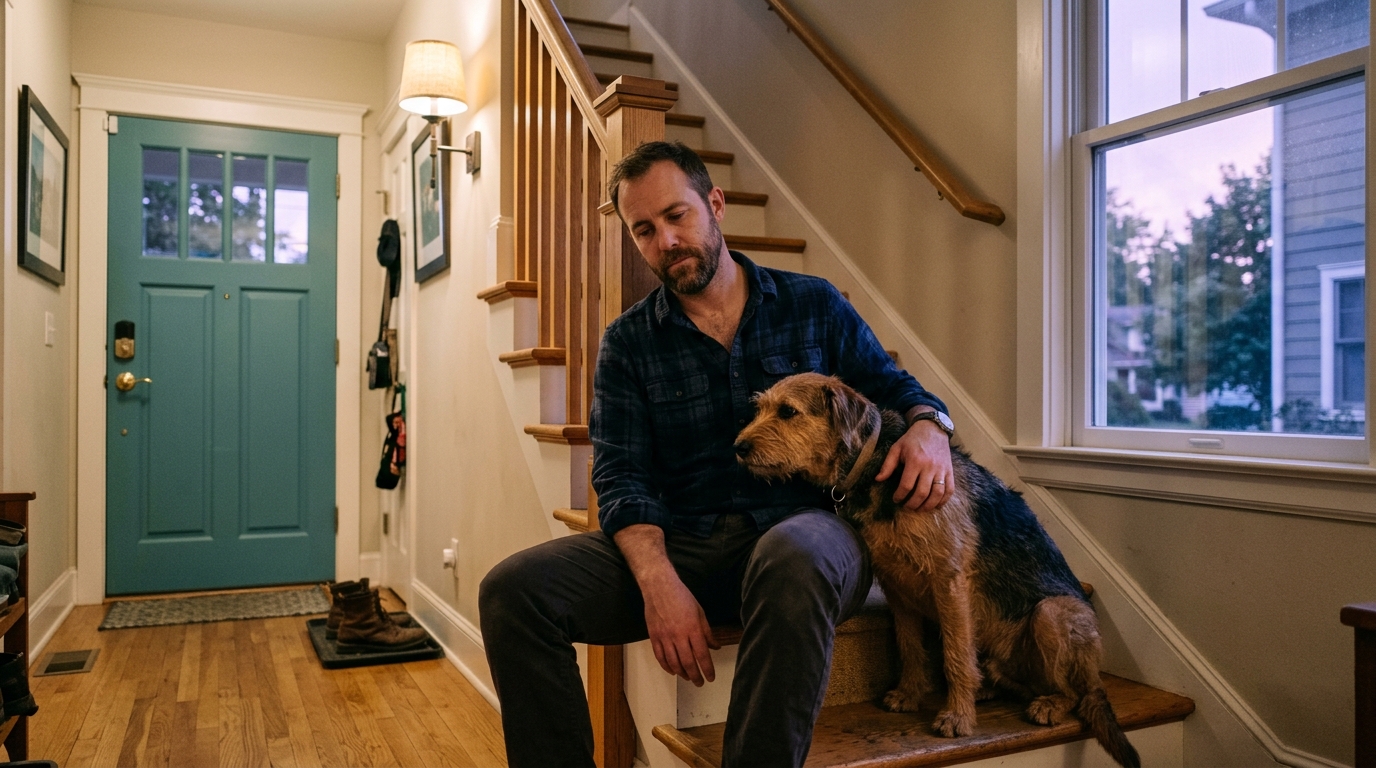
Somewhere along the way most of us absorbed a quiet lie: that how we respond to feelings is a personality setting, fixed somewhere in childhood, and the reactive stay reactive while the calm stay calm. Emotional regulation research says otherwise. Responding to your own inner weather is a skill, built from learnable moves, and adults improve at it measurably at every age. This guide covers what emotional regulation actually is, the handful of moves that carry most of the evidence, why suppression backfires, how the skill grows in real weeks, and the moments when feelings deserve professional company.
What is emotional regulation?
Emotional regulation is your ability to influence which emotions you have, when you have them, and how you experience and express them. It includes turning intensity down, and equally turning toward feelings worth having. Regulation is influence, never elimination: the goal is emotions that inform you without driving.
Psychologists map the skill along a timeline, a framework developed most fully by researcher James Gross: you can shape emotions early, by choosing and modifying situations, in the middle, by steering attention and reframing meaning, or late, by managing the response itself. Early and middle moves are cheap and effective. Late moves, the white knuckle ones, cost the most and work the least, which single handedly explains most of what follows.
Which regulation moves carry the strongest evidence?
Four earn permanent places: naming the feeling precisely, reframing the situation's meaning, steadying the body first through breath and movement, and choosing situations deliberately. Suppression, the fifth famous move, reliably tests worst: pushing feelings down raises the body's arousal and returns the feeling with interest.
Name it precisely. Affect labeling, putting a feeling into one accurate word, measurably lowers its grip; brain imaging work associates the act with calmer emotional circuitry. Precision does the work: disappointed lands differently than angry, and both beat bad.
Reframe the meaning. Cognitive reappraisal, finding a different true reading of the same event, is the most studied move in the field with hundreds of trials behind its benefits for mood and stress. The interview becomes information gathering, the criticism becomes data with a delivery problem. The frame must be honest to hold.
Body first. A flooded system reasons poorly, which the stress physiology in Harvard Health Publishing's explainer makes concrete: the accelerator is pressed, and thinking narrows. Long exhales, a walk, cold water, ninety seconds of settling buys every other move its working conditions.
Choose situations. The most underrated move happens before feelings start: the meeting scheduled when you are fed, the news read once daily instead of hourly, the third drink declined, the conversation had before resentment compounds. Adults regulate best upstream.
Precision deserves one more beat, because vocabulary turns out to be equipment. People with more granular emotional vocabularies, who can tell resentment from disappointment from depletion, regulate more effectively, plausibly because an accurately named problem points at its own solution. Depleted asks for rest, resentment asks for a boundary, disappointment asks for a recalibrated expectation. Bad asks for nothing and gets it. Growing the vocabulary is legitimate training, and it costs one honest word a day.
Why does suppressing feelings backfire?
Suppression hides the expression while the feeling keeps running, so the body stays aroused, memory and connection suffer, and the emotion returns later with interest. Decades of studies rank it among the costliest strategies. The skillful alternative is expression with steering: feel it, name it, choose the response.
The finding deserves gentleness, because everyone suppresses sometimes, and some rooms require it. The mature reading: suppression is an expensive emergency tool for unsafe moments, never a lifestyle. People who rely on it chronically report worse mood, thinner relationships, and more exhaustion, which tracks the mechanics: holding a beach ball underwater is work, full time. Regulation research keeps arriving at the same door: feelings flow through better when they are allowed to exist and steered, which costs less than forbidding them and pays better than obeying them.
How does the skill actually grow?
Through small repetitions at real moments: one named feeling a day, one honest reframe a week, one body first pause before a hard conversation. Weeks of practice thicken into reflex, and the aging research adds encouragement: emotional steadiness tends to improve across adult decades, so the curriculum has the wind at its back.
A two week starter that people in our community actually keep: each evening, write one line naming the day's strongest feeling with an accurate word. When a spike hits, run one physiological sigh before responding, then ask what else is true about the situation, which is reappraisal wearing work clothes. Once a week, review which situations manufactured the worst weather and adjust one upstream choice. Mental longevity is the lifelong capacity to think clearly, regulate your inner state, adapt to change, keep learning, maintain meaningful connections, and live intentionally. This is the regulate your inner state clause, practiced at kitchen table scale, and mindfulness training, whose modest real benefits the NCCIH summarizes honestly, strengthens the noticing that every move above depends on.
One caution keeps the practice honest: reappraisal serves you only while the new frame is true. Reframing a colleague's cruelty as their bad day, week after week, stops being regulation and starts being denial with better posture. The skill includes noticing when the situation itself needs changing, which is the upstream move wearing its work boots.
What does regulation look like in a hard conversation?
Before: settle the body and decide your one honest goal. During: name your feeling to yourself in one word, breathe out slowly while the other person speaks, and reach for the truest generous reading of what they mean. After: close the loop with movement or a note, so the residue drains instead of composting overnight.
The overlooked half is aftercare. Unfinished emotional business is what returns at 2am, so give conversations endings: the walk around the block, the two line journal entry, the follow up message that says the thing you wished you had said. And when the same conversation keeps producing the same flood, that pattern is information about the relationship or the boundary, which regulation can carry but never replace. Skills manage weather. Some weather is climate, and climates deserve decisions.
Families deserve one practical paragraph, because regulation is caught as much as taught. Children calibrate their systems against the adults nearby, which means your named feelings and visible recoveries are a curriculum running whether or not you meant to teach one. The single most useful family move is narrating repair out loud: I was frustrated earlier, I took a walk, I am back. One sentence, and the household learns that feelings arrive, get handled, and end.
When do feelings deserve professional company?
When low mood or anxiety colors most days for weeks, when anger keeps damaging what you value, when feelings go numb entirely, or when regulation collapses around a past that stays present. These patterns respond to therapy, and evidence based approaches exist for each. Skills practice supports care and substitutes for none of it.
The line worth keeping: this article teaches maintenance for ordinary emotional weather, and clinical weather deserves clinicians. Therapy is regulation training with a professional at the level your situation actually requires, medication questions belong to prescribers, and reaching for either is the skill working, never the skill failing. The strongest regulators in any room are usually the people who got help early and practiced afterward.
Frequently asked questions
Is emotional regulation the same as staying calm?
Calm is one setting; regulation is the whole dial. A well regulated person grieves at funerals, celebrates loudly at good news, and gets appropriately angry at injustice, with the response sized to the moment and steered by values. Permanent calm is usually suppression wearing better branding.
Can adults really improve, or is it set in childhood?
Adults improve measurably: reappraisal and labeling are trainable in weeks, therapy outcomes demonstrate change at every age, and day to day emotional steadiness tends to rise across the adult decades. Childhood wrote the first draft, and drafts are exactly the thing revision exists for.
What is the fastest regulation technique?
Body first: one physiological sigh, a double inhale and a long exhale, settles the system inside a minute, which buys reasoning back online. Naming the feeling comes second and costs five seconds. Everything else in the skill set works better after those two, which is why they lead.
Does venting help?
Brief expression with a person who listens helps; repetitive venting that replays the trigger tends to rehearse the anger instead of releasing it. The dividing line is movement: talk that reaches naming, reframing, or a decision digests the feeling, while loops that circle the injustice feed it.
Feelings regulate faster in rooms that welcome them, which is most of what a good community is. Ours trades honest lines about hard weeks, named feelings included, and keeps the tone kind on the reactive days too. When you are ready, join us in the HumanOS Community. Bring your weather; all of it is welcome.