Breathwork for Sleep: The Complete Guide to Breathing Your Way to Better Rest
Master breathing techniques for sleep. Learn 4-7-8, box breathing, diaphragmatic breathing, and more science-backed methods to fall asleep faster.
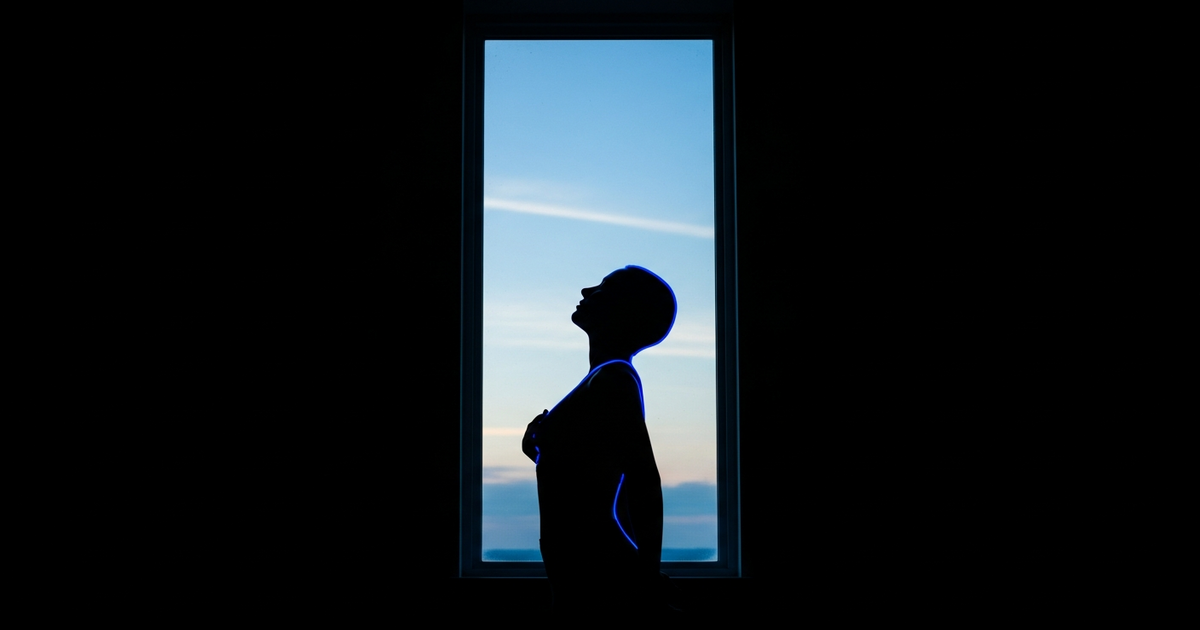
# Breathwork for Sleep: The Complete Guide to Breathing Your Way to Better Rest
You do it roughly 20,000 times a day without thinking about it.
Yet when you can't sleep — when your mind is racing, your body is tense, and the clock keeps ticking toward morning — the one thing that could actually help is the one thing you completely overlook.
Your breath.
Not a supplement. Not a sleep gadget. Not another meditation app subscription. Just the simple, free, always-available act of breathing — done intentionally, done correctly.
Here's the irony: most people struggling with sleep spend hundreds of dollars on solutions while ignoring the most powerful sleep tool they already have. Your breathing pattern directly controls whether your nervous system stays in alert mode or shifts into the calm, restorative state that makes sleep possible.
This guide will show you exactly how that works, teach you five specific breathing techniques for sleep, and help you build a nightly breathwork practice that transforms your relationship with rest.
No equipment needed. No subscriptions. Just you and your breath.
Why Breathing Matters for Sleep
To understand why breathwork for sleep is so effective, you need to understand one thing: your nervous system has two modes.
The Two Modes
Your autonomic nervous system — the part that runs on autopilot — operates through two branches:
The sympathetic nervous system is your accelerator. It triggers the fight-or-flight response that increases heart rate, tenses muscles, sharpens focus, and floods your body with stress hormones. It's designed to keep you alive in dangerous situations.
The parasympathetic nervous system is your brake. It activates rest-and-digest mode — slowing heart rate, relaxing muscles, lowering blood pressure, and signaling to your body that it's safe to sleep.
Here's the problem: modern life keeps most people stuck with their foot on the accelerator.
Screens, deadlines, social media, news cycles, financial stress — your sympathetic nervous system doesn't know the difference between a charging bear and a stressful email at 10 PM. It responds the same way. Heart rate up. Cortisol flowing. Muscles tight.
And then you wonder why you can't fall asleep.
The Breath-Sleep Connection
Your breathing is unique in the autonomic nervous system because it's both automatic and voluntary. You breathe without thinking about it, but you can also choose to change your breathing pattern at any time.
This is the bridge between your conscious mind and your automatic nervous system.
When you deliberately slow your breathing, extend your exhales, and engage your diaphragm, you're sending a direct signal to your parasympathetic nervous system: we're safe. It's time to rest.
This isn't a metaphor. It's physiology.
CO2 Tolerance and Sleep
There's another piece most people miss: carbon dioxide tolerance.
When you're stressed or anxious, you tend to over-breathe — taking shallow, rapid breaths that dump too much CO2 from your blood. This creates a feedback loop: low CO2 triggers more anxiety, which triggers more rapid breathing, which drops CO2 further.
Many people with sleep anxiety are caught in exactly this cycle without realizing it. Their breathing pattern during the day is setting them up for restless nights.
Breathwork for sleep isn't just about the 10 minutes before bed. It's about training your body to breathe properly, building CO2 tolerance, and breaking the cycle of hyperventilation that feeds insomnia and anxiety.
The Science: How Breath Controls Your Nervous System
Let's go deeper into the mechanisms. Understanding the why makes the techniques more effective — because you'll trust the process instead of wondering if you're doing it right.
The Vagus Nerve: Your Calm-Down Switch
The vagus nerve is the longest cranial nerve in your body. It runs from your brainstem down through your neck, chest, and abdomen, connecting your brain to your heart, lungs, gut, and other organs.
It's the primary communication channel for your parasympathetic nervous system. When you stimulate the vagus nerve, you activate the relaxation response.
And one of the most reliable ways to stimulate the vagus nerve is through slow, deep breathing — particularly through extended exhales.
Here's why: when you inhale, your heart rate naturally speeds up slightly. When you exhale, it slows down. This is called respiratory sinus arrhythmia, and it's mediated by the vagus nerve.
By making your exhales longer than your inhales, you're spending more time in the "slow down" phase of each breath cycle. Do this repeatedly, and you shift your entire nervous system toward parasympathetic dominance.
Research published in Frontiers in Human Neuroscience (2018) found that slow breathing techniques at around 6 breaths per minute significantly increased parasympathetic activity and reduced sympathetic arousal. Participants reported feeling calmer, and their physiological markers — heart rate, blood pressure, cortisol — confirmed it.
Heart Rate Variability: The Measure of Resilience
Heart rate variability (HRV) is the variation in time between consecutive heartbeats. Counterintuitively, higher variability is better — it means your nervous system is flexible and responsive rather than stuck in one mode.
People with high HRV tend to:
- Fall asleep faster
- Experience more deep sleep
- Wake up feeling more rested
- Handle stress more effectively during the day
A 2019 study in Psychophysiology showed that just five minutes of slow, paced breathing significantly improved HRV in participants with high baseline anxiety. The effects were measurable within a single session and became stronger with regular practice.
Breathwork for sleep directly improves HRV. And better HRV means better sleep. It's a virtuous cycle.
What the Research Says
The evidence base for breathing techniques for sleep is substantial and growing:
- A 2015 study in the Journal of Alternative and Complementary Medicine found that yogic breathing practices significantly improved sleep quality in elderly participants after just two weeks.
- Research from Harvard Medical School demonstrated that the relaxation response triggered by slow breathing reduces oxygen consumption, heart rate, and blood pressure — creating ideal physiological conditions for sleep onset.
- A 2020 meta-analysis in Sleep Medicine Reviews found that mind-body practices with a breathing component were effective for insomnia, with effect sizes comparable to cognitive behavioral therapy for insomnia (CBT-I).
- A 2022 Stanford study led by Dr. Andrew Huberman found that cyclic physiological sighing (a specific breathing pattern) was more effective at reducing stress than traditional meditation.
This isn't fringe science. Breathing techniques for sleep are one of the most well-supported natural interventions available — and one of the most underused.
Technique #1: 4-7-8 Breathing
The 4-7-8 breathing technique was popularized by Dr. Andrew Weil, who describes it as a "natural tranquilizer for the nervous system." It's one of the most widely recommended sleep breathing exercises, and for good reason.
How It Works
The extended breath hold and long exhale in this technique force your body into parasympathetic mode. The hold phase allows oxygen to fully saturate your blood, while the 8-count exhale stimulates the vagus nerve and slows your heart rate.
Many people report feeling noticeably drowsy after just 3-4 cycles.
Step-by-Step Instructions
- Get comfortable. Lie on your back with one hand on your chest and one on your belly.
- Exhale completely through your mouth, making a whooshing sound.
- Inhale quietly through your nose for 4 counts.
- Hold your breath for 7 counts.
- Exhale slowly through your mouth for 8 counts, making the whooshing sound again.
- Repeat for 4 cycles to start. Work up to 8 cycles over time.
Tips for Beginners
- If the 4-7-8 ratio feels too long, start with 2-3.5-4 and gradually work up.
- The ratio matters more than the exact count. Keep the exhale twice as long as the inhale.
- Don't force it. If you feel lightheaded, return to normal breathing for a minute before trying again.
- Practice during the day first (not just at bedtime) so the technique becomes familiar.
Best For
- People who need a simple, structured technique
- Racing thoughts at bedtime — the counting gives your mind something to focus on
- General relaxation and stress reduction
👉 Deep dive: The Complete Guide to 4-7-8 Breathing for Sleep
Technique #2: Box Breathing
Box breathing (also called square breathing or four-square breathing) is used by Navy SEALs, first responders, and elite athletes to manage stress under pressure. If it can calm someone in a combat zone, it can calm you in your bedroom.
How It Works
Box breathing creates a perfectly balanced breathing pattern — equal inhale, hold, exhale, hold. This symmetry brings your nervous system into a balanced state, reducing both over-arousal and under-arousal. It's particularly effective for people whose minds tend to spin with anxiety at night.
Step-by-Step Instructions
- Sit or lie comfortably. Close your eyes.
- Inhale slowly through your nose for 4 counts.
- Hold your breath for 4 counts. Don't clamp down — just pause gently.
- Exhale slowly through your mouth for 4 counts.
- Hold your breath (lungs empty) for 4 counts.
- Repeat for 4-8 cycles.
Variations
- Beginner: Use 3-count intervals instead of 4.
- Advanced: Work up to 6- or 8-count intervals.
- Sleep-optimized: After a few rounds of standard box breathing, transition to a modified version where the exhale is 6 counts while keeping everything else at 4. This shifts the balance toward parasympathetic activation.
Best For
- People with night anxiety — the structure gives a sense of control
- Those who find 4-7-8 breathing too challenging at first
- Anyone who responds well to symmetry and rhythm
👉 Deep dive: Box Breathing for Sleep: The Navy SEAL Technique
Technique #3: Alternate Nostril Breathing
Alternate nostril breathing (Nadi Shodhana in yogic tradition) has been practiced for thousands of years. Modern research is catching up to what practitioners have known: it works.
How It Works
Each nostril is associated with different branches of the autonomic nervous system. The right nostril tends to activate sympathetic (alert) function, while the left nostril activates parasympathetic (calm) function. Alternating between them creates balance.
A 2013 study in the International Journal of Yoga found that alternate nostril breathing significantly reduced heart rate, systolic blood pressure, and diastolic blood pressure within just 15 minutes of practice.
Step-by-Step Instructions
- Sit comfortably with your spine straight. (This one works better sitting than lying down.)
- Place your right thumb on your right nostril, gently closing it.
- Inhale slowly through your left nostril for 4 counts.
- Close your left nostril with your right ring finger, so both nostrils are closed.
- Hold for 2 counts.
- Release your right nostril and exhale slowly through it for 4 counts.
- Inhale through your right nostril for 4 counts.
- Close it, hold for 2 counts.
- Release your left nostril and exhale through it for 4 counts.
- That's one full cycle. Repeat for 5-10 cycles.
Tips
- Breathe gently — this isn't about force or volume.
- If one nostril is congested, do what you can. The mental focus alone has benefits.
- Transition to lying down after completing your cycles and breathe normally as you drift off.
Best For
- People who want a more meditative, ritual-like practice
- Those who find pure counting techniques too mechanical
- Calming an overactive mind before bed
- Balancing energy when you feel "wired but tired"
👉 Deep dive: Alternate Nostril Breathing for Sleep
Technique #4: Diaphragmatic Breathing
Diaphragmatic breathing (belly breathing) is the foundation of all effective breathwork for sleep. If you learn only one technique, make it this one.
How It Works
Most stressed adults breathe into their chest — short, shallow breaths that use the accessory muscles of the neck and shoulders. This pattern signals danger to the nervous system.
Diaphragmatic breathing reverses this. By breathing deep into your belly, you engage the diaphragm — a dome-shaped muscle at the base of your ribcage. This creates a gentle massaging effect on the vagus nerve, directly activating the parasympathetic response.
It also increases the volume of air exchange per breath, meaning you need fewer breaths per minute. Fewer breaths = calmer nervous system.
Step-by-Step Instructions
- Lie on your back with knees bent and feet flat on the bed.
- Place one hand on your chest and one hand on your belly, just below your ribcage.
- Inhale slowly through your nose. Focus on making the hand on your belly rise while the hand on your chest stays relatively still.
- Exhale slowly through pursed lips (like blowing through a straw). Feel your belly fall.
- Continue for 5-10 minutes, aiming for about 6 breaths per minute (5 seconds in, 5 seconds out).
The Belly Test
If you're not sure whether you're doing it right, try this: place a light book on your belly. As you inhale, the book should rise. As you exhale, it should fall. If your chest is moving more than your belly, you're still chest-breathing.
Why It's the Foundation
Every other technique on this list works better when you're breathing diaphragmatically. If you do 4-7-8 breathing but you're chest-breathing the whole time, you're getting maybe 50% of the benefit.
Master belly breathing first. Then layer the other techniques on top.
Best For
- Everyone — this is the universal starting point
- People who are chronic chest-breathers (most desk workers)
- Those who want a simple, no-counting practice
- Daily practice to improve baseline breathing patterns
👉 Deep dive: Diaphragmatic Breathing for Sleep: The Complete Guide
Technique #5: Extended Exhale and the Physiological Sigh
The physiological sigh is the technique with the most exciting recent research behind it. Identified by Stanford neuroscientist Dr. Andrew Huberman, it's a breathing pattern your body actually uses naturally — you just don't know it.
How It Works
When you sleep, your lungs' tiny air sacs (alveoli) occasionally collapse. Your body responds with a double inhale followed by a long exhale — a physiological sigh. You also do this involuntarily when you're sobbing or right before you fall asleep.
This pattern is uniquely effective at offloading CO2 and resetting your nervous system. The double inhale maximally inflates the alveoli, creating the largest possible surface area for gas exchange. The extended exhale then drives parasympathetic activation.
The 2022 Stanford study found that deliberate cyclic sighing (doing this pattern intentionally for 5 minutes) was more effective at reducing stress and improving mood than mindfulness meditation of equal duration.
Step-by-Step Instructions
- Inhale through your nose — a normal-sized breath.
- Without exhaling, take a second, shorter inhale through your nose on top of the first. (This inflates any collapsed alveoli.)
- Exhale slowly and completely through your mouth for as long as comfortable — aim for at least twice the length of your combined inhales.
- Repeat for 5-10 cycles.
The Extended Exhale Variation
If the double inhale feels awkward, you can use a simpler extended exhale approach:
- Inhale for 4 counts through your nose.
- Exhale for 8 counts through your mouth.
- Repeat for 5-10 minutes.
The key principle is the same: make the exhale significantly longer than the inhale. This ratio is what shifts your nervous system from sympathetic to parasympathetic dominance.
Best For
- Quick stress relief (even 1-2 sighs can help)
- People who don't like complex counting patterns
- Combining with other techniques as a "reset" breath
- Those interested in the latest neuroscience-backed approaches
👉 Deep dive: The Physiological Sigh: Your Body's Built-In Stress Reset
When to Use Which Technique
Different situations call for different breathing techniques for sleep. Here's a practical decision matrix:
You're Lying in Bed, Mind Won't Stop
Use: 4-7-8 Breathing
The counting gives your brain something to do. It's structured enough to interrupt racing thoughts at bedtime while the long exhale calms your body. Start with 4 cycles and repeat if needed.
You're Feeling Anxious or Panicky
Use: Box Breathing → Extended Exhale
Start with box breathing to regain a sense of control and stability. After 4-6 cycles, transition to extended exhale breathing (4 in, 8 out) to deepen the relaxation. This two-stage approach works because box breathing meets your agitated nervous system where it is, then gently steers it toward calm.
You're "Wired but Tired"
Use: Alternate Nostril Breathing
That frustrating state where your body is exhausted but your nervous system won't power down. Alternate nostril breathing is uniquely suited for this because it balances both branches of the autonomic nervous system rather than just suppressing one.
You're a Beginner or Nothing Else Has Worked
Use: Diaphragmatic Breathing
Go back to basics. Spend a week doing nothing but belly breathing for 10 minutes before bed. Often, people jump to complex techniques while still breathing into their chest. Fix the foundation first.
You Need a Quick Reset (Under 60 Seconds)
Use: Physiological Sigh
Three deliberate physiological sighs take about 30 seconds and can noticeably shift your state. Use this when you wake up in the middle of the night and need to fall back asleep quickly, or when you don't have time for a full practice.
You're Dealing with Chronic Insomnia
Use: Diaphragmatic Breathing + 4-7-8 Breathing + Consistent Practice
Chronic insomnia needs a consistent approach, not a one-night fix. Build a daily diaphragmatic breathing practice (morning and evening), then use 4-7-8 as your bedtime technique. Give it two weeks before evaluating. Consider combining with sleep-without-medication strategies for a comprehensive approach.
Building a Nightly Breathwork Practice
Knowing the techniques is step one. Building a sustainable practice is what actually changes your sleep. Here's a realistic, progressive plan.
Week 1-2: Foundation
Goal: Learn diaphragmatic breathing and make it habitual.
- Morning: 5 minutes of belly breathing after waking (sets a calm tone for the day)
- Bedtime: 5 minutes of belly breathing in bed, lights off
- During the day: Set 2-3 reminders to check your breathing. Are you chest-breathing? Shift to belly breathing.
Don't add other techniques yet. Let your body relearn how to breathe properly.
Week 3-4: Add Structure
Goal: Introduce one structured technique.
- Morning: 5 minutes of diaphragmatic breathing (continue)
- Bedtime: 5 minutes of diaphragmatic breathing → 4 cycles of 4-7-8 breathing
- Stressful moments: Use 3 physiological sighs as an instant reset
The bedtime sequence becomes: relax your body with belly breathing, then signal "sleep time" with 4-7-8.
Week 5-6: Personalize
Goal: Find your optimal combination.
By now, you'll have a sense of which techniques resonate with your body. Some people love the ritual of alternate nostril breathing. Others prefer the simplicity of extended exhale.
- Morning: 5-10 minutes of your preferred calming technique
- Bedtime: Your personalized 10-15 minute breathwork sequence
- As needed: Quick-reset techniques throughout the day
Habit Stacking
The most effective way to make breathwork stick is to attach it to something you already do every night. This is called habit stacking.
Examples:
- After brushing teeth → sit on the bed and do 5 minutes of breathing
- After setting your alarm → begin your breathwork sequence
- After turning off the last screen → this is your digital sunset cue to start breathing
Don't rely on motivation. Rely on routine.
Track Your Progress
You don't need an app for this (though HRV tracking devices can show objective improvement). A simple journal works:
- What technique did I use?
- How many cycles/minutes?
- How long did it take to fall asleep? (estimate)
- Sleep quality rating (1-10)
After two weeks, you'll likely see clear patterns. This data also helps you troubleshoot if one technique isn't working as well as another.
Combining Breathwork with Sound Frequencies
Breathwork for sleep becomes even more powerful when paired with sound healing.
Here's why: breathing techniques shift your nervous system. Sound frequencies shift your brainwaves. When you combine them, you're addressing sleep from two angles simultaneously.
How to Combine Them
Layer 1: Sound environment
Put on a sound healing track — delta frequency (0.5-4 Hz) for deep sleep, or theta (4-8 Hz) for the transition into sleep. You can explore brainwave entrainment for more on how these frequencies work.
Layer 2: Breathing practice
Begin your breathwork sequence on top of the sound. Some people naturally sync their breathing to the rhythm of the audio, which adds another layer of regularity and calm.
Layer 3: Let go
After 10-15 minutes of combined practice, stop the deliberate breathing. Let your body breathe on its own. Keep the sound playing. Most people fall asleep during this transition.
The combination of parasympathetic breathing and frequency-specific sound creates what researchers call a "multi-modal relaxation response" — essentially, you're telling your nervous system to calm down through multiple channels at once.
If you've been struggling with sleep despite trying breathwork alone, adding a sound component may be the missing piece.
Frequently Asked Questions
How long does breathwork take to improve sleep?
Most people notice a difference within the first session — feeling calmer and falling asleep faster. However, the real benefits compound over time. Research suggests that consistent daily practice for 2-4 weeks leads to significant improvements in sleep quality, HRV, and daytime stress levels. Think of it like exercise: one session helps, but a regular practice transforms you.
Can breathwork replace sleep medication?
Breathwork shouldn't be viewed as a direct replacement for prescribed medication — always consult your doctor before changing any medication regimen. That said, many people find that a consistent breathwork practice reduces or eliminates their need for sleep aids over time. A 2020 meta-analysis found breathing-based interventions to be as effective as some pharmaceutical approaches for mild to moderate insomnia, without side effects or dependency risks.
What if I can't breathe through my nose at night?
Nasal congestion is common, especially for people with allergies or deviated septums. You can still benefit from breathwork by breathing through your mouth using pursed lips (like breathing through a straw) — this creates similar back-pressure to nasal breathing. For alternate nostril breathing, do what you can and focus on the mental rhythm even if airflow is limited. Long-term, nasal breathing practice during the day can actually help improve nighttime nasal patency.
Is it possible to do breathwork wrong?
The techniques themselves are safe for most healthy adults. The most common "mistake" is trying too hard — forcing deep breaths, holding beyond comfort, or getting frustrated when your mind wanders. If you feel dizzy, lightheaded, or anxious during any technique, return to normal breathing immediately. The goal is gentle control, not aggressive manipulation. Start with shorter sessions and simpler techniques, then progress gradually.
Should I do breathwork if I have sleep apnea?
If you have diagnosed sleep apnea, continue using your CPAP or prescribed treatment. Breathwork isn't a substitute for sleep apnea treatment. However, daytime diaphragmatic breathing practice can strengthen your breathing muscles and improve CO2 tolerance, which some research suggests may complement standard sleep apnea treatment. Always discuss new practices with your healthcare provider.
What's the best time to start breathwork before bed?
Begin your breathwork practice about 15-20 minutes before you want to fall asleep. This gives your nervous system enough time to fully shift into parasympathetic mode. Some people benefit from doing a brief session earlier in the evening — around the time they begin their wind-down routine — followed by a more focused session in bed. Avoid intense or energizing breathwork (like rapid breathing or breath of fire) within 2 hours of bedtime.
Your Breath Is the Beginning
Here's what makes breathwork for sleep different from every other sleep solution you've tried: it's not something you add to your life. It's something you already do — you're just learning to do it with intention.
You don't need to buy anything. You don't need to download anything. You don't need to wait for shipping or wonder about side effects or read ingredient labels.
You just need to breathe.
Start tonight. Pick one technique — if you're not sure which, start with diaphragmatic breathing. Five minutes. That's it.
Tomorrow night, do it again. And the night after that.
Within a week, you'll notice you're falling asleep faster. Within a month, you'll wonder how you ever went to bed without it.
The most powerful sleep tool you have is the one you've been overlooking your entire life. It's time to use it.
---
Looking for more natural approaches to better sleep? Explore our guides on [calming your nervous system for sleep](/blog/nervous-system-sleep), [managing sleep anxiety](/blog/sleep-anxiety), and [sleeping better without medication](/blog/sleep-without-medication). For the optimal sleep environment, check out our guide on [the best temperature for sleep](/blog/best-temperature-for-sleep) and the [magnesium-sleep connection](/blog/magnesium-for-sleep).
Start Sleeping Better Tonight
Join 14,500+ people who've transformed their sleep with healing frequencies, delta wave entrainment, and our progressive 21-night program.