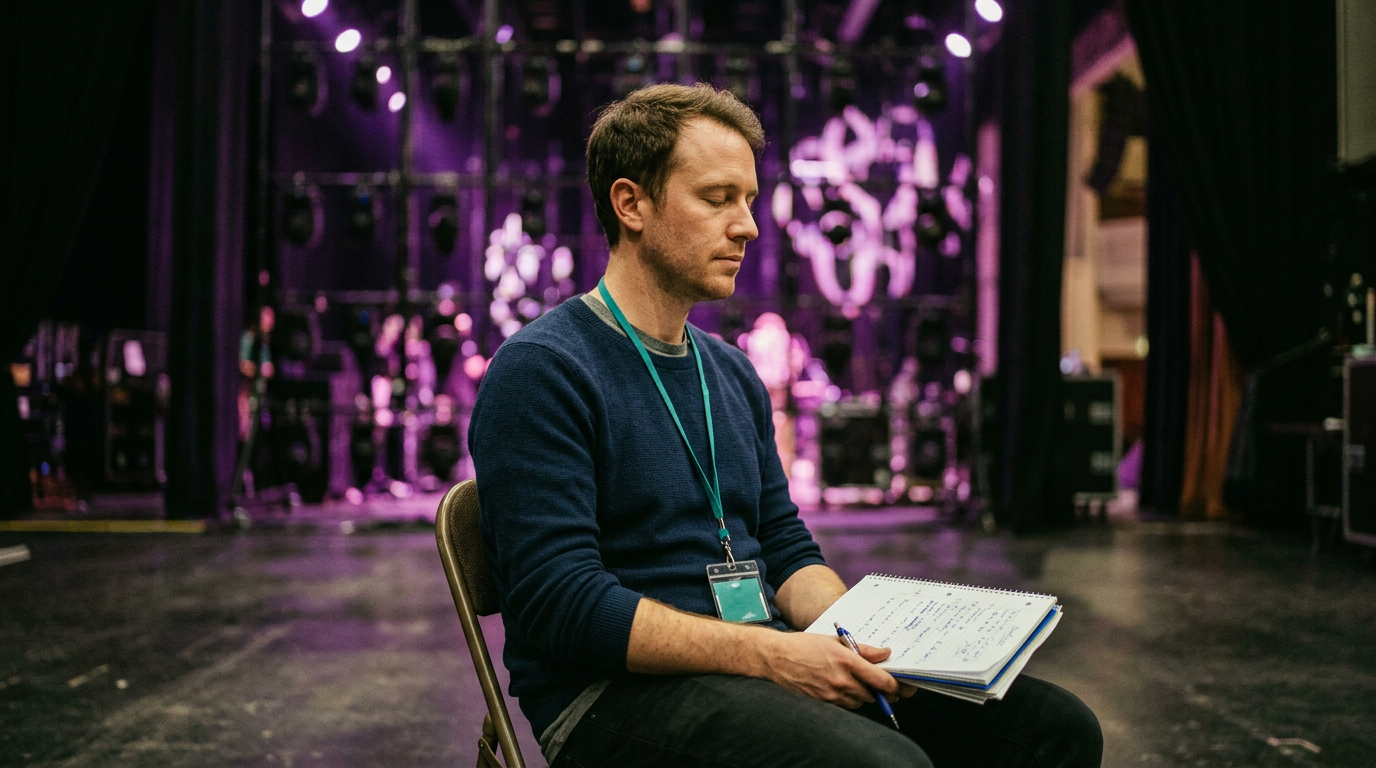
Before the lift, the diver stands still on the board and runs the dive behind closed eyes. Before the surgery, many surgeons do a version of the same. Visualization, the deliberate mental rehearsal of actions and situations, has decades of performance research behind it, and almost everyone outside sport uses it backwards: replaying worries instead of rehearsing intentions. Your imagination is already running simulations all day; the skill is choosing them. This guide covers what mental rehearsal genuinely does, the process-versus-outcome distinction that decides whether it helps, how to practice it in five minutes, and where its honest limits sit.
What is visualization, mechanically?
Visualization is structured imagination: deliberately simulating an action, situation, or response vividly enough that overlapping brain systems treat it as light practice. Motor imagery engages movement planning, situation rehearsal primes attention and responses, and repeated simulations make the real moment feel familiar instead of foreign.
The overlap is the working part: imagining a movement recruits much of the planning circuitry the movement itself uses, which is why sports science took the technique seriously long before wellness did. The same holds for situations, since a conversation rehearsed vividly, opening line, likely pushback, your calm response, arrives partly pre-practiced. None of this is mystical: it is the same machinery that makes you flinch during a film, pointed on purpose. And it explains the technique's dark twin, because anxious rumination is also visualization, rehearsing failure with excellent production values, which is why learning to aim the projector counts as regulation training too.
Why does process beat outcome?
Rehearsing the process, the actions, obstacles, and recoveries, measurably supports performance and follow-through. Fantasizing only the outcome, the podium, the corner office, tends to relax motivation by paying the reward early. The rule of thumb from the research: simulate the doing, and let the destination appear briefly at the end.
Psychologist Gabriele Oettingen's work on positive fantasy documented the trap: people who indulged idealized outcome imagery often showed less energy and follow-through afterward, with the mind treating the enjoyed fantasy as partial accomplishment. Her repair, mental contrasting, pairs the wish with the obstacle: see the outcome, then see what stands in the way, then plan the response, which converts dreaming into preparation. Combined with when-then planning from our implementation intentions guide, this becomes the strongest documented use of imagination in goal pursuit: destination glimpsed, path rehearsed, obstacles pre-answered.
What does a five minute practice look like?
Choose one upcoming challenge. Two minutes: rehearse the process vividly, first person, with sensory detail, the room, the first move, the middle. One minute: summon the most likely obstacle and watch yourself respond well. One minute: run the recovery, wobbling and continuing. Thirty seconds: the good ending, briefly.
Details raise the transfer. First person beats watching yourself on a screen for most purposes, since you are training the view you will actually have. Sensory texture, sounds, weight, light, recruits more of the system than abstract outline. Slow motion helps at tricky moments, exactly as athletes use it. And the recovery rep may be the most valuable sixty seconds of the practice, because pre-rehearsed recovery is what separates a stumble from a spiral in the live moment. Mental longevity is the lifelong capacity to think clearly, regulate your inner state, adapt to change, keep learning, maintain meaningful connections, and live intentionally. Deliberate imagination serves the adapt clause directly: futures rehearsed are futures you meet already knowing your lines.
Where does visualization genuinely help?
Performance moments: presentations, interviews, difficult conversations, athletic and musical execution. Skill consolidation alongside physical practice. Behavior starts, where rehearsing the first two minutes lowers the activation cost. Exposure's gentler cousin, walking yourself toward feared-but-safe situations. And sleep, where guided imagery gives a racing mind a calmer film.
The performance uses have the deepest evidence base, with mental practice functioning as a genuine supplement to physical repetitions in the sports science literature, and the everyday translations inherit the mechanism. The habit connection matters too: rehearsing a cue and response pair mentally is exactly the rehearsal step that arms when-then plans, and the habit formation research gives the repeated version its ten-week arc. Rehearsing the gym entrance, the blank page's first sentence, or the party's first hello shrinks the threshold where most intentions die. For worry-prone minds, deliberately rehearsing the manageable version of a feared event, calmly, repeatedly, with recoveries included, often takes the edge off anticipation, though clinical anxiety deserves a therapist's structured version of exactly this. And the wind-down use returns in our sleep guides: imagery like a slow walk through a remembered place gives the narrating mind a script that competes with the committee.
How do you steer imagination away from rumination?
Notice the involuntary screening, name it, one word, rehearsing failure, and either close the projector with a breath and a task, or reshoot the scene: same situation, competent response, recovery included. You already have the skill; rumination proves it. Steering is the practice.
The reshoot move deserves its own paragraph because it converts the mind's worst habit into training material. A replayed argument becomes a rehearsal of the boundary you will hold next time. The looping catastrophe about the presentation becomes three reps of the opening done well, wobble included. This borrows the structure of clinical imagery techniques while staying firmly in everyday territory: for intrusive imagery, trauma replays, or loops that will not release, the professional versions exist and work, and a therapist is the right director for them. For ordinary worry-cinema, the notice-name-reshoot loop, run patiently for a few weeks, teaches the projector who it works for.
How does rehearsal support a long mental life?
Deliberate imagination keeps two longevity muscles warm: Adaptability, because futures rehearsed are transitions met halfway, and Regulation, because a mind that can aim its own simulations spends less time trapped in the anxious ones. Both compound quietly across decades of presentations, moves, retirements, and recoveries.
The transitions use deserves a concrete image: people navigate retirement, relocation, and role changes better when the new chapter has been mentally walked through in specifics, the Tuesday morning of the new life, the first visit to the new city's market, the introduction at the new club. Rehearsal converts the unknown into the merely unfamiliar, and unfamiliar is a much smaller opponent. The regulation use runs daily: every worry you catch and reshoot is a rep, and calm practices like the ones summarized honestly by the NCCIH strengthen the noticing that steering depends on. An imagination you can aim is one of the quieter definitions of a capable mind.
What are the honest limits?
Visualization supplements action and substitutes for none of it: imagined workouts build no muscle, and rehearsed conversations still need having. Effects are modest and grow with repetition and vividness. It steers probabilities inside your own behavior, and claims beyond that, attracting outcomes, bending events, belong to meaning, never mechanism.
The boundary keeps the tool credible and connects it honestly to the manifestation conversation from our grounded guide: mental rehearsal is one of the legitimate mechanisms inside those practices, and it works on the only thing imagination can reach, your own readiness, responses, and follow-through. People differ in imagery vividness too, and low-imagery minds can run the same practice through felt sense and inner narration with similar benefit, since the rehearsal, and never the picture quality, carries the effect. Five focused minutes before the moments that matter, most days, for a season: that is the honest dose, and it is enough to notice.
Frequently asked questions
Is visualization the same as manifestation?
Visualization is one mechanism that grounded manifestation practices use, the mental rehearsal part. Manifestation traditions wrap it in meaning and intention frameworks, which many people find sustaining. The rehearsal effect works identically under either name, and it always works through your own preparation and behavior.
What if I cannot picture things clearly?
Vividness varies enormously between minds, and the practice survives low imagery: rehearse through inner narration, felt movement, and spatial sense instead of pictures. The planning systems engage either way. Judge by results in the live moments, never by the mental screen's resolution.
How often should I practice?
Tie it to real events: five minutes before anything that matters, plus a daily rep during seasons of deliberate change. Like every practice in this blog, frequency beats duration, and three focused minutes daily outperforms a weekly half hour of drifting.
Can visualization increase anxiety?
Aimed at catastrophes, it already does; that is what rumination is. Aimed at process and recovery, it usually lowers anticipatory anxiety by making the moment familiar. If imagery of any kind reliably spikes distress, or intrusive images arrive uninvited, bring a professional in; structured imagery work is a therapy specialty.
Rehearsal improves with an audience of fellow practitioners. Our community trades pre-performance routines, reshoot stories, and honest reports of what five minutes of process imagery changed by Thursday. When you are ready, join us in the HumanOS Community. Bring next week's hardest moment; we will help you rehearse it.