The Best Bedroom Temperature for Sleep (Backed by Research)
Research says the best temperature for sleep is 60-67°F (15-19°C). Learn why cool rooms improve sleep quality and practical tips to get there.
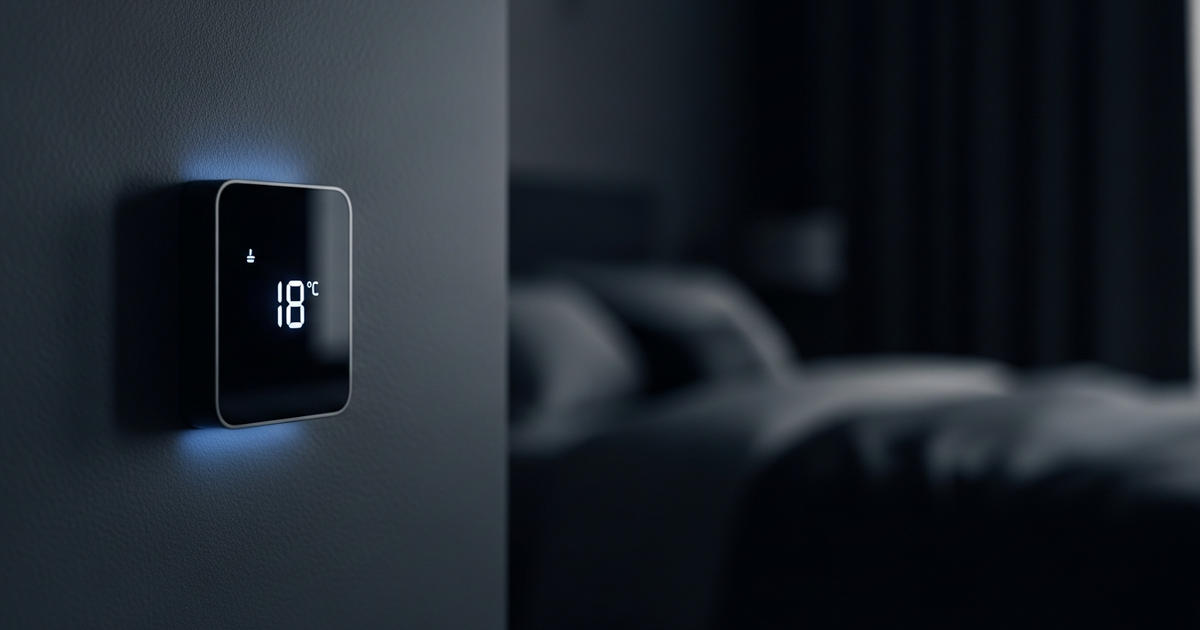
# The Best Bedroom Temperature for Sleep (Backed by Research)
If you're doing everything right — consistent schedule, no screens, dark room — and you're still not sleeping well, check your thermostat.
Bedroom temperature is one of the most underestimated factors in sleep quality. And the research is surprisingly clear about what works best.
The Optimal Range: 60-67°F (15-19°C)
Multiple studies, including research from the National Sleep Foundation and the Journal of Physiological Anthropology, converge on the same range: 60 to 67 degrees Fahrenheit (about 15 to 19 degrees Celsius).
That feels cold to most people when they first hear it. If your bedroom is currently at 72°F, dropping to 65°F sounds uncomfortable.
But here's the thing — you don't need to feel cold. You need the air around you to be cool while your body is warm under covers. That combination is what drives the physiological process that initiates sleep.
Why Cool Rooms Help You Sleep
Sleep isn't just your brain shutting down. It's an active process that requires specific physiological conditions, and one of the most important is a drop in core body temperature.
Here's how it works:
In the evening, your circadian clock triggers a process called vasodilation — your blood vessels near the skin's surface expand, releasing heat from your core to the environment. Your core temperature drops by about 2-3°F over the course of the night, reaching its lowest point around 4-5 AM.
This temperature drop is a trigger for melatonin release. When your core cools, your brain interprets it as a signal that it's time for sleep. The two systems — temperature regulation and melatonin production — are deeply linked.
A warm room fights this process. If your bedroom is 75°F, your body can't efficiently shed heat. Your core temperature stays elevated, melatonin release is delayed, and you lie there feeling restless without understanding why.
A cool room acts as a heat sink, allowing your body to offload warmth naturally. The result: faster sleep onset, more time in deep sleep, and fewer nighttime awakenings.
If you've been struggling with melatonin dependency, optimizing your sleep temperature is one of the most effective ways to support natural melatonin production without supplements.
The Warm Bath Paradox
This is counterintuitive, but taking a warm bath or shower 1-2 hours before bed actually helps you sleep — even though it temporarily raises your body temperature.
Here's why: the warm water causes vasodilation (blood vessels expand, especially in your hands and feet). When you get out, all that blood near the surface rapidly releases heat to the cooler air. Your core temperature drops faster and further than it would have without the bath.
A 2019 meta-analysis in Sleep Medicine Reviews analyzed over 5,000 studies and found that a warm bath (104-109°F / 40-43°C) taken 1-2 hours before bed reduced sleep onset latency by an average of 10 minutes. That's comparable to many sleep medications.
The timing matters: too close to bed and you'll still be warm when you lie down. The 1-2 hour window gives your body time to complete the heat dump.
What About Being Too Cold?
Yes, you can go too far. Below 60°F, most people experience discomfort that disrupts sleep. Your body starts constricting blood vessels to conserve heat (vasoconstriction), which raises your core temperature — the opposite of what you want.
Shivering is a clear sign you've overcorrected. The goal is cool air with warm bedding, not a freezing room.
If you share a bed and your partner runs hot while you run cold (or vice versa), individual solutions help: separate blankets, a bed fan on one side, or cooling/warming mattress pads that can be set to different temperatures per side.
Seasonal Adjustments
Summer
Summer is the hardest season for sleep temperature. Here's how to manage it:
- Use a fan — even if you have AC. Moving air helps with evaporative cooling from your skin.
- Choose breathable bedding — cotton, linen, or bamboo-derived fabrics. Avoid polyester.
- Cool your pillow — a gel cooling pad or simply flipping your pillow works surprisingly well.
- Close blinds during the day — preventing heat buildup is easier than cooling a hot room later.
Winter
Winter is easier for sleep temperature, but central heating can work against you:
- Turn the heat down at night — program your thermostat to drop to 65°F at bedtime.
- Use layers — warm blankets with cool air is the ideal combination.
- Crack a window — even slightly, for fresh air circulation.
Practical Tips for Any Season
If you don't have AC or a programmable thermostat:
- A box fan pointed away from you (toward a window) can pull warm air out of the room
- Frozen water bottles near the bed or in front of a fan create a DIY cooling effect
- Sleeping in lightweight, moisture-wicking clothing helps regulate skin temperature
- Elevating your feet slightly can promote vasodilation and heat loss
If you tend to overheat at night:
- Skip heavy pajamas — or sleep in less
- Avoid memory foam (it retains heat) — consider a latex or spring mattress
- Keep a glass of cool water on your nightstand
- Avoid intense exercise within 2-3 hours of bed (it elevates core temperature)
If you tend to get cold:
- Wear socks to bed — warming your feet triggers vasodilation, which paradoxically helps your core cool down
- Use a hot water bottle at your feet, then remove it as you warm up
- Layer blankets so you can adjust throughout the night
The Connection to Your Nervous System
Temperature regulation and nervous system state are closely connected. When you're stressed, your sympathetic nervous system (fight-or-flight) constricts blood vessels and raises core temperature. This is why anxious nights often feel physically hot, even in a cool room.
If you find that temperature adjustments alone aren't enough, it may be worth addressing the nervous system activation that's preventing your body from cooling naturally.
The Bottom Line
The best temperature for sleep is cooler than most people keep their bedrooms. Somewhere between 60-67°F gives your body the conditions it needs to shed core heat, trigger melatonin production, and transition into deep sleep.
It's one of the simplest changes you can make — and often one of the most immediately noticeable.
Tonight, try dropping your thermostat by just 2-3 degrees. See how it feels. For most people, the difference is obvious within a night or two.
Pair this with the rest of your sleep hygiene checklist, and you've built a sleep environment that does most of the work for you.
---
This is part of our complete guide to [sleeping better without medication](/blog/sleep-without-medication). Start there for the full roadmap.
Start Sleeping Better Tonight
Join 14,500+ people who've transformed their sleep with healing frequencies, delta wave entrainment, and our progressive 21-night program.