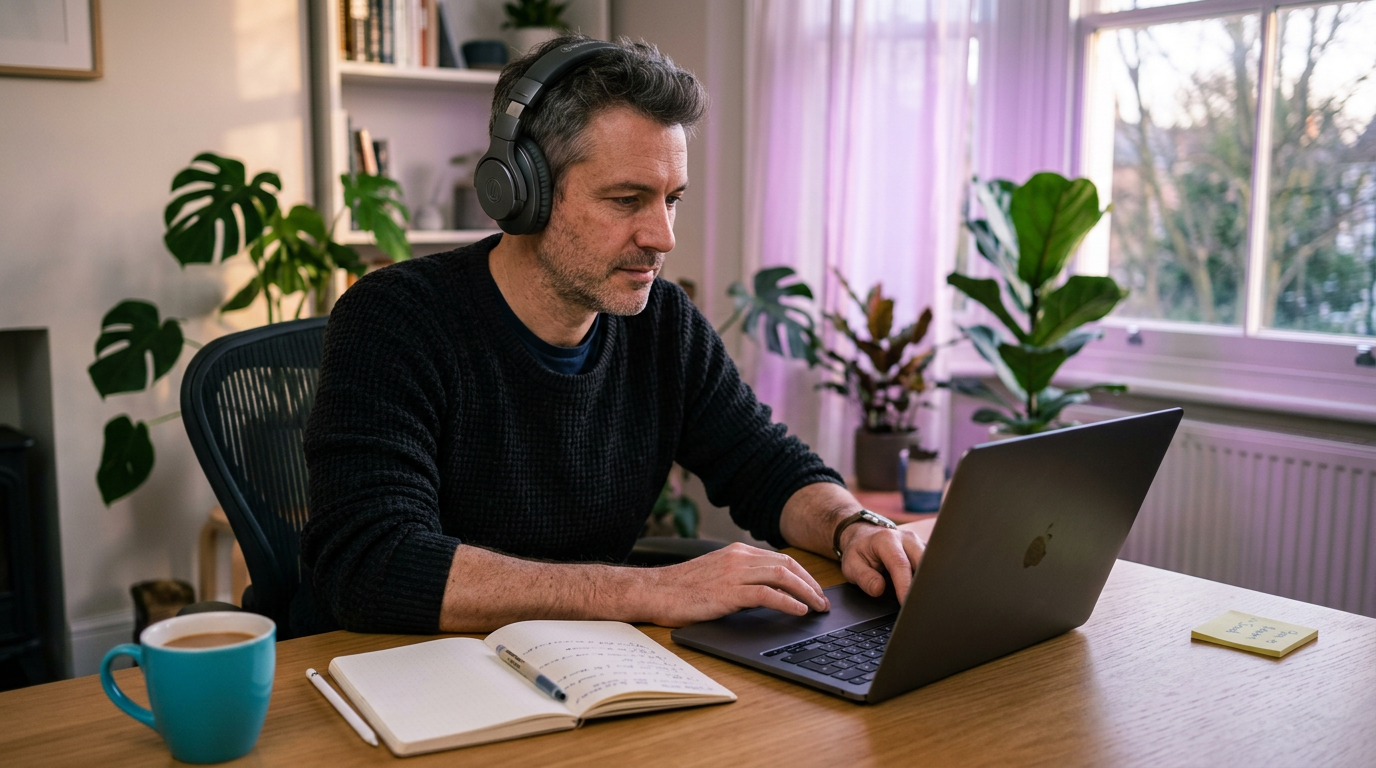
Read this paragraph without checking anything else, and notice how loud the pull is. That pull is the subject. Attention feels like it is breaking for many of us, and the encouraging truth from research is that attention span behaves like capacity, and capacity trains. The environment got engineered against it; you get to engineer back. This guide covers what actually happened to your attention span, what the multitasking research really shows, how to increase attention span through training and environment design, and how to tell ordinary scatter from something that deserves a professional conversation.
Is your attention span actually getting shorter?
Your attention system is intact; its operating conditions collapsed. Modern screen time runs in seconds-long fragments, and every switch trains the expectation of another exit. What broke is the habit of staying, and habits of staying rebuild with practice under better conditions. That distinction is the whole hopeful premise of training.
Attention researchers describe the modern pattern bluntly: screen attention now hops between windows in well under a minute for most knowledge workers, and every interruption carries a re-entry cost before deep thought resumes. The engineering is deliberate, because feeds monetize your switches. None of that constitutes damage. Put the same brain in a theater, a workshop, or a novel it loves, and forty minutes pass in a blink, which is the proof most people overlook: the capacity shows up wherever conditions allow it.
What does multitasking really do to focus?
The landmark finding is uncomfortable: heavier media multitaskers performed worse on the exact skills multitasking seems to advertise. In the Stanford study by Ophir and colleagues, heavy multitaskers filtered distractions less effectively and paid a larger cost when switching tasks, 167 milliseconds more per switch, than light multitaskers.
The Ophir, Nass, and Wagner study compared people by their media multitasking habits and found the heavy group more distractible by both the environment and their own memories, with a breadth-biased style that let everything in. The authors were careful about direction: heavy multitasking may erode control, and distractible people may also multitask more. Either way, the practical reading stands, because switching is a cost center in both stories. Single tasking is a performance strategy with receipts, and the calmest people you know at work are usually running it on purpose.
How do you train a longer attention span?
Like any capacity: progressive load. Start with one daily block of single-task focus at a length you can actually complete, ten or fifteen minutes, phone in another room. Add five minutes each week. Support it with reading that asks you to hold a thread, and one attention practice like breath-following.
The block is the barbell. One task, visible timer, zero inputs, and the rule that defines the training: when the pull arrives, notice it, stay seated, and return to the task. Every noticed pull and return is one repetition, which means a distracted session full of returns is a good workout. Long-form reading builds the same muscle at leisure pace, and meditation practices train the raw return reflex; the NCCIH's honest summary supports modest, real benefits from that family of practices. Expect the first week to feel itchy and the fourth to feel different. Mental longevity is the lifelong capacity to think clearly, regulate your inner state, adapt to change, keep learning, maintain meaningful connections, and live intentionally. Clarity is the capability under construction here, and it responds to sets and reps like everything else in this blog.
Which environment changes pay off immediately?
Phone out of the room beats phone face down, notifications batched beat notifications constant, one visible window beats six, and a written next step beats an open-ended session. Environment moves faster than willpower, because it removes the fights instead of winning them.
The phone deserves its own sentence: its mere presence on the desk taxes attention even when silent and face down, which is why the other room is the intervention and the drawer is the compromise. Notification batching converts a hundred daily interruptions into three scheduled check-ins, and the sky reliably fails to fall. Tab hygiene keeps working memory off janitorial duty. And writing the next concrete step before a block starts gives attention a rail to run on, which shortens the wobble at the start of every session. None of this requires discipline. It requires furniture moving, once.
How does recovery fit into attention?
Attention is metabolically expensive, and it refuels on genuine breaks: movement, a window, water, three slow breaths, anything with zero feeds in it. A scrolled break swaps one attention drain for another and returns you tireder. Sleep remains the deepest recovery, and short nights show up as scattered days.
The break rule is simple to say and oddly radical to follow: breaks without inputs. Five minutes of walking, stretching, or staring out a window actually restores the resource, while five minutes of feed sets the switching engine spinning again and hands back a mind mid-churn. Batch your real breaks between blocks, protect a lunch that contains no screen at all if you can manage it, and let the evening wind-down and a consistent sleep window do the heavy restoration. The focus guides across this blog keep converging on the same unglamorous trio, sleep, movement, and recovery, because attention rides on all three.
What does a training month actually look like?
Week one: a single ten minute block each workday, phone in another room, plus notifications batched to three windows. Week two: fifteen minute blocks and one long-form reading session. Week three: twenty minutes and a second daily block if the first feels stable. Week four: twenty five minutes, and a review of what the month changed.
Two field notes keep the month honest. First, count completed blocks and returns, never perfect unbroken focus, because returns are the actual repetitions and perfection is a myth that quits by Thursday. Second, expect a plateau around week three when novelty wears off; that week is where the capacity is genuinely built, exactly like the unglamorous middle of any training plan. People who log a one line note per block, what the task was and how many returns it took, end the month with proof that the trend is real, which is what keeps month two happening.
When is scattered attention something more?
When focus problems are lifelong, severe across settings, and paired with restlessness or impulsivity, an ADHD evaluation with a qualified clinician is the right conversation. When scatter is new and arrived with exhaustion, low mood, anxiety, poor sleep, or a health change, the upstream cause deserves attention first.
The distinction matters because the internet sells attention hacks to people who need assessments, and assessments to people who need sleep. ADHD is real, underdiagnosed in adults, and responds to proper care, and a clinician can separate it from the imitators: untreated sleep problems, depression, anxiety, thyroid conditions, medication effects, and plain overload. The honest self-check: if your attention works well somewhere, conditions are the likelier story; if it has never worked anywhere, get the evaluation. Both paths deserve zero shame and real help.
Frequently asked questions
How long should my attention span be?
There is no universal number: absorbing work produces long effortless stretches, and boring tasks fragment for everyone. The useful benchmark is trend against yourself, whether your trained block length is growing, and whether chosen tasks hold you longer this month than last. Twenty five to fifty minute blocks serve most adults well.
Do focus apps and website blockers help?
As scaffolding, yes: blockers remove the fight during training weeks, and timers structure the sets. The goal stays internal, an attention that returns on its own, so treat apps like training wheels you gradually need less. If an app becomes another thing to fiddle with, simplify to a kitchen timer.
Does caffeine help or hurt attention?
Moderate caffeine sharpens alertness for most people, and the timing decides the bill: late doses shorten sleep, and short sleep is the single most reliable attention killer available. Morning coffee with an early afternoon curfew keeps the benefit and skips the tax.
Can attention span recover after years of scrolling?
Yes, and faster than most people expect. The training response typically shows within two to four weeks of daily blocks plus environment changes. The pull toward the phone fades slower than the block length grows, so judge progress by completed blocks, and let the pull die of neglect on its own schedule.
Attention grows easier in rooms where staying is normal. People in our community run focus blocks together, trade environment tricks, and confess their tab counts without fear. When you are ready, join us in the HumanOS Community. Bring the thing you keep meaning to finish; this is a good room to finish it in.